






Tanzania Overtakes Nigeria as Africa’s Second-Largest Maize Producer – Without GMOs
 Confidence UbaniFebruary 20, 20251 Mins read2.8k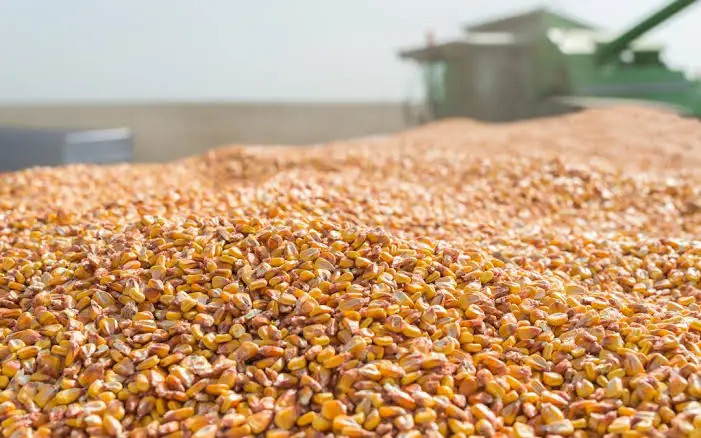
Tanzania has officially surpassed Nigeria to become Africa’s second-largest maise producer. The country recorded an output of 11.7 million tonnes in the 2023/24 farming season, up from 6.4 million tonnes in 2021/22. The Ministry of Agriculture attributes this growth to key agricultural reforms.
He said that the fertiliser subsidy programme introduced in 2022/23 was a major factor. Before the subsidy, farmers used an average of 15 kilograms of fertiliser per acre – far below the 50 kilograms applied in countries like South Africa. However, fertiliser use has now increased to 24 kilograms per acre. The government aims to raise this to 50 kilograms by 2030.
Tanzania is also driving mechanisation to improve efficiency and reduce labour costs. The government has already deployed 800 tractors and power tillers. By 2030, it plans to roll out 10,000 machines to support farmers. Other interventions include free soil testing, improved seed varieties, and enhanced extension services.
The National Food Reserve Agency (NFRA) has reportedly played a critical role in stabilising the maise market. Over the last two seasons, it purchased 700,000 tonnes of maise, up from 200,000 tonnes three years ago. This intervention has helped farmers secure fair prices and reduced post-harvest losses.
Tanzania’s maise is now a key commodity in regional trade. It supplies markets in the Democratic Republic of Congo, Malawi, and Mozambique. Business is booming at the Manzete market, one of the country’s biggest maise trading hubs. Speaking to CGTN news, traders reported higher sales and expanded export opportunities.
Tanzania achieved this growth without using genetically modified (GMO) seeds. This contrasts with Nigeria, which has pushed for GMO adoption despite public concerns over health and environmental risks. While Tanzania focused on improving natural farming methods – fertiliser access, mechanisation, and better seeds – Nigeria seems insistent on risking using genetically modified seeds.
Data from the Tanzanian agricultural ministry shows a projection of 15 million tonnes by the 2025/26 season. South Africa remains Africa’s top maise producer, with 13 to 15 million tonnes annually. However, Tanzania’s success positions it as a strong contender in Africa’s grain market.
Read More: Anti-GMO Activist Segun Adebayo Calls For Aggressive Push Back Against Promoters
About The Author



Related Articles

World Bank Pledges $25m for Nigeria’s $300m Off-Grid Power Fund, Leaving $275m Unaccounted For
The World Bank has committed an initial $25 million to Nigeria’s newly...

Awoniyi Replaces Injured Osimhen in Super Eagles Squad for AFCON Qualifiers
Victor Osimhen has been ruled out of Nigeria’s opening 2027 Africa Cup...

Tinubu and Umahi Threaten to Shut Down Coastal Highway They Can’t Protect
The Federal Government has threatened to shut down the Lagos section of...


Tinubu Extends European Vacation as Nigerians Continue to Suffer at Home
President Bola Tinubu has extended his working vacation in Europe, meaning he...
Leave a comment