






Warri Refinery Shuts Down Weeks After $897 Million Relaunch; Port Harcourt Still Underperforms After $1.5 Billion Revamp
 Confidence UbaniApril 30, 20252 Mins read2.3k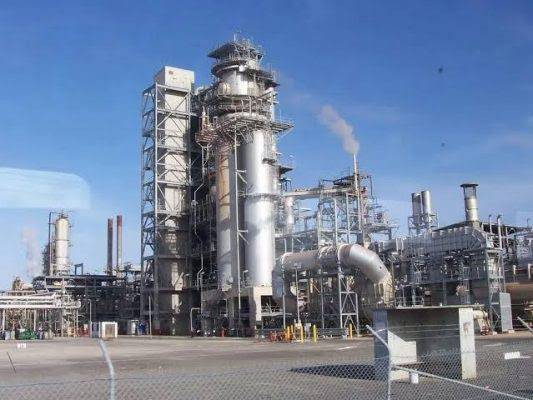
The Warri Refining and Petrochemical Company has remained shut since 25 January 2025, barely a month after it was declared operational. This has sparked criticism over the Nigerian National Petroleum Company Limited’s (NNPCL) management of the nation’s refineries.
A document from the Nigerian Midstream and Downstream Petroleum Regulatory Authority (NMDPRA), obtained in April, confirmed that the shutdown was due to safety concerns with the Crude Distillation Unit (CDU) Main Heater. The plant had been commissioned with fanfare on 30 December 2024, after undergoing a $897.6 million rehabilitation.
Despite its relaunch being praised by President Bola Tinubu and then NNPCL Group Chief Executive Officer, Mele Kyari, operations ceased just weeks later. Industry experts have described the situation as a failure of due diligence, transparency, and oversight, especially in a sector critical to Nigeria’s economic stability.
The Warri refinery, with a nameplate capacity of 125,000 barrels per day, was designed to produce key petroleum products such as Automotive Gas Oil (diesel), Straight-Run Kerosene, and naphtha. Located in the Ekpan, Uwvie, and Ubeji areas of Delta State, the facility also houses a petrochemical plant capable of producing 13,000 metric tonnes of polypropylene and 18,000 metric tonnes of carbon black annually.
Meanwhile, the Port Harcourt Refining Company (PHRC), recommissioned on 26 November 2024 after a long-delayed $1.5 billion revamp, is reportedly underperforming. While NNPCL had announced a 70 per cent operational capacity with plans to scale up to 90 per cent, the NMDPRA data shows it has averaged just 37.87 per cent over six months.
Between November 2024 and April 2025, the refinery produced a monthly average of 82.55 million litres of refined products, significantly below its estimated optimal output of 218 million litres. The plant’s outputs include Premium Motor Spirit blending components, diesel, household kerosene, and liquefied petroleum gas.
The inconsistency between official claims and actual performance has raised further questions about the credibility of NNPCL’s refinery rehabilitation projects. Energy expert Kelvin Emmanuel plainly stated that the Warri, Port Harcourt, and Kaduna refineries were never truly set to resume operations. Speaking on Arise News, Emmanuel described the televised commissioning as a “charade,” accusing the government of staging the event to mislead the public.
The Warri and Port Harcourt refinery setbacks come at a time when Nigeria continues to face intermittent fuel scarcity, high energy costs, and growing public frustration over unmet reform promises in the oil sector. Calls have intensified for the new NNPCL Group Chief Executive Officer, Bashir Ojulari, to prioritise transparency and publish a full account of ongoing refinery projects.
Read More:
- “Alabuga Truth”: A Western Disinformation Operation In Focus
- Niger Establishes Open-Heart Surgery Unit in Niamey Hospital in Collaboration with Burkina Faso
About The Author


Related Articles
Barrick Reaches Deal With Mali Unions to Avert Strike at Loulo-Gounkoto as Government Tightens Grip on Gold
Barrick Mining has signed a new collective bargaining agreement with unions at...

Guinea-Bissau’s Ousted President Embalo to Return From Exile and Run in December Election
Guinea-Bissau’s exiled former president, Umaro Sissoco Embalo, has announced that he will...

Aaron Greenspan Accuses Tinubu of Lying to Court Over 1993 Political Status in FOIA Case
Aaron Greenspan, who is pursuing a Freedom of Information Act lawsuit against...


Nigeria Grows 2.3 Million Tonnes of Tomatoes and Still Spends $360 Million Importing Paste
Nigeria is Africa’s second-largest tomato producer. The country grows about 2.3 million...
Leave a comment