


Tinubu Is Fanning Flames of Tribalism—At Home and Across Borders
 West Africa WeeklyJuly 22, 20252 Mins read1.7k
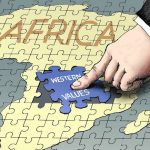
President Bola Tinubu came to office with the promise of a united and prosperous Nigeria. But two years into his presidency, his policies and political manoeuvring increasingly reflect not a unifying national vision, but a troubling pattern of ethnic favouritism, regional insensitivity, and cross-border meddling that is stoking tribalism both within Nigeria and beyond.
At a time when West Africa is struggling with insecurity, economic hardship, and deep-rooted ethnic tensions, Nigeria, Africa’s largest “democracy”, should be setting an example in inclusive governance. Instead, Tinubu’s administration appears to be narrowing national identity to a political base defined by ethnicity, and exporting that logic to regional politics.
Domestic Politics: A Nation Divided by Ethnic Appointments
From the outset of his tenure, Tinubu has been accused of stacking key government positions with individuals from his Yoruba ethnic group or political loyalists from the South-West. From the central bank governor to the revenue and financial oversight bodies, the pattern is clear:
A concentration of power in the hands of a few, largely at the expense of national diversity
This type of appointment strategy has alienated entire regions, particularly the South-East and parts of the North. The South-East, already politically marginalised for decades, continues to feel excluded, with little federal presence, investment in infrastructure, or national appointments. This sense of alienation only fuels separatist sentiment and reinforces dangerous stereotypes.
Tinubu’s government has done little to counteract this trend; instead, it has responded with silence, deflection, or accusations of “politicising governance” whenever concerns are raised.
Weaponising Identity Across West Africa
Reports suggest that Nigeria, under President Tinubu, has extended identity-based diplomacy beyond its borders, elevating cultural and political ties to advance influence across the region.
-
Tinubu led ECOWAS to threaten military intervention in Niger following the July 2023 coup. West African governments, including Niger, Mali, and Burkina Faso, perceived Nigeria’s approach as aligned with Western, particularly French, interests. This perception is widely cited as a key driver for their withdrawal from ECOWAS and the formation of the Confederation of Sahel States (CSS) in early 2025.
-
Nigeria’s post-coup posture, characterised by issuing threats, imposing sanctions, and supporting force, contrasts with traditional regional non-interference norms. This militancy has reduced trust among Francophone neighbours and amplified concerns over Nigerian cultural and political influence.
-
ECOWAS member governments, along with Northern Nigerian civil society, have echoed warnings that under Tinubu’s leadership, ECOWAS policies seem increasingly directed by external agendas, instilling fear that Nigeria may act as a regional proxy for French interests and intensifying ethno-cultural divides.
These developments collectively fueled the rise of CSS nations, who cast ECOWAS, notably influenced by Nigeria, as neo‑colonialist, ethnically biased, and unrepresentative of broader West African interests.
The Cost of Division
Tribalism has long been Nigeria’s Achilles’ heel, exploited by colonialists, military regimes, and post-democracy elites alike. What makes the current situation under Tinubu more dangerous is that this ethnocentric governance is being normalised, cloaked in nationalism and sold as political pragmatism.
But the consequences are real:
- Weakened national unity
- Deteriorating trust in federal institutions
- Rising ethnic militancy and communal violence
- Shrinking space for merit-based leadership
- Regional suspicion of Nigeria’s intentions
The irony? Tinubu, once a leading figure in the June 12 democracy struggle, now stands accused of undermining the pluralistic ideals that that very movement fought to establish.
Nigeria is not Lagos. The presidency is not a tribal crown. Leadership at the federal level demands inclusivity, cultural sensitivity, and balance, traits glaringly absent from Tinubu’s political calculus.
Suppose Nigeria is to survive its current challenges and reclaim its position as a stabilising force in West Africa. In that case, President Tinubu must abandon ethnic consolidation and embrace the pan-Nigerian identity he once claimed to represent.
Until then, his leadership will remain a symbol of deepened division.
Read More:
- Malian Authorities Prevent Ex-PM Moussa Mara from Travelling Out of the Country
- NBS Releases Rebased GDP, But Tinubu’s Government Still Fails to Deliver Real Growth
About The Author

Related Articles
Gambian Businesses Struggle Under Prolonged Blackouts as Anger Mounts Ahead of December Election
Gambian businesses are collapsing under the weight of prolonged power cuts that...
Chelle Names Osimhen, Lookman, Ndidi in 24-Man Super Eagles Squad for 2027 AFCON Qualifiers
Super Eagles head coach Éric Chelle has unveiled a 24-man squad for...

Ghana Cuts Fuel Exports to Burkina Faso and Mali to Protect Its Own Supply
Ghana’s state-owned fuel distributor BOST Energies has reduced diesel and gasoline exports...

ASUU Strike Threatens to Shut Down Federal Universities as Nigerians Accuse Media of Ignoring the Crisis
The Academic Staff Union of Universities is on the verge of a...
Leave a comment