



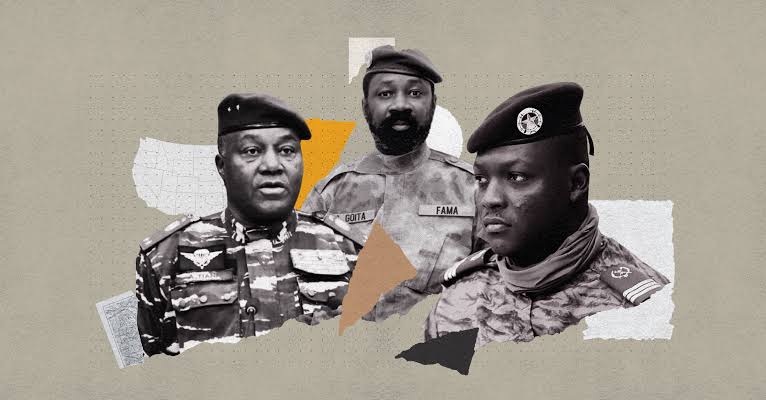
Burkina Faso, Mali and Niger have resumed formal discussions with the Economic Community of West African States, agreeing to work towards a framework for cooperation more than 18 months after pulling out of the regional bloc. The three military-led countries held their first official ministerial-level talks with ECOWAS on Saturday, October 17, 2026, in Dakar, Senegal.
The meeting was led by Burkina Faso’s Foreign Minister, Karamoko Jean-Marie Traore, who headed the AES delegation, and Senegal’s Foreign Minister, Cheikh Niang, who led the ECOWAS team. In a joint communiqué issued on Saturday evening, both sides welcomed what they described as a spirit of fraternity, mutual respect and openness during the discussions. They stressed the importance of good neighbourly relations and respect for national sovereignty.
The two blocs agreed to establish joint thematic working groups to conduct technical discussions aimed at reaching a cooperation framework agreement. The working groups will submit their findings to ministers for consideration ahead of the next ministerial session, with the date and venue to be determined through diplomatic consultations. The joint statement said future relations should be balanced and realistic, and should protect the interests of the people of West Africa.
The Dakar meeting followed earlier consultations held in Bamako, Mali, on May 22, 2025, where the two sides exchanged views on areas of common interest. Although talks between ECOWAS and the AES had been ongoing since January 2025, Saturday’s session was the first official ministerial-level engagement between the two sides.
Burkina Faso, Mali and Niger announced their withdrawal from ECOWAS in January 2024 following tensions with the regional bloc after military takeovers in the three countries. They formally exited the bloc in January 2025 and formed their own group, the Alliance of Sahel States. The three countries have since severed longstanding military ties with France, their former colonial power, and strengthened political ties with Russia, presenting their approach as a commitment to sovereignty and opposition to foreign influence. They have also criticised West African coastal states, including Benin and Côte d’Ivoire, which they view as maintaining close relations with Paris.
The split has complicated regional cooperation on security, trade and free movement of people at a time when armed groups continue to carry out attacks across the Sahel and expand towards coastal West African countries. Mali, Burkina Faso and Niger have battled jihadist insurgencies for more than a decade, with al-Qaeda and Islamic State-linked groups exploiting weak state presence, porous borders and local grievances. In Mali, coordinated attacks on April 25 targeted several locations, and the country’s Defence Minister, Sadio Camara, was killed during the violence. Niger’s withdrawal from the Multinational Joint Task Force in March 2025 further weakened regional counterterrorism cooperation.
The renewed talks come as ECOWAS seeks to manage the consequences of the three countries’ departure without necessarily reversing it. It remains unclear whether the negotiations envisage the AES states returning to the regional bloc. The joint communiqué thanked Senegalese President Bassirou Diomaye Faye, who chairs the ECOWAS Authority of Heads of State and Government, and the Senegalese government for hosting the talks and supporting West African integration. For now, the two sides have committed to a process, not a reunion. The working groups will determine whether the framework agreement becomes a basis for cooperation or simply a mechanism for managing a divorce that neither side can fully afford.
About The Author


Leave a comment