






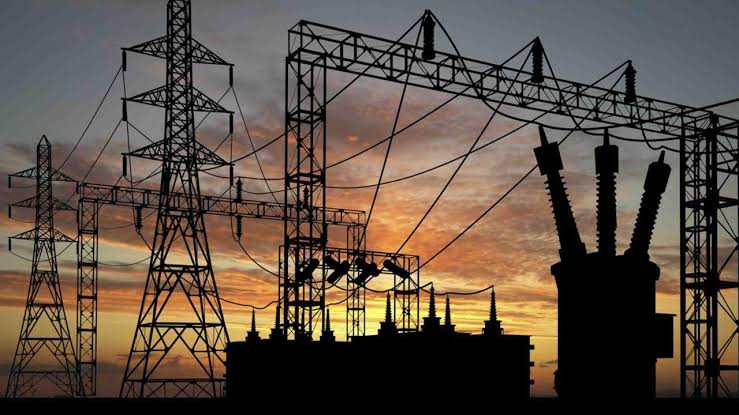
Nigeria faced yet another electricity grid collapse on Sunday, plunging several cities, including the capital Abuja, into darkness.
The Abuja Electricity Distribution Company (AEDC) reported that the electricity grid collapse happened around 11 a.m., leading to a nationwide power outage.
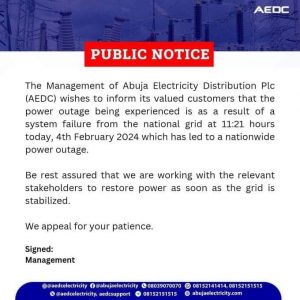
“The Management of Abuja Electricity Distribution Plc (AEDC) wishes to inform its valued customers that the power outage being experienced is a result of a system failure from the national grid at 11:21 hours today, 4th February 2024 which has led to a nationwide power outage,” the company said.
“Be rest assured that we are working with the relevant stakeholders to restore power as soon as the grid is stabilized. We appeal for your patience,” it said.
This incident follows a similar collapse less than two months ago in December.
In January, the Transmission Company of Nigeria (TCN) mentioned a gradual decrease in available generation into the grid due to gas constraints. In the past, the government had pinned the low supply of gas to generating companies as the main cause of poor power supply in the nation.
While the AEDC is yet to disclose the cause of the latest collapse, it assured customers that efforts are underway to restore power.
About The Author