



Niger, Mali, and Burkina Faso Form New Confederation, Vows to Improve Use of Local Languages
 Oluwasegun SanusiJuly 7, 20242 Mins read1.3k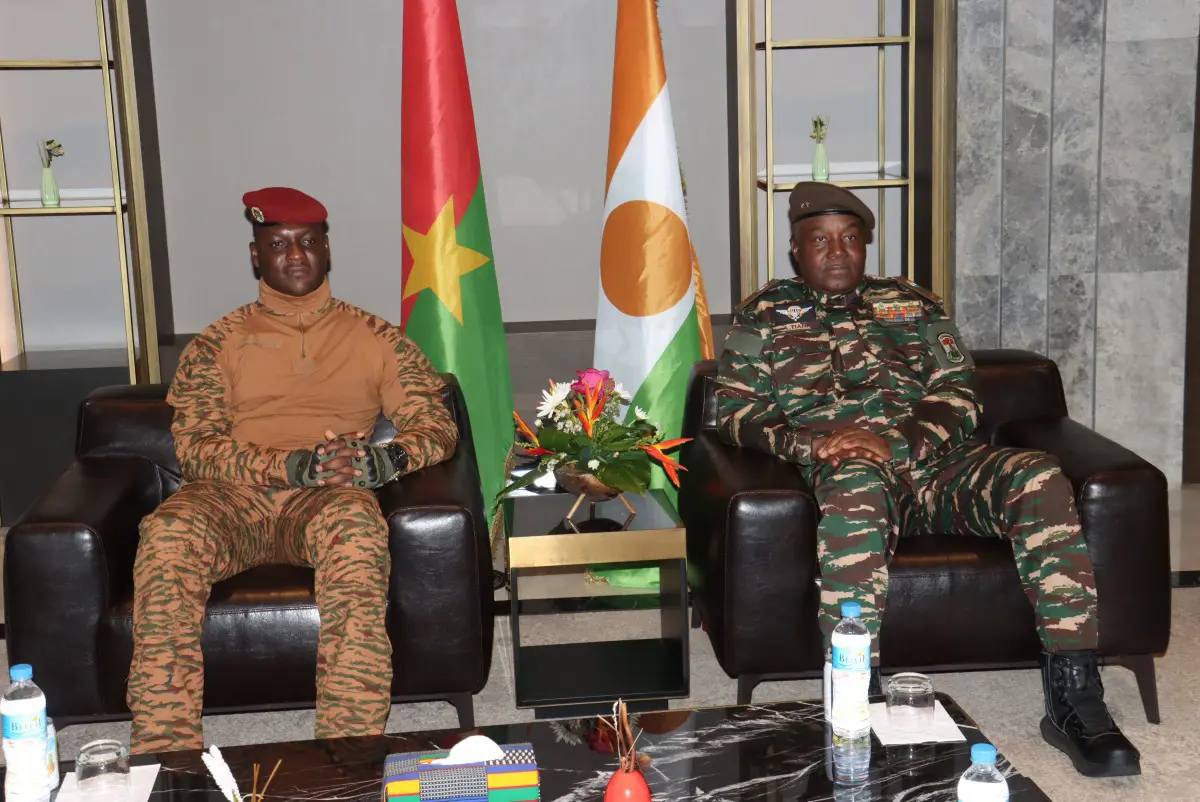
The military regimes of Burkina Faso, Mali, and Niger signed a treaty on Saturday for the creation of a new confederation called the “Confederation of Sahel States” AES.
At the end of their first summit in Niamey, this historical accord opened the way to more regional integration, grouping a combined population of about 72 million people.
The declaration to form the AES was made through a communiqué by three heads of state, all of whom rose to power via coups in the past few years.
They underlined that one central aspiration overriding this new entity is to see greater cooperation and mutual support among its member states.
The priority areas for cooperation in AES shall include agriculture, water, energy, and transport. It will also advocate the use of indigenous languages in local media.
As earlier reported, the head of Niger’s military government, General Abdourahamane Tiani, declared at the meeting, “Our people have irrevocably turned their back on ECOWAS.” This is the clearest indication of a widening gulf between the countries and the Economic Community of West African States.
The trio had previously severed relations with ECOWAS, describing it as an “entity in the service of France, the former colonial power”.
The formal declaration of this breakaway was in January, following strained relations and mutual distrust built up over the years.
The event that changed everything dramatically in the relations between ECOWAS and these nations was the July 2023 coup that ushered General Tiani into power in Niger.
Feeling incensed by this turn of events, ECOWAS imposed sanctions and even threatened military intervention if the toppled president, Mohamed Bazoum, was not reinstated.
Although the sanctions were removed in February, the relationship remained strained and characterised by trust issues between the parties.
The creation of the AES also marks a geostrategic turn toward Russia since all its three member states have severed military and defence ties with France.
This realignment mirrors a broader regional trend in the Sahel, where Russian influence has grown incessantly.
In March, AES countries created a joint military force to fight jihadist groups that jointly present a threat by targeting AES countries’ territories.
The issue at hand, therefore, is security and stability entrenchment in a region torn apart by years of insurgent violence.
How the organisation will improve ties with both groups in the future is a critical point to be considered in an ECOWAS summit of leaders in Abuja today.
The AES establishment comes when a new re-orientation is taking place in West African geopolitics, which will have weighty implications for regional stability and international relations.
Read more: Euro 2024 Quarter-Finals: Upsets, Penalties, Sneak Preview of the Semis
About The Author


Related Articles
Burkina Faso’s Traoré Says God Is Angry With Black People for Refusing to Use Their Brains
Burkina Faso’s military leader, Captain Ibrahim Traoré, has said God is angry...

Ghana Begins Jailing Pastors Who Preach on Moving Buses
Ghana has started enforcing a new law that sends pastors who preach...
Senegal’s Power Cuts Force Government to Push Gas as the Long-Term Fix
Senegal’s energy minister says the power cuts that hit the country hard...

Ethiopia and Eritrea Cut Diplomatic Ties as Tigray Conflict Escalates
Ethiopia and Eritrea have severed diplomatic relations as renewed fighting in northern...