


Kwara Governor Installs Giant Horse Sculpture as Bandits Turn Villages Into Ghost Towns
 West Africa WeeklyApril 7, 20263 Mins read31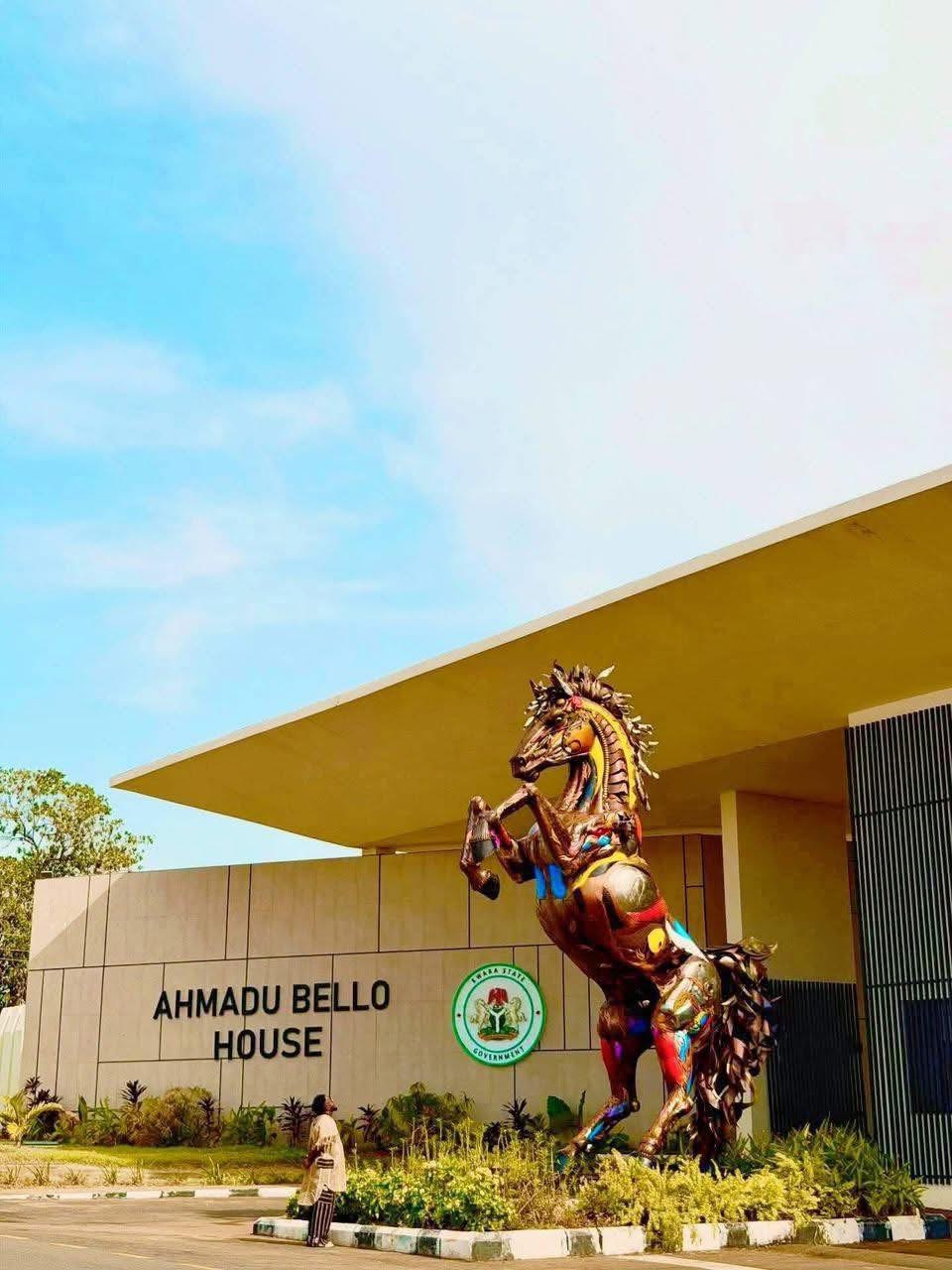
A giant horse sculpture has been installed in front of the Kwara State Government House in Ilorin, sparking outrage among residents who question why the government is spending on aesthetics while bandits turn rural communities into ghost towns. The statue, reportedly commissioned by Governor AbdulRahman AbdulRazaq, is the latest in a series of high‑profile beautification projects that critics say prioritise optics over the urgent needs of a state bleeding from persistent insecurity.
This is not the first such project. In 2025, the state unveiled what it claimed to be the tallest flagpole in West Africa, a project rumoured to have cost over N500 million, according to a Nairaland forum post that has since fueled public anger. The same post warned that a giant horse statue was on its way to Government House, a prediction that has now materialised. The forum user wrote, “All these may make for great photo ops and hashtags, but they do nothing to improve lives. What kind of legacy is this?”
While the government focuses on beautification, the security situation in Kwara has reached alarming levels. On February 3, 2026, bandits attacked the agrarian communities of Woro and Nuku in Kaiama Local Government Area, killing at least 78 people and abducting 40 others, according to a New Telegraph report. The attackers, believed to be linked to Boko Haram factions, operated for nearly 10 hours without effective resistance. The village head of Woro, Umar Salihu, told reporters that soldiers had been withdrawn from the area before the attack, leaving the community defenceless. He said the bandits sent a letter on January 10, 2026, claiming they were coming to preach, but instead carried out a massacre.
Installation of a horse sculpture in front of the Kwara State Government House in Ilorin. pic.twitter.com/NhCi87dzg2
— Osas (@osazenoo) April 6, 2026
The horror did not end there. Residents recounted how attackers locked people inside their homes and set them on fire. Others were assembled at the palace of the village head, tied up, and executed. Some victims were burned alive inside a church. The wife of the traditional ruler, his mother, and three of his children were among those abducted. Two months after the attack, families of the abducted victims say they have received no communication from the government or the kidnappers. A resident, Mohammed Abdulkarim, told reporters that his two‑year‑old child, who barely speaks, was among those taken. “Over 170 people were kidnapped, and we don’t know what is happening,” he said. “We are not concerned about palliatives; we want information and action from the government.”
The attacks have continued. On March 30, 2026, residents of Omugo Community in Ifelodun Local Government Area deserted their homes after persistent bandit attacks. The once‑lively community has turned into a ghost town, with only a few domestic animals left behind. During a recent attack on an ECWA church in the area, eight worshippers were abducted, including the pastor’s wife. A ransom of N1 billion was placed on the victims, but the community could only gather N1 million, which was rejected by the bandits.
In another incident on March 1, 2026, bandits attacked Gada Oli, a border community in Kaiama LGA, firing sporadically into the air and looting shops. The attackers targeted phone stores and provision outlets, carting away food items and other goods. Community sources said the bandits came on motorcycles in large numbers, and there was no confrontation with security operatives during the incident. Just days ago, on April 5, 2026, terrorists attacked two churches in Kaduna State, killing seven and abducting several worshippers, highlighting that the security crisis is not limited to Kwara but is spreading across the North Central region.
Civil society organisations have condemned the state government’s response. The Kwara South Development Forum accused authorities of failing to protect residents, stating that over 20 communities in Kwara South have been deserted as residents flee their homes. The group alleged that security agencies were given advance warnings about imminent attacks in three local government areas but ignored the intelligence. Traditional rulers have also been targeted. On January 1, 2026, gunmen abducted the Oniwo of Afin, Simeon Olanipekun, alongside one of his sons. In February 2024, terrorists killed the traditional ruler of Koro town.
READ MORE: Is Tinubu Preparing to Rig the 2027 Election? His Government Reserves N135 Billion for Lawsuits
Governor AbdulRazaq has faced mounting criticism for what many see as misplaced priorities. In March 2026, he told reporters that he has “raised the bar of good and impactful governance” in the state, citing infrastructural renewal and healthcare delivery. But residents of Woro, Nuku, and Omugo, whose villages have been emptied by fear, see little evidence of this impact. When the governor visited Woro after the February massacre, he told survivors that President Bola Tinubu had approved the deployment of an army battalion to the state. But as of April 2026, the attacks have not stopped, and many communities remain unprotected.
The contrast between the horse statue at Government House and the deserted villages in Kwara’s rural areas could not be starker. For residents who have lost loved ones, fled their homes, or are waiting for news of abducted children, the sight of a giant metal horse in Ilorin is not a symbol of progress. It is a reminder that those in power seem more interested in showmanship than in saving lives. As one Nairaland user put it, “It’s not just about the flagpole or the horse. It’s about what they represent: a government more focused on showmanship than solutions.”
About The Author

Related Articles
Côte d’Ivoire Ends Customs Visas for Sahel Neighbours Mali and Burkina Faso Amid Trade Route Shifts
Côte d’Ivoire has moved decisively to overhaul its customs procedures with Mali...
Is Tinubu Preparing to Rig the 2027 Election? His Government Reserves N135 Billion for Lawsuits
The Federal Government has proposed a jaw‑dropping N135.22 billion in the 2026...
Tinubu Releases Just 7% of ₦3.3 Trillion to Tackle Ongoing Power Crisis Affecting Millions
President Bola Ahmed Tinubu has approved a ₦3.3 trillion payment plan to...

Over 100 Ghanaian Trucks Stranded in Nigeria as Onion Traders Suspend Exports Amid Trade Tensions
More than one hundred Ghanaian trucks carrying vegetables from the Republic of...
Leave a comment