





IMF Tells Nigerians to Suffer in Silence as War Drives Oil Prices Past 113 Dollars
 West Africa WeeklyApril 17, 20262 Mins read950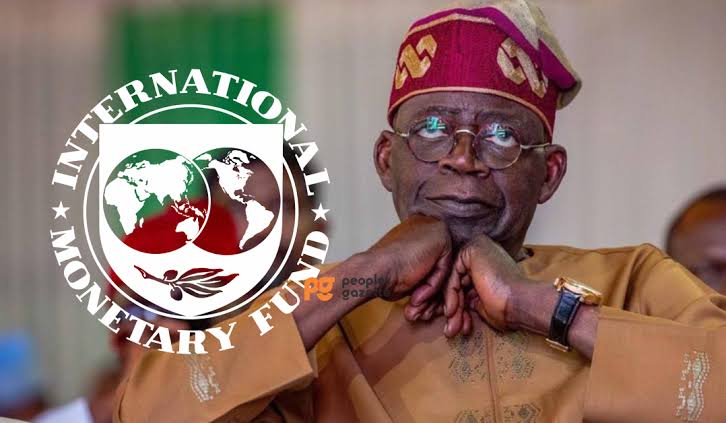
The International Monetary Fund has once again proven that its loyalty lies with economic dogma, not human life. In the face of a spiralling Middle East crisis that has pushed crude oil prices above 113 dollars per barrel, the IMF has warned the Nigerian government against returning to fuel subsidies despite the fact that millions of Nigerians can no longer afford to eat, commute, or keep their small businesses open.
What exactly is the IMF saying? Stay the course. Keep the reforms. Do not reverse the removal of fuel subsidies. Never mind that global oil prices have blown past Nigeria’s 60 dollar budget benchmark by nearly double. Never mind that transportation costs have tripled in some areas. Never mind that food insecurity is now a daily reality for over half the population. The IMF’s prescription is simple: Nigerians must tighten their belts further while the fund pats itself on the back for creating buffers.
The hypocrisy is staggering. The same IMF that lectures Nigeria on fiscal discipline presides over a global financial system where wealthy nations routinely subsidise their own essential goods. The United States subsidises farming and energy. The European Union spends billions protecting its farmers. France keeps fuel subsidies in its overseas territories. But when Nigeria wants to use its own oil wealth to keep its own people alive, the IMF cries foul.
The fund’s Director of the African Department, Abebe Selassie, acknowledged that rising transportation costs will increase pressure on food security and that the crisis is making life difficult for people. Then he immediately added that policy consistency must be maintained. In plain English, he said: We see that you are suffering, but do not change anything. That is not advice. That is cruelty dressed in economic jargon.
The IMF revised Nigeria’s 2026 growth forecast downward to 4.1 per cent. It is preparing a 50 billion dollar support package. But anyone familiar with IMF history knows that such packages come with strings attached. More conditionality. More austerity. More demands that Nigeria keep its hands off its own resources while global oil companies and foreign creditors get paid first.
Critics of the IMF have long argued that the fund treats African economies as laboratories for failed economic experiments. The structural adjustment programmes of the 1980s and 1990s gutted public services across the continent. Now, under the banner of reform, the IMF is demanding that Nigeria maintain a policy that has directly contributed to record inflation, mass poverty, and a wave of small business closures. Meanwhile, the fund offers no concrete plan for how Nigerians are supposed to survive the immediate shock of 113 dollar oil.
Finance Minister Wale Edun has ruled out a return to broad based subsidies, parroting the IMF line that support must be targeted and temporary. But targeted support in a country with no functional social registry and widespread corruption means most Nigerians will see nothing. The IMF knows this. It does not care.
The question Nigerians should be asking is simple. Why does the IMF have any say in whether Nigeria uses its own crude oil to subsidise its own citizens? The answer is that successive governments have surrendered economic sovereignty to foreign lenders. Until that changes, the IMF will keep telling Nigerians to suffer while the rest of the world protects its own. That is not economic wisdom. That is institutionalised indifference.
About The Author

Related Articles
NFF to Announce New Super Falcons Coach on Tuesday as Team Looks to Rebuild After World Cup Miss
The Nigeria Football Federation and the National Sports Commission are set to...
I Can Fix Nigeria, My Anambra Record Speaks – Peter Obi Replies Datti
Peter Obi, presidential candidate of the Nigeria Democratic Congress (NDC) for the...
Tanzania’s First Gentleman Hafidh Ameir Hassan Dies at 76
Hafidh Ameir Hassan, the husband of Tanzanian President Samia Suluhu Hassan, has...

BudgIT Exposes N6.93 Trillion in Questionable Projects Inserted Into Nigeria’s 2026 Budget
A comprehensive analysis by BudgIT, a civic technology organisation promoting transparency in...
Leave a comment