



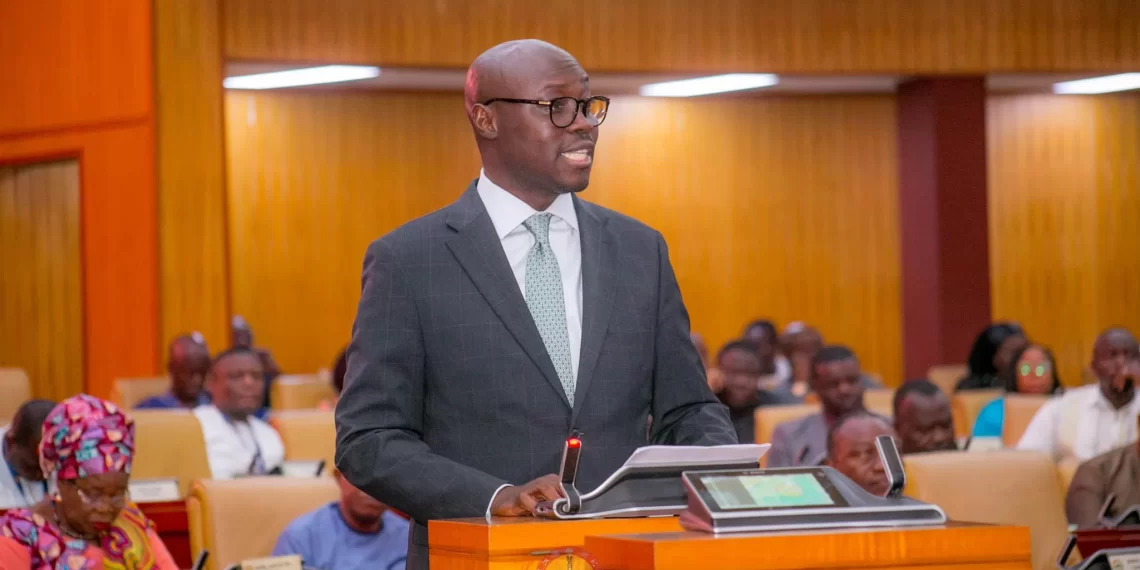
Ghana’s 2026 national budget includes a bold new investment in its creative economy: the government has committed GH₵ 20 million to a Creative Arts Fund designed to support music, fashion, visual arts, food, and other cultural industries. This move comes alongside another GH₵ 20 million earmarked to revive the struggling film sector, with a special focus on Kumawood and other local production associations.
Finance Minister Dr Cassiel Ato Forson announced during the presentation of the 2026 Budget and Economic Policy Statement. Officials say the new fund aims to professionalise creative enterprises, support technical upgrades, and give market access to creators who have long operated without reliable public backing.
This development marks a significant shift for Ghana, where the creative arts have often been sidelined in resource allocation. The government frames the investment as part of a broader strategy to grow the country’s “orange economy,” transforming culture and creativity into drivers of economic growth.
Yet, as Ghana steps up to back its creative sector financially, attention turns to Nigeria, a country whose creative industry is globally acclaimed, but whose institutional support remains fragile. Nigeria boasts world-class musicians, Nollywood films, celebrated fashion designers, and influential storytellers. However, as argued by analysts at West Africa Weekly, much of this creative brilliance thrives despite inadequate government systems, rather than because of them.
According to creatives interviewed by West Africa Weekly, Nigeria’s sector suffers from fragmented infrastructure: funding is unpredictable, grants are scarce, and art institutions, such as residencies, mentorship programmes, and training academies, are either weak or unevenly distributed. While social media platforms provide visibility, they don’t offer the stability or structure needed for long-term artistic growth.
Furthermore, with limited public funding and minimal investments in creative infrastructure, many Nigerian artists continue to juggle multiple side hustles. Observers argue that the country’s government needs to go beyond rhetoric and build strong systems, grants, art schools, and cultural institutions that will not only scale its creative economy but also cement its status as a global cultural powerhouse.
Ghana’s budgetary move is a clear signal: creative industries are not peripheral, but central to national growth. For Nigeria, the question now is whether its policymakers will heed the call, shifting from admiration of its creative exports to genuine, structural investment in the artists and institutions that produce them.
Read More:
- Tinubu Demanded Jonathan’s Resignation in 2014—Why Is He Still in Office While Schoolgirls Are Kidnapped and Violence Spreads Nationwide?
- Congo Extends Minerals Trade Ban in Conflict Zones as Pressure Mounts on Global Supply Chains
About The Author





Leave a comment