





Assimi Goïta Places AES at the Core of Mali’s New Foreign Policy Strategy
 West Africa WeeklyFebruary 23, 20262 Mins read387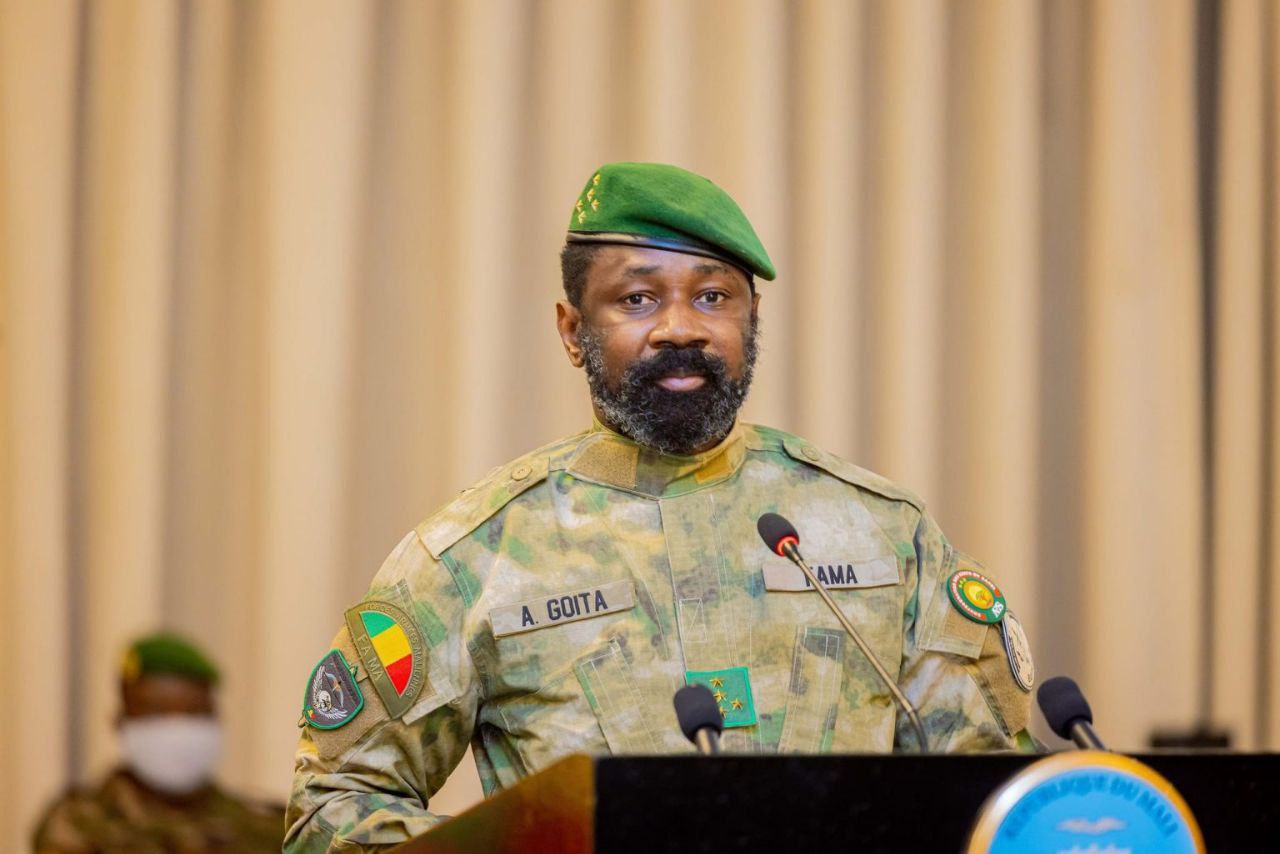
Mali’s transitional president, Assimi Goïta, has formally placed the Confederation of the Alliance of Sahel States at the centre of the country’s foreign policy, signalling a decisive shift in Bamako’s diplomatic orientation.
Speaking during the traditional New Year’s greetings ceremony with members of the diplomatic corps at the Koulouba Palace in Bamako, Goïta outlined what he described as a new strategic direction for Mali’s external relations. The event, attended by ambassadors and representatives of foreign missions accredited to Mali, served as a platform for the transitional leader to clarify how the country intends to position itself regionally and internationally.
At the heart of the announcement is the Confederation of the Alliance of Sahel States, a bloc formed by Mali, Burkina Faso and Niger following their withdrawal from the Economic Community of West African States. Goïta said Mali now considers the AES framework the primary pillar of its diplomatic strategy, with the ambition of transforming it into a regional power centre capable of exerting influence on the global stage.
According to the Malian leader, the strategy is rooted in what he described as strategic sovereignty, deeper regional integration and diversification of partnerships. Rather than relying exclusively on traditional multilateral platforms, Mali intends to broaden its diplomatic engagements while reinforcing cooperation with its Sahelian neighbours.
Goïta emphasized that the AES is expected to serve as a collective voice for member states in addressing shared challenges, particularly insecurity and economic vulnerability. The Sahel region has faced persistent militant violence and political instability in recent years, developments that have reshaped alliances and prompted new security arrangements among its governments.
READ MORE: Nigeria’s New Electoral Act Grants Voting Rights to Prisoners
The Malian president said strengthening cooperation within the AES would enhance coordinated responses to security threats and promote joint economic initiatives. He also highlighted plans to advance common interests in areas such as investment, infrastructure development and resource management.
Beyond security, the diplomatic recalibration aims to consolidate Mali’s image as an autonomous regional actor. Since the 2020 military takeover and subsequent political transition, Bamako has redefined its international partnerships, seeking new alliances while recalibrating existing ones. The emphasis on sovereignty has become a central theme in official communications.
During the ceremony, the dean of the diplomatic corps in Bamako, Russia’s ambassador to Mali, commended the country’s efforts toward asserting sovereignty, combating terrorism and deepening regional integration. Russia has strengthened its presence in the Sahel in recent years, expanding military and economic ties with several governments in the region.
Despite the renewed focus on the AES, Goïta reiterated Mali’s commitment to the principles of the United Nations, stressing respect for international law and state sovereignty. He described the country’s approach as pragmatic and guided by a search for balanced partnerships that align with national priorities.
The announcement marks another step in Mali’s evolving foreign policy landscape. By elevating the Alliance of Sahel States to the centre of its diplomatic strategy, Bamako is signalling that regional solidarity within the Sahel will shape its engagement with the wider international community in the years ahead.
About The Author



Related Articles
World Bank Praise for Tinubu Reforms Collides With 63 Percent Poverty Reality in Nigeria
Nigeria’s economic direction under President Bola Tinubu is marked by worsening living...
Another Senior Military Officer Killed By Terrorists In Borno, Nigeria, As Tinubu Administration Continues Statement-based Response To Insecurity
First, Brigadier General Zurukushi was targeted. Then Brigadier General Mohammed Uba. Now,...

How the EU Uses Traineeships to Quietly Build Networks, Access, and Long-Term Influence in Nigeria
The traineeship programme run by the European Union Delegation to Nigeria and...


Nigeria DJ Association Declares Temporary Ban on Burna Boy Over Attack on DJ Tunez
The Nigerian DJ Association (NDJ) has directed its members nationwide to temporarily...
Leave a comment