






AES Slams Nigeria Over Unauthorised C-130 Landing in Burkina Faso; Portugal Flight Claim Questioned
 West Africa WeeklyDecember 9, 20252 Mins read914
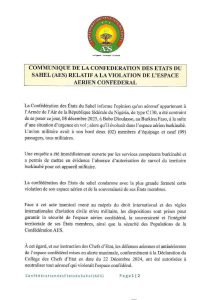
The diplomatic crisis between Nigeria and the Confederation of Sahel States (AES) deepened on Monday after Burkina Faso confirmed that a Nigerian Air Force C-130 was forced to land in Bobo-Dioulasso on December 8 for entering AES airspace without authorisation. The aircraft, carrying 11 Nigerian military personnel, remains grounded as Burkinabe authorities continue their investigation.
In its communiqué, the AES condemned the unauthorised entry as a violation of confederal sovereignty and announced that its air and anti-aircraft defence systems have been placed on maximum alert, authorised to neutralise any aircraft that breaches its airspace. The bloc emphasised that the Nigerian aircraft had no clearance to operate over Burkina Faso and that its emergency landing only occurred after detection by local defence systems.
The Nigerian government maintains that the C-130 was en route to Portugal and diverted due to an unexpected technical problem in flight. Abuja insists the crew followed international aviation safety procedures by landing at the nearest available airfield. However, the explanation has been widely questioned, as the route from Nigeria to Portugal does not naturally pass through southwestern Burkina Faso.
READ ALSO: Burkina Faso Captures Nigerian Aircraft, Alleges Territorial Violation
This incident comes in the immediate aftermath of Nigeria’s recent airstrikes in Benin, carried out during the attempted coup there. The operation, which was intended to support the Beninese government. Within West Africa, there has been discussion over whether Tinubu acted in alignment with broader security interests involving France, whose influence in the Sahel has declined. The timing has contributed to heightened suspicion and political tension across the region.
The restrained public response from Tinubu’s administration has drawn notable attention. As eleven military personnel remain in foreign custody, Abuja’s cautious tone has become a point of national and regional discussion, particularly against the backdrop of the shifting alliances and geopolitical realignments in West Africa.
For the AES, the aircraft incident is a moment of reckoning. The bloc, comprising Burkina Faso, Mali, and Niger, has reiterated its determination to strictly control its airspace, following months of escalating tensions with neighbouring states. The leadership in Ouagadougou has signalled that any further unauthorised military movement near its borders will receive an uncompromising response.
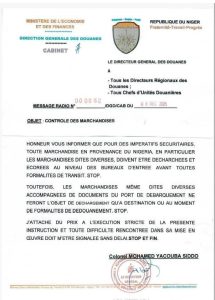
In a related move, Niger has announced that, for “security reasons,” all goods coming from Nigeria, particularly miscellaneous goods, must now be unloaded and inspected at entry offices before transiting into the country. This measure reflects rising regional caution and the broader impact of tensions between Nigeria and its Sahel neighbours.
With both governments standing firmly by their accounts, the standoff now sits at the centre of a broader regional struggle for influence and security. The incident has become a defining moment in the new geopolitical landscape unfolding across the Sahel and coastal West Africa.
About The Author

Related Articles

MultiChoice Pumps GH¢200 Million Into Ghana’s Creative Industry
MultiChoice Ghana has invested more than GH¢200 million into the country’s creative...

FIFA Confirms DR Congo Playoff Spot, Ending Nigeria’s World Cup Dream
Nigeria’s hopes of qualifying for the 2026 FIFA World Cup have come...

Ghanaians to Travel to St Kitts and Nevis Without Visa
Ghanaian citizens will soon be able to travel to the Caribbean nation...
Ghana Records Sharp Drop in Inflation, Lowest Since 2021
Ghana’s inflation rate dropped to 3.3 percent in February 2026, marking the...
Leave a comment