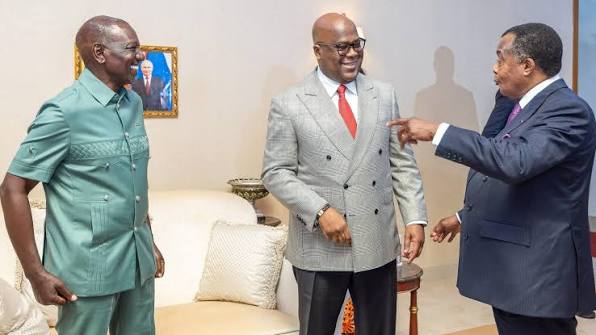
Kenya’s President William Ruto and his Congolese counterpart Felix Tshisekedi have agreed to restore full diplomatic relations between their two countries after years of tensions linked to the conflict in eastern Democratic Republic of Congo. The agreement was announced in a joint statement following a summit held in the town of Oyo in Congo-Brazzaville on Sunday.
The meeting was facilitated by the President of Congo-Brazzaville, Denis Sassou Nguesso, with Togolese leader Faure Essozimna Gnassingbe serving as mediator. In their statement, the two leaders affirmed their commitment to the sovereignty, territorial integrity, and non-interference in the internal affairs of states. They also agreed to promote good neighbourliness, the peaceful settlement of disputes, and to strengthen cooperation within regional mechanisms.
Relations between the two countries soured in 2023 when DR Congo accused Kenya of hosting leaders who were launching a rebel alliance, including the M23 group. DR Congo responded by recalling its envoy to Nairobi. The situation worsened when Kinshasa refused to accredit Kenya’s nominated ambassador. Tensions were further stoked in March 2025 after Kenya named a consul-general to Goma, the capital of North Kivu, shortly after the city fell to M23 forces. DR Congo said the move amounted to disrespect for its territorial integrity.
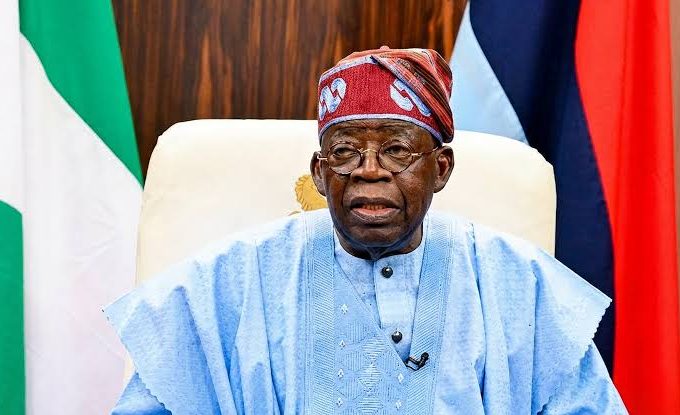
READ MORE: Tinubu Admits He Does Not Know the Pain of the Market, Says He Is a Comfortable Man While Nigerians Starve
The relationship deteriorated even further after Kenya hosted a meeting of Congolese opposition figures in October 2025, including former President Joseph Kabila. Kabila has since been named the leader of a new rebel coalition, the Front for the Refoundation of the Nation, which took over from the Congo River Alliance.
Sunday’s meeting between Ruto and Tshisekedi also covered other issues, including deepening trade cooperation, economic development, and regional integration. The two leaders also sought to collaborate to control the spread of the Ebola virus. The head of the World Health Organization, Tedros Adhanom Ghebreyesus, said on Sunday that the frequency of attacks across eastern DR Congo had increased since the end of October, seriously affecting the Ebola response. He noted that heavy fighting in an area close to where the outbreak first emerged had disrupted work and the wider response.
More than 5,700 people have died and 11,000 have been infected with Ebola in DR Congo since the outbreak was declared in May. The latest outbreak, caused by the Bundibugyo species of the virus, has spread beyond DR Congo’s borders, with cases reported in Kenya, Uganda, and Nigeria.




 West Africa WeeklyNovember 23, 20262 Mins read5

Leave a comment