







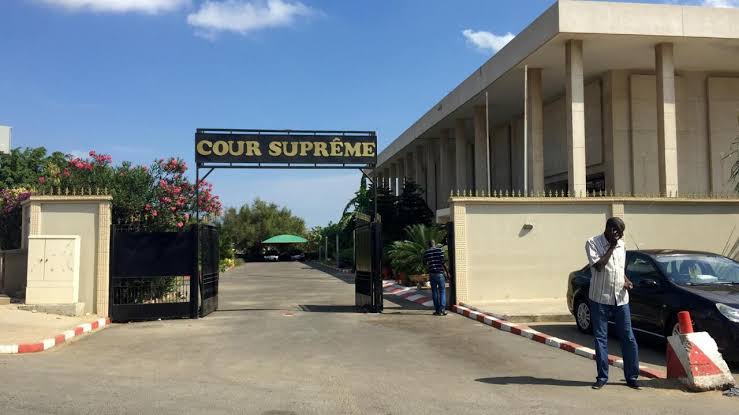
The senior investigating judge at the Dakar High Court has formally closed the judicial inquiry into a transnational child exploitation network linked to a French national, Pierre Robert, and referred all fourteen accomplices to the Criminal Chamber for immediate public trial.
The development highlights the ongoing challenges West African authorities face in tackling cross-border criminal networks. The investigation, which involved collaboration between European law enforcement and Senegal’s Division of Criminal Investigations, led to the arrest of fourteen Senegalese nationals in neighbourhoods across Dakar, Kaolack and Tivaouane Peulh. Court documents indicate that Robert, a 72-year-old French citizen currently detained in France, funnelled more than 50,000 euros to local intermediaries since 2017.
To avoid detection by neighbours and local authorities, the network operated behind a fake humanitarian and educational facade, masking its activities under the guise of funding community aid projects and starting specialised educational centres. According to statements from the Senegalese National Police, this deceptive infrastructure systematically targeted more than 150 highly vulnerable children, including street youth and students aged between three and fifteen.
The local accomplices are accused of operating under direct instructions to facilitate exploitation and produce illicit recordings in exchange for financial compensation. Law enforcement discovered extensive digital evidence during the investigation. The suspects remain in pre-trial detention and face heavy statutory penalties under Senegalese law.
The final charges confirmed for the upcoming criminal trial include organised human trafficking, the rape of minors under fifteen, pimping, acts against nature, the deliberate transmission of HIV/AIDS and the possession of illicit substances.
The case reflects broader regional challenges where transnational syndicates exploit economic disparities, regulatory gaps and digital infrastructure across the continent. In various parts of East Africa, international networks have occasionally used private real estate and tourism infrastructure to evade community oversight, often gaining entry into local communities through similar promises of educational funding or humanitarian aid. Law enforcement agencies across Southern and East Africa are also increasingly encountering cases where operations are coordinated remotely through encrypted communication channels and digital platforms, complicating traditional localised policing methods. In parts of North Africa, human smuggling rings frequently target displaced or unaccompanied minors along migration routes, using coercion to enforce compliance.
In response to the growing complexity of these international networks, African law enforcement agencies are increasingly adopting cross-border strategies. As judicial proceedings move towards a public trial, regional child protection advocates and policymakers are calling for enhanced scrutiny of foreign-funded non-governmental organisations, stricter regulations on transient real estate, and increased penalties for local entities that facilitate transnational crime.
About The Author







Leave a comment