






WAEC Withholds 167,486 Results as Tinubu’s Anti-Malpractice Crusade Fails to Stop Cheating
 West Africa WeeklyAugust 6, 20263 Mins read358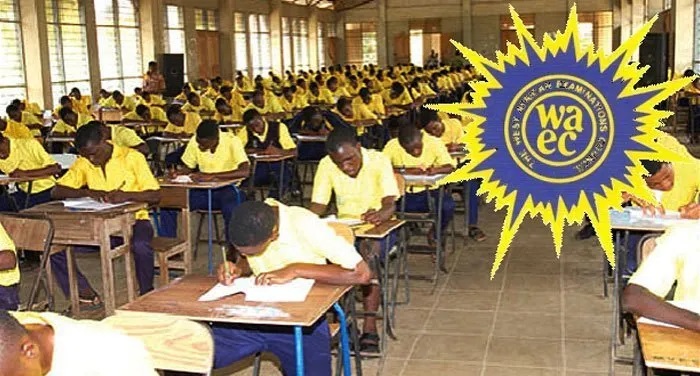
The West African Examinations Council has withheld the results of 167,486 candidates who sat the 2026 Computer-Based WASSCE for School Candidates over alleged examination malpractice, representing 8.59 per cent of the total number of candidates who sat the examination. The figure, though a slight improvement from the 9.7 per cent recorded in 2025, still means that tens of thousands of Nigerian students have had their futures thrown into uncertainty because the system President Bola Tinubu promised to fix remains fundamentally broken.
WAEC Nigeria National Office Head, Dr Amos Dangut, who announced the release of the results in Lagos on Wednesday, attributed the infractions to the increasing use of mobile phones in examination halls despite the existing ban, as well as organised cheating in some schools. He also disclosed that some supervisors and invigilators caught aiding candidates in examination malpractice had been arrested and would face disciplinary action through the relevant state ministries of education.
But the persistence of these practices, despite the government’s repeated promises to tackle examination malpractice, raises serious questions about the effectiveness of Tinubu’s education policies. In January 2025, Education Minister Tunji Alausa warned that President Tinubu’s government would not tolerate examination malpractice in schools across the country. He decried that examination malpractice had been allowed for too long, saying: “We have allowed exam malpractice to persist for far too long, and its reach has extended beyond students to include parents, teachers, invigilators, and even examination bodies themselves. This has gone on without consequence until now. Today, we say: No more”.
Yet here we are, a year and a half later, and WAEC is still withholding nearly 170,000 results over the same issues. The government’s much-touted anti-malpractice measures, including the introduction of computer-based testing and the serialisation of question papers, have clearly failed to address the root causes of the problem. The increasing use of mobile phones in examination halls and organised cheating in some schools remain “nagging issues,” according to WAEC’s own head.
The scale of the problem is staggering. A total of 1,959,668 candidates from 24,207 schools across Nigeria, Benin Republic, Côte d’Ivoire and Equatorial Guinea registered for the examination, while 1,950,726 candidates eventually sat for the tests. Of these, 1,200,514 candidates (61.54 per cent) obtained credits in at least five subjects, including English Language and Mathematics. The number of candidates who obtained credits in five subjects including English and Mathematics dropped by 1.42 percentage points compared with the 2025 examination.
But the withheld results are just the tip of the iceberg. WAEC also disclosed that 116,031 candidates, representing 5.95 per cent, have one or more of their subjects still being processed due to unresolved issues. And candidates sponsored by states indebted to the council would not have their results released until the outstanding payments were cleared. The 2025 WASSCE saw 192,089 results withheld, representing 9.75 per cent of the total. In 2024, the figure stood at 11.92 per cent.
The pattern is clear: year after year, WAEC withholds tens of thousands of results over malpractice. Year after year, the government promises to crack down. Year after year, nothing changes. Tinubu’s government has been in power for over three years. It has had ample time to implement meaningful reforms. Instead, it has presided over a system where students still cheat, invigilators still collude, and the futures of nearly 170,000 young Nigerians hang in the balance because the government cannot get its act together.
While Tinubu and his ministers lecture Nigerians about the evils of examination malpractice, the rot continues. While they inaugurate committees and issue press releases, students continue to cheat. While they pat themselves on the back for a marginal decline in malpractice cases, nearly 170,000 results are still withheld. This is not progress. This is not reform. This is the same old story, dressed up in new clothes, and Nigerians are tired of it.
The government’s failure to address examination malpractice is not just an education issue. It is a governance issue. It is a failure of leadership. It is a failure of will. Tinubu promised to fix Nigeria’s education sector. He has failed. And 167,486 Nigerian students are paying the price.
About The Author



Related Articles

Gambian Businesses Struggle Under Prolonged Blackouts as Anger Mounts Ahead of December Election
Gambian businesses are collapsing under the weight of prolonged power cuts that...

Chelle Names Osimhen, Lookman, Ndidi in 24-Man Super Eagles Squad for 2027 AFCON Qualifiers
Super Eagles head coach Éric Chelle has unveiled a 24-man squad for...
Ghana Cuts Fuel Exports to Burkina Faso and Mali to Protect Its Own Supply
Ghana’s state-owned fuel distributor BOST Energies has reduced diesel and gasoline exports...


ASUU Strike Threatens to Shut Down Federal Universities as Nigerians Accuse Media of Ignoring the Crisis
The Academic Staff Union of Universities is on the verge of a...
Leave a comment