




Nearly 200,000 Nigerians Access Pension Savings Early Following Unemployment Under Tinubu Administration
 West Africa WeeklyJune 17, 20262 Mins read533
Almost 200,000 Nigerian workers have been forced to withdraw from their pension savings over the past five years after losing their jobs. This figure comes directly from the National Pension Commission, PENCOM, and covers the period from 2021 to 2025.
According to PENCOM data, cumulative beneficiaries of premature pension withdrawals stood at 180,000 by the end of 2025. These are workers who, after being disengaged from employment and remaining jobless for at least four months, accessed a portion of their Retirement Savings Accounts under the provisions of the Pension Reform Act. The Act allows such individuals to withdraw up to 25 per cent of their balance as a temporary relief measure.
The year by year breakdown shows a consistent pattern. In 2021, 40,858 workers withdrew a total of N20.86 billion. In 2022, 40,707 workers took out N27.78 billion. In 2023, 39,470 contributors withdrew N35.48 billion. By the third quarter of 2024, 23,673 workers had accessed N33.43 billion. In the final quarter of 2025, another 8,082 unemployed workers withdrew N12.11 billion. Cumulatively, since the inception of the contributory pension scheme, a total of 176,424 disengaged workers have withdrawn N134.94 billion from their pension funds.
The overwhelming majority of these cases, over 96 per cent, came from the private sector, reflecting the heavy toll of business closures, downsizing, and restructuring in that part of the economy. Public sector workers accounted for less than four per cent of the total withdrawals.
LINKS:
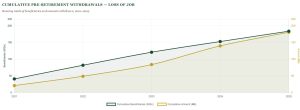
Nearly 200,000 people have had to prematurely withdraw from their pensions due to job loss over the last 5 years. These are official figures from PENCOM that demonstrate the disaster of BAT and their party yet APC folks want you to disregard this in favour of bogus macro indices. pic.twitter.com/bQDqzRRnbv
— Neto (@docneto) June 16, 2026
These numbers have raised concerns among financial analysts and labour advocates. They argue that repeated withdrawals from retirement savings could leave millions of Nigerians without adequate income in old age, especially given the country’s limited social safety nets. The trend also points to broader challenges in the labour market, where job creation has not kept pace with population growth or economic shocks.
Officials from the pension commission have noted that the withdrawal provision is a statutory right for workers who meet the eligibility criteria. They have also pointed to ongoing reforms aimed at strengthening the contributory pension system and improving investment returns. However, they have not offered a specific explanation for the rising cumulative figures over the five year period.
Some government representatives have cited recent improvements in macroeconomic indicators such as GDP growth and foreign exchange stability as signs of recovery. Yet the pension withdrawal data presents a contrasting picture, suggesting that a significant number of workers continue to face sustained hardship in their daily lives.
The figures are official and verifiable. They do not include informal sector workers who have no pension coverage at all. As such, the 200,000 figure represents only a fraction of those who have lost jobs and income in recent years. For policy makers, the data offers a clear signal that despite efforts at economic stabilisation, the recovery has not reached many ordinary citizens. Whether this translates into long term damage to retirement security remains an open question. What is certain is that hundreds of thousands of Nigerians have already made the painful choice to spend their future savings simply to get through the present.
About The Author


Related Articles

Veteran Actor Olu Jacobs Dies at 84, Nollywood Mourns the Lion of Lufodo
Veteran Nigerian actor and film executive Oludotun Baiyewu Jacobs, popularly known as...

Lagos Government and Tinubu Cause More Pain as Commuters Sleep in Traffic While Repairs Make Everything Worse
Lagos has become a city where going to work means sleeping on...

Ghana Reaffirms Withdrawal of Recognition of Polisario, Backs Morocco’s Autonomy Plan
Ghana has reaffirmed its decision to withdraw recognition of the Polisario Front’s...

Peter Obi Denies Leaving Anambra Debts, Vows to End 2027 Campaign If Proven Wrong
Presidential candidate of the Nigeria Democratic Congress (NDC), Peter Obi, has strongly...
Leave a comment