





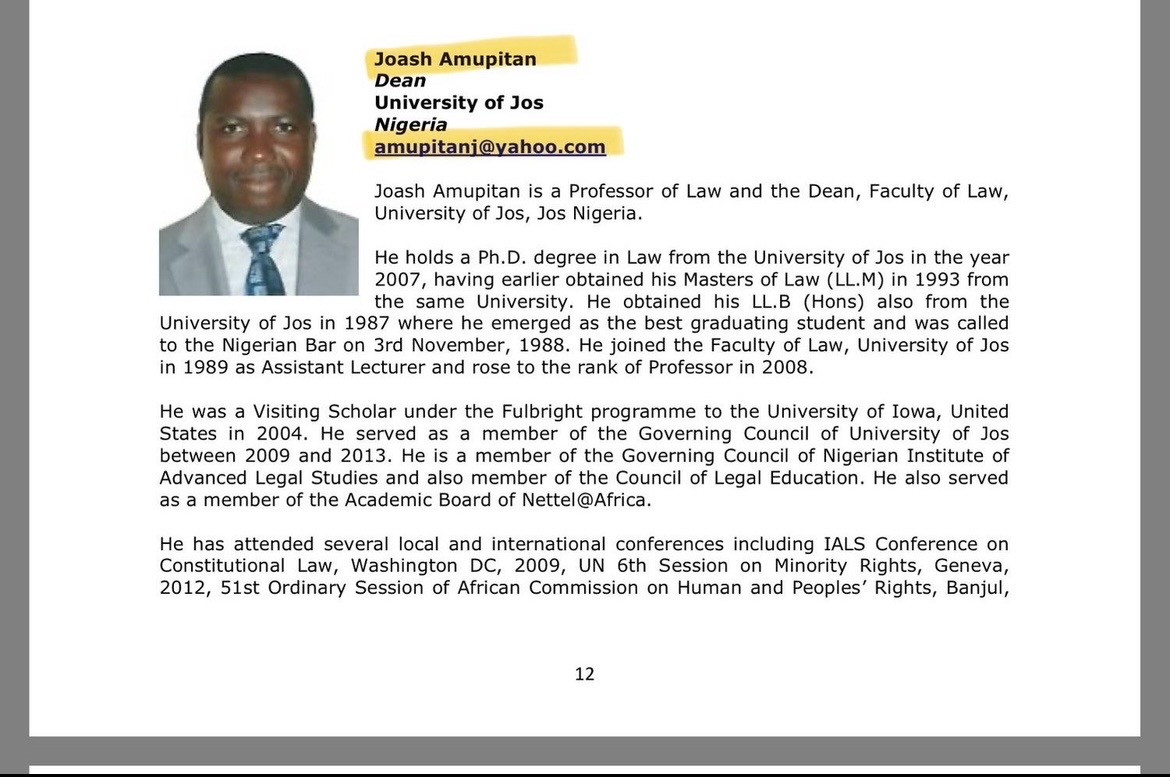
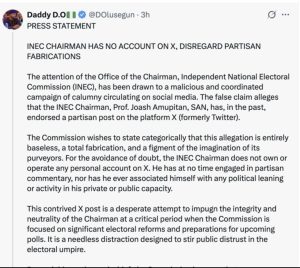
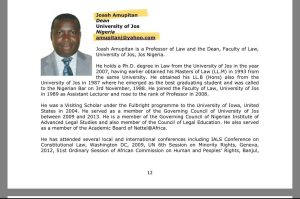
The Independent National Electoral Commission (INEC) has dismissed allegations circulating on social media linking its Chairman, Prof. Joash Ojo Amupitan, to a purported X (formerly Twitter) account associated with political commentary. INEC described these claims as false, misleading, and lacking any factual basis. In a statement through the Chairman’s media office, INEC affirmed that Prof. Amupitan does not operate any personal account on X and has never engaged in partisan political activities online. The Commission emphasised that impersonators have previously created fake accounts using the Chairman’s identity for fraudulent purposes.
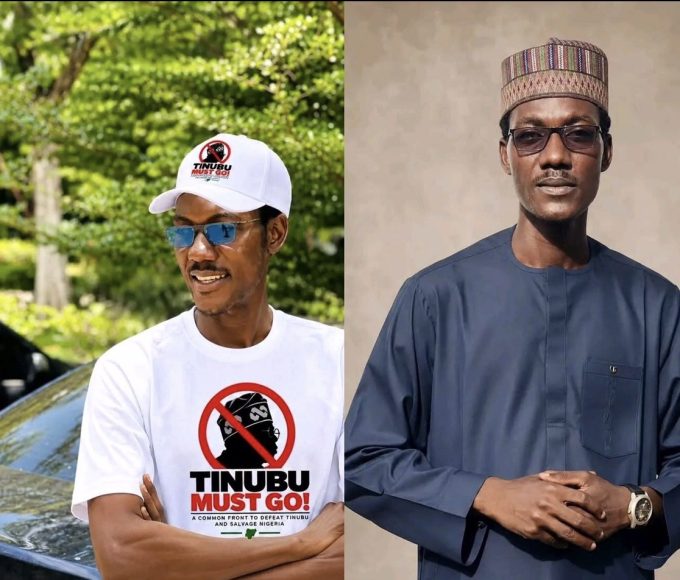
INEC added that it is working with relevant security and cybercrime agencies to identify and prosecute those responsible for identity theft and online impersonation, criminal offences under Nigeria’s Cybercrimes Act. The statement was not initially published on INEC’s official social media platforms; it was later circulated on X by the Special Assistant to the President on Social Media and the National Convener of the PBAT Media Centre through a personal account.
The denial follows online allegations that an X account under @joashamupitan was active during the 2023 election cycle with politically charged posts supporting the ruling All Progressives Congress (APC), including President Bola Tinubu’s victory of President Bola Tinubu.
One of the posts being circulated reads:
“Victory is sure.”
while responding to a post by Dayo Israel celebrating his victory at his polling unit.
“Today, I rejoice… for winning 7 of the 10 polling units in my nearby Igbo community where APC have NEVER WON… “


Beyond social media issues, INEC is also scrutinised for its handling of internal political disputes. The Commission followed a Court of Appeal directive to maintain the status quo in the ongoing leadership dispute within the African Democratic Congress (ADC), adjusting its recognition of party leadership accordingly. This occurred after prominent politicians such as Peter Obi and Kwankwaso joined the party, fueling speculation about INEC’s ties to the APC.
Legal challenges to INEC’s recognition decisions remain active, with party factions contesting its actions on the official portal. While INEC claims its operations are strictly guided by law and procedure, the interplay of social media allegations, political commentary, and legal disputes has heightened public scepticism about the Commission’s neutrality.
This controversy extends beyond individual claims, highlighting broader concerns about the formation, dissemination, and influence of digital narratives on public confidence in electoral institutions.
About The Author



Leave a comment