

What Do Countries Targeted by the United States Have in Common?
 West Africa WeeklyMarch 4, 20262 Mins read727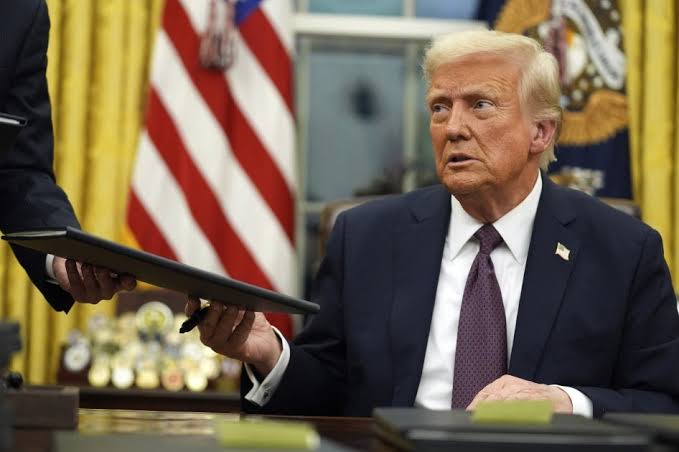
Look at the list. Iran, Palestine, Venezuela, Syria, Iraq, Nigeria, Somalia, Yemen. These are countries the U.S. has bombed, and if you step back and look at the bigger picture, a pattern starts to emerge that has nothing to do with freedom or democracy.
Just recently, President Trump said he’s open to supporting armed Iranian militias . Think about that for a second. When the U.S. can’t control a country or a region, the strategy shifts to backing militias and extremist groups to weaken things from the inside. We’ve seen this movie before. In the Sahel and beyond, groups like Boko Haram, JNIM, ISWAP, and the RSF have flourished under these conditions . The result is always the same. Chaos, division, and ordinary people caught in the middle, suffering while the powerful play their games.
And then Trump goes and suggests the United States could just invade Spain if they wanted to . Spain is a NATO ally, and he’s talking about taking their bases by force because they wouldn’t let him use them to bomb Iran. This man is going scorched earth, and it makes you wonder what exactly is driving this madness.
The answer, if you’re willing to see it, is resources. It’s always been about resources.
When the U.S. went after Venezuela, they tried to sell it as some kind of anti-drug operation. But then Vice President Vance let it slip. He actually admitted that oil was the reason . He brought up how Venezuela nationalized American oil assets years ago, as if that justifies military action. Trump himself stood at a press conference and talked about Venezuela’s oil reserves like they were up for grabs, mentioning “oil” 26 times while barely bothering with the drug talk . Experts are now calling this what it is, resource imperialism.
Then you have the Democratic Republic of Congo. The U.S. signed a minerals pact with them recently, and suddenly they’re all over Congo’s cobalt, copper, and lithium . These are the minerals that power everything from phones to electric vehicles. China already controls more than 70 percent of Congo’s mining assets, so the U.S. is scrambling to catch up . But here’s the thing. Some of these mines sit in areas controlled by rebel groups like M23. So Congo is basically telling the U.S. that if they want the minerals, they need to deal with the rebels first . It’s a dirty game, and the people on the ground pay the price.
This pattern goes back decades. Since 2001 alone, the U.S. has bombed at least ten countries under four different presidents, spending nearly six trillion dollars on wars that have killed close to a million people . Look at what happened in Nigeria. The U.S. launched strikes in Sokoto State, supposedly targeting terrorists, but locals reported that groups like Lakurawa just started hiding among civilians afterward . And Trump framed it as protecting Christians, language that only deepens religious divisions in a country that’s already fragile .
The thing is, when you strip away all the speeches about human rights and fighting terror, you’re left with the same story repeating itself. The U.S. wants control, and if they can’t have it through diplomacy, they’ll create chaos until they can step in and take what they’re after. Militias get funded, countries get destabilized, and ordinary people lose everything.
And now Trump is talking about backing armed groups inside Iran . After bombing them, after Israel struck while their council was voting for a new leader, he’s looking for factions on the ground to do the work American bombs can’t finish . It’s the same playbook. Weaken the state, arm the opposition, and call it freedom.
At what point do we stop believing the reasons they give and start seeing the pattern for what it is?
About The Author


Related Articles
Gambia Protests Turn Chaotic as Power Outages Worsen Ahead of December Elections
Thousands of Gambians took to the streets overnight in Banjul and surrounding...
Russia and North Korea Open First Road Bridge, Raising Fears of Covert Military Corridor
Russia and North Korea have opened the first road bridge linking the...

Only Two African Players Nominated for 2026 Men’s Ballon d’Or
Only two African players have been named among the 30 nominees for...

Senegal to Reprofile Debt Rather Than Restructure, Prime Minister Says
Senegal’s Prime Minister Ahmadou Al Aminou Lo has told parliament that the...
Leave a comment