






It rarely begins with soldiers.
More often, it begins with a sentence, spoken casually, almost jokingly, by a powerful Western man who knows history will not be applied to him.
“I want to buy Greenland.”
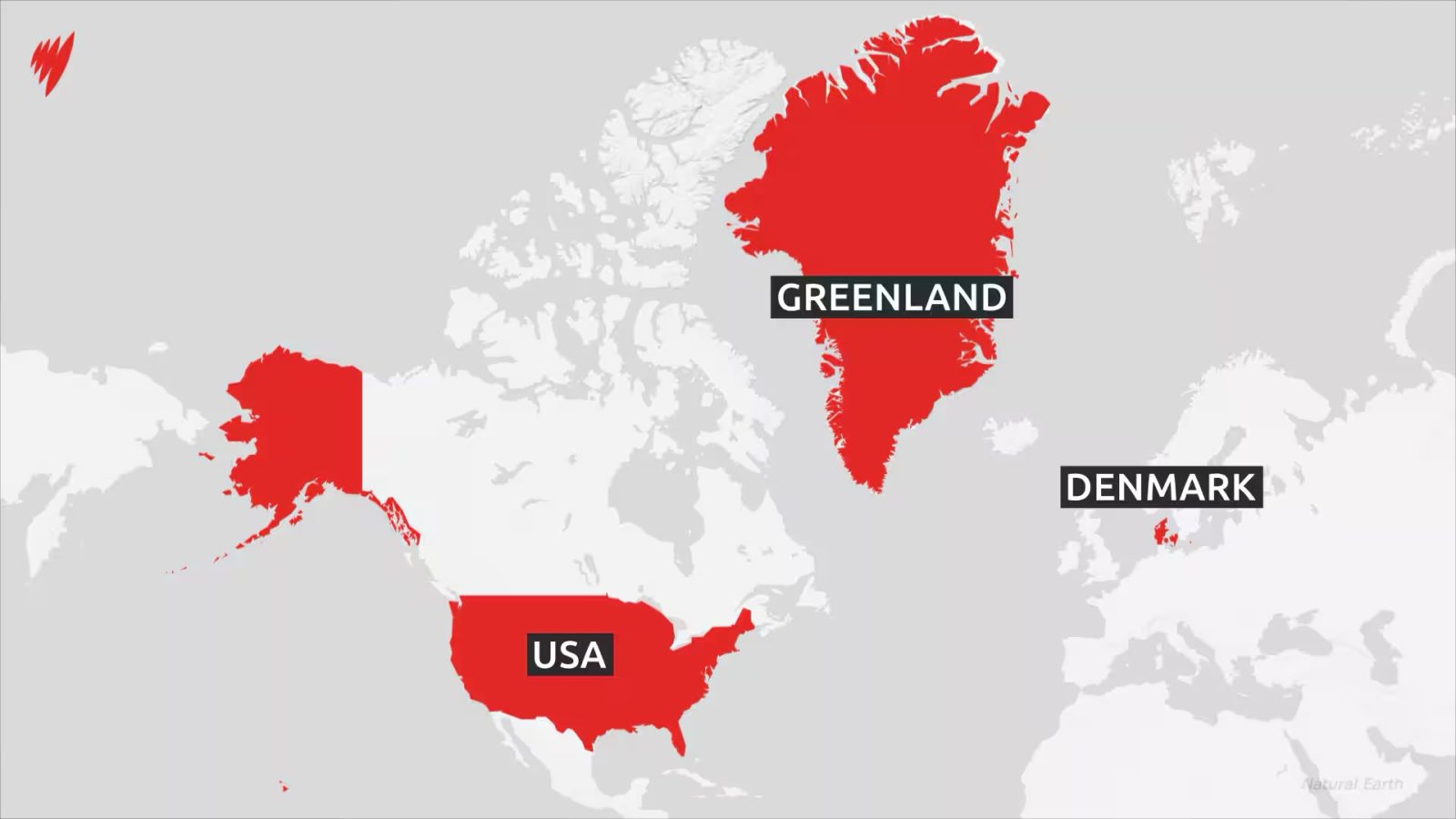
When Donald Trump suggested that the United States should take over Greenland from Denmark, much of the Western world laughed. The comment was dismissed as unserious, absurd, and another example of Trump’s political theatrics. But outside the West, among people whose histories are scarred by empire, the laughter sounded familiar.
Because colonisation does not announce itself as violence.
It announces itself as interesting.
Interest dressed up as strategy.
Interest framed as security.
Interest justified as inevitability.
Trump’s Greenland rhetoric was not an anomaly. It was a confession. A rare moment when the West said out loud what it has practised quietly for centuries, and that power entitles you to decide the fate of other people’s land.
Greenland is not empty. It is not a bargaining chip. It is home to Indigenous Inuit communities who have already endured generations of control, extraction, and paternalism, first under Denmark, now under a global Western order that treats land as valuable only when it can be exploited.
And this is where the discomfort begins.
For once, the colonial gaze turned inward. A European country, once a beneficiary of empire, found itself spoken of the way Africa, Asia, and Latin America have been spoken of for centuries. Denmark was confronted with the language of acquisition, strategic necessity, and power imbalance that Europe perfected and exported worldwide.
The West has used this language everywhere.
It was used to carve up Africa at the Berlin Conference.
It was used to dispossess Indigenous peoples in the Americas.
It used it to carve out Asia, destabilise the Middle East, and redraw nations with straight lines and crooked intentions.
Now, for a brief moment, the script flipped.
That is what colonisation feels like.
It feels like being discussed rather than consulted.
It feels like your land reduced to minerals, shipping lanes, and military advantage.
It feels like powerful Western men debating your future in rooms you will never enter, using words like “global stability” to sanitise desire.
The West has always wrapped conquest in logic.
It said the empire would bring civilisation.
It said occupation would bring order.
It said intervention would bring democracy.
And when none of those things arrived, it blamed the colonised.
What made Trump’s Greenland remarks so revealing was not their cruelty, but their honesty. There was no civilising mission this time. No humanitarian disguise. Just the blunt assumption that a stronger Western power could, and should, take what it wants.
For much of the Global South, this was not shocking. It was recognition.
The same West that redraws borders, then lectures about sovereignty.
The same West that destabilises regions, then moralises about governance.
The same West that conducts airstrikes, sanctions economies, and calls it a partnership.
Colonisation is not just history.
It is structured.
It is a habit.
It is narrative control.
Who gets to define violence?
Who gets to decide whose lives matter?
Who gets to frame resistance as extremism and obedience as cooperation?
Greenland’s leaders rejected Trump’s proposal. Denmark objected diplomatically. But the moment lingered because it exposed an uncomfortable truth: that in the Western imagination, some lands are still considered available, and some peoples still negotiable.
The difference now is that the West briefly experienced its own medicine.
For once, a European nation heard its future discussed without consent.
For once, a Western power felt the cold logic of “strategic interest.”
For once, the colonisers caught a glimpse, however fleeting, of what it feels like to be colonised.
Colonisation feels like power assuming it owns you.
Like history repeating itself with better branding.
Like realising the West never abandoned empire, it simply outsourced it, renamed it, and learned to speak softly.
And perhaps that is why the laughter was misplaced.
Because for the rest of the world, the parts the West colonised, partitioned, exploited, and lectured, there was nothing funny about it at all.
About The Author




Leave a comment