







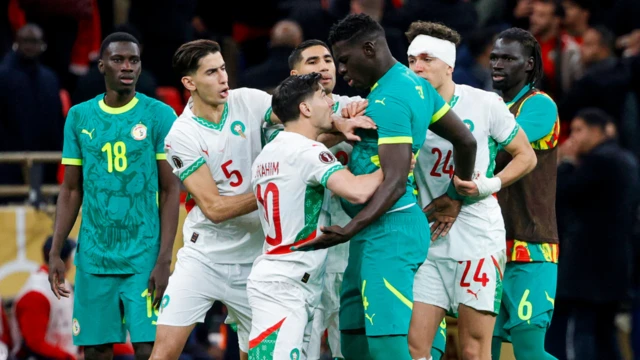
The Africa Cup of Nations final between hosts Morocco and Senegal ended with a trophy in Dakar, but left a host of unresolved questions about fairness, officiating and respect for the spirit of African football.
On Sunday in Rabat, what should have been a celebration of continental competition descended into chaos. Senegal ultimately won 1-0 in extra time, with midfielder Pape Gueye scoring in the 94th minute. But before the drama, the match was interrupted, heated and bitterly contested after a late decision by the referee and the Video Assistant Referee system. A Senegal goal that would have given them the lead was disallowed. Minutes later, a controversial penalty was awarded to Morocco following a VAR review, sparking a standoff in which Senegal’s players briefly walked off the pitch in protest. Play was halted for more than a dozen minutes before the teams returned, and the penalty was taken. Brahim Díaz of Morocco, who was clinical throughout the tournament, mishit the kick and Senegal capitalised in extra time to take the title.
CAF, African football’s governing body, described the behaviour of some players and officials during the final as “unacceptable“ and said it would review footage for disciplinary action. The Confederation expressed concern for the targeting of refereeing staff, underscoring its commitment to respect and fair play.
Amid this upheaval, complaints have also emerged about fan conduct. Video and fan reports online showed Moroccan supporters directing laser pointers into the eyes of players and even match officials during earlier tournament matches. This action contravenes the rules of CAF and FIFA and endangers safety. Laser attacks can distract and endanger keepers and outfield players alike. Yet there has been no precise public accounting of these incidents by tournament organisers or match officials, raising questions about uneven rule enforcement and the overall environment at Morocco’s matches.
Criticism of Morocco’s approach goes beyond fans with lasers. Social media and discussions from supporters and observers noted moments some described as unsporting, including attempts by Moroccan players or ball-boys to interfere with Senegal’s equipment, such as trying to remove a goalkeeper’s towel. This minor detail illustrates a bigger point about gamesmanship and the limits of fair play. These clips circulated widely and fuelled perceptions among Senegalese and other African fans that the host nation was pushing boundaries beyond normal competitive fervour.
While there is no evidence that the laser incidents directly affected the outcome of the final itself, the broader pattern raises essential questions about how match environments are managed, how organisers enforce regulations consistently and how hosts should be held accountable to the same standards expected of all competitors.
The referee calls, and VAR decisions are always open to debate. Still, they become far more combustible when they occur in a context where one side appears to benefit from home advantage, whether in crowd behaviour, stadium atmosphere or administrative oversight. Fans and commentators, online and in traditional media, have lamented that officiating at AFCON often sidelines neutral professionalism in favour of protecting hosts or placating local pressure, a trend that erodes confidence in the tournament.
Perhaps most troubling for many African football supporters is the sense that in moments like these, the spirit of pan-African competition, the idea that nations respect one another and compete on a level playing field, is overshadowed by narrow nationalism. Whether it is the assignment of referees, crowd management, or clarity around laser incidents, the perception of imbalance blindsides fans who believed in a shared African stage for excellence.
Senegal’s players and staff, visibly agitated by the late decisions, chose to express their frustration by briefly abandoning the pitch. While such a protest violates the rules, it also reflects how deep the sense of injustice had grown at the moment. Discussions now centre on whether disciplinary measures will follow and whether CAF will take stronger steps to ensure that future finals are contested with greater fairness and respect for both teams.
AFCON remains one of Africa’s most cherished sporting events, yet the Rabat final has left a bitter aftertaste. It was a showcase of athletic skill, no question. Senegal deserved praise for resilience and eventual victory. But without transparent, consistent officiating and more explicit action on fan behaviour, such as laser use, the event risks reinforcing divisions at a time when African football needs unity, respect and integrity above all.
About The Author







Leave a comment