


World Bank Praise for Tinubu Reforms Collides With 63 Percent Poverty Reality in Nigeria
 West Africa WeeklyApril 10, 20262 Mins read31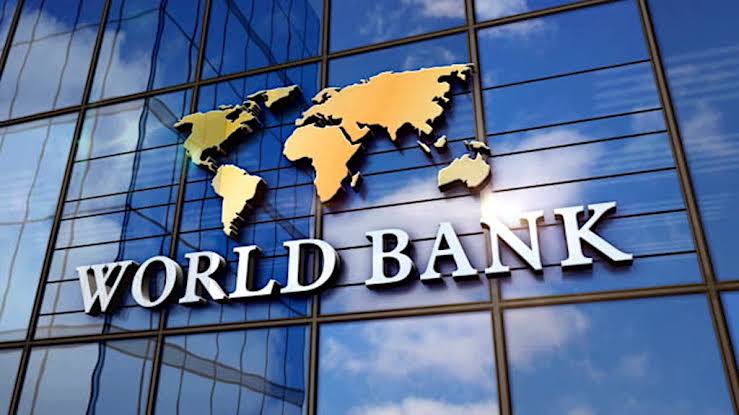
Nigeria’s economic direction under President Bola Tinubu is marked by worsening living conditions, rising poverty, and expanding debt exposure. The latest Nigeria Development Update from the World Bank confirms that poverty in Nigeria surged to 63 per cent in 2025, affecting roughly 140 million people. This represents a steady increase from 56 per cent in 2023 and 61 per cent in 2024, despite a significant slowdown in inflation during the same period.
Although inflation figures on paper appear encouraging, headline inflation falling from 34.8 per cent in December 2024 to 15.15 per cent in December 2025, with food inflation also declining, the World Bank emphasises that these improvements have not led to better living standards. Household incomes have failed to recover from earlier price shocks, reinforcing the reality that economic gains remain elusive for the average Nigerian.
The World Bank attributes the worsening poverty situation to weak job creation, low agricultural productivity, and uneven growth. Agriculture, the largest employer of Nigeria’s poor, continues to lag behind other sectors, hampering broader macroeconomic progress. The institution projects a gradual decline in poverty from 2026, potentially reaching 59 per cent by 2028, but warns that substantial progress depends on addressing structural issues in employment and productivity.
Nigeria’s fiscal strategy relies heavily on external financing. Over the past year, the government has aggressively secured billions of dollars in World Bank-related funding, alongside additional loan requests still under review. Concerns mount over large-scale borrowing for major infrastructure and sector reforms, including multi-trillion-naira commitments in the power sector. These debts, while aimed at resolving long-standing structural problems, significantly expand Nigeria’s long-term debt obligations.
The government defends these loans as vital for stabilising key sectors, supporting reforms, and bridging infrastructure gaps that domestic revenue alone cannot fill. Meanwhile, the same World Bank that highlights Nigeria’s deepening poverty crisis also lauds the country as a global model for steady and credible reform leadership, praising policy continuity and economic adjustments under the Tinubu administration. The contrast exposes a familiar tension in global financial reporting, in which institutions that fund and evaluate reforms often emphasise macroeconomic stability and policy consistency, even as on-the-ground indicators highlight worsening poverty, weak job creation, and limited improvements in living standards.
This creates a disconnect; reform progress is acknowledged in technical terms, but the social costs are ignored or downplayed. What are these reforms actually producing? Inflation is slowing, but poverty accelerates. Borrowing increases, yet structural hardship persists. This troubling combination raises urgent questions about the distribution and effectiveness of economic gains, as well as whether current reforms are sufficient to translate macroeconomic adjustments into tangible improvements for households.
Nigeria’s current trajectory under President Tinubu presents a complex reality. While international institutions recognise the momentum of reform, domestic indicators reveal a worsening poverty crisis and continued reliance on external borrowing. The gap between policy progress and the everyday struggles of millions of Nigerians continues to widen.
About The Author

Related Articles
Another Senior Military Officer Killed By Terrorists In Borno, Nigeria, As Tinubu Administration Continues Statement-based Response To Insecurity
First, Brigadier General Zurukushi was targeted. Then Brigadier General Mohammed Uba. Now,...

How the EU Uses Traineeships to Quietly Build Networks, Access, and Long-Term Influence in Nigeria
The traineeship programme run by the European Union Delegation to Nigeria and...
Nigeria DJ Association Declares Temporary Ban on Burna Boy Over Attack on DJ Tunez
The Nigerian DJ Association (NDJ) has directed its members nationwide to temporarily...

Zimbabwe’s Plan to Scrap Presidential Elections Sparks Fears of a ‘Slow Coup’
Fears are growing in opposition circles in Zimbabwe that the ruling Zanu‑PF...
Leave a comment