




Tinubu Government Claims Intelligence Cooperation With the US, Yet New York Times Publishes Conflicting Story Following $9 Million US Lobbying Effort
 West Africa WeeklyJanuary 19, 20263 Mins read698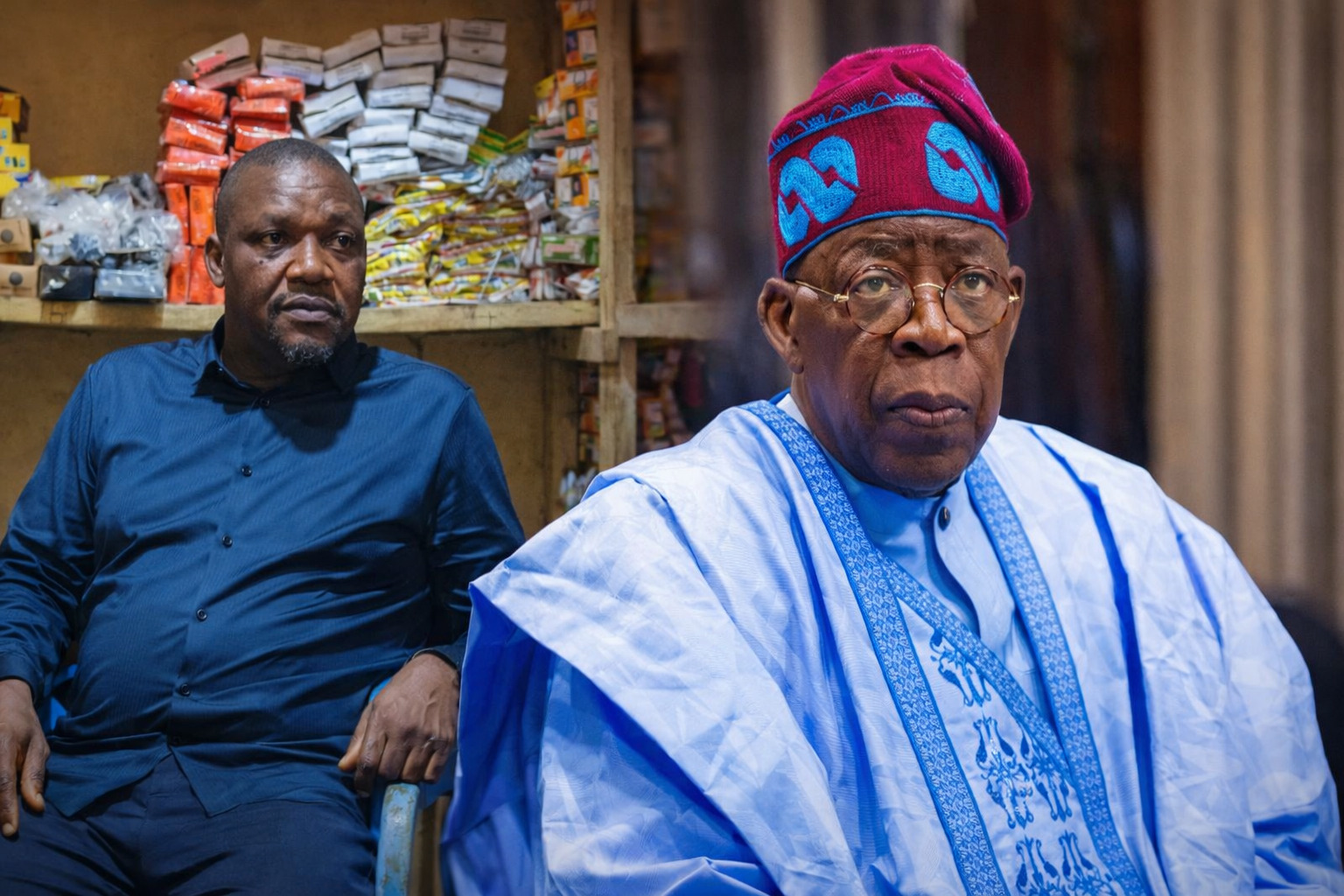
When the New York Times published its investigation suggesting that claims from a little-known civil society actor in Onitsha helped shape Washington’s perception of Nigeria and ultimately preceded US airstrikes in Sokoto, the story landed in Nigeria like an insult wrapped in disbelief. Not just because of its central character, a screwdriver trader turned activist, but because of what the fallout has revealed about the Nigerian government’s own conduct, messaging, and political instincts under President Bola Tinubu.
At the heart of the report is a troubling contradiction. On one hand, Nigeria’s Ministry of Foreign Affairs insists that the December US airstrikes were carried out at Nigeria’s request, based on intelligence cooperation between sovereign states. On the other hand, the international narrative that took hold, amplified by US political actors and now documented by the New York Times, leans heavily on unverifiable claims of a “Christian genocide” in Nigeria. Claims traced back not to Nigeria’s security agencies, but to advocacy reports produced from a private home in Onitsha.
Instead of forcefully dismantling that narrative at the global level, the Nigerian state appears to have chosen a more familiar path: deflection inward and blame outward. And once again, the Igbo have found themselves subtly positioned as the problem.
The framing is telling. The subtext of the discourse is not simply that the genocide claims are flawed, but that they are the work of an Igbo activist, conveniently divorced from the reality that insecurity in Nigeria cuts across religion, ethnicity, and geography. Bandits kill Muslims in Zamfara. Terrorists attack Christians in Plateau. Farmers and herders die in Benue and Kaduna alike. Yet the international narrative being allowed to stand, and in some quarters quietly encouraged, reduces a complex national tragedy into a religious script with an ethnic undertone.
This is where the Tinubu government’s silence becomes complicity.
Rather than clearly challenging the foundations of the genocide claim, Nigeria’s response has oscillated between defensive press statements and muted outrage. There has been no sustained diplomatic offensive to correct the record, no transparent breakdown of the intelligence that led to the strike, and no public reckoning with how Nigeria came to be discussed in Washington as a failed protector of religious minorities.
And yet, we know the government has not been idle. Reports confirm that Nigeria spent about $9 million on lobbying and public relations efforts in the United States to reshape its image, particularly around religious freedom and security. Which raises the unavoidable question: if this is the outcome, if the global conversation still paints Nigeria as a theatre of unchecked religious slaughter, then what exactly was that money spent on?
This is not just about optics. It is about politics.
Peter Obi’s shadow looms over this conversation, whether the government acknowledges it or not. Since the 2023 elections, Obi has enjoyed sustained goodwill among sections of the international community, particularly as a symbol of a different Nigerian politics rooted in accountability and restraint. For a government already hypersensitive to narratives of legitimacy, the emergence of a story that places an Igbo civil society actor at the centre of a global security controversy feeds into an old and dangerous reflex: delegitimise, ethnicise, and discredit.
Instead of confronting the uncomfortable reality that Nigeria’s insecurity problem is being misunderstood abroad, the response risks sliding into the familiar trope of “who is embarrassing the country,” rather than “why is the country so easily misrepresented.”
The irony is hard to miss. A government that insists it is firmly in control of national security is now reacting to a story that suggests foreign powers can be nudged toward military action by unverified reports and domestic advocacy. If that perception is false, then it deserves an immediate, detailed, and confident rebuttal backed by facts. If it is even partially true, then it represents a damning indictment of Nigeria’s intelligence diplomacy.
What is clear is that scapegoating, whether explicit or implied, solves nothing. Turning this into another Igbo problem will not erase the reality of terrorism, banditry, or state failure in parts of the country. It will only deepen mistrust and reinforce the idea that the Nigerian state responds to crisis not with clarity, but with politics.
So yes, the question must be asked plainly, without euphemism and without fear.
So this is the propaganda the Tinubu government spent $9 million on?
Nigeria is still struggling to control the narrative about its own security—a government that reacts more sharply to perceived embarrassment than to the problem’s roots. And a country once again watching ethnicity dragged into a crisis that demands honesty, competence, and leadership instead.
READ MORE: Mali’s Transition Leader Attends Swearing-In of Guinea’s President Mamadi Doumbouya
About The Author

Related Articles
Diplomatic Embarrassment Looms Over Tinubu’s Ambassadorial Appointments with Only Two Countries Granting Approval
Some countries may decline to accept several ambassadors recently nominated by the...
Mali Establishes National Observatory to Advance Peace and Reconciliation
The transitional government of Mali has launched a new national body aimed...
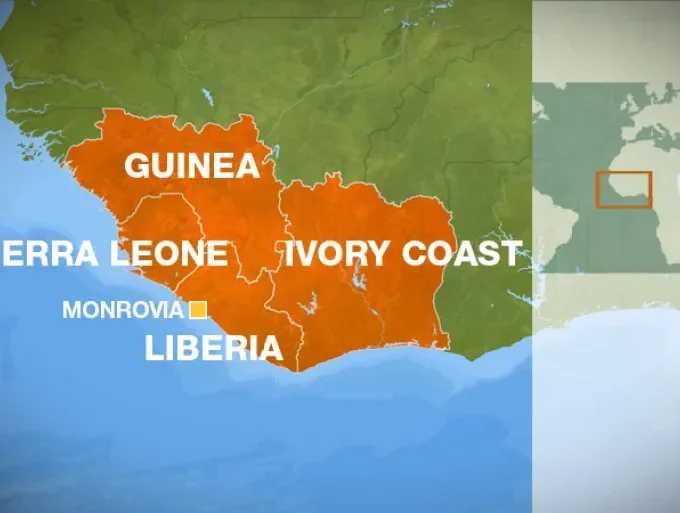
Liberia–Guinea Border Tensions Rise After Soldiers Cross Into Disputed Area
Tensions are rising along the border between Liberia and Guinea after reports...


While the West consumes raw oysters and rare steak, African foods are still labelled as dangerous
Around the globe, discussions about traditional foods are becoming more vibrant as...
Leave a comment