




Nigeria’s Unauthorized Landing Sparks Crisis as Burkina Faso Holds Troops and Plane
 West Africa WeeklyDecember 11, 20253 Mins read3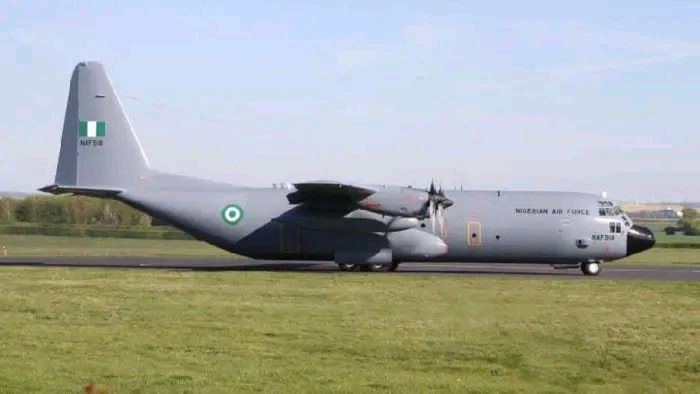
Nigeria has once again embarrassed itself on the regional stage after a military transport plane carrying Nigerian troops made an unauthorised emergency landing in Burkina Faso, triggering a diplomatic standoff and exposing the recklessness of Abuja’s actions. What Nigerian authorities now portray as a simple safety stop has, in fact, become a humiliating episode that highlights a broader pattern of poor planning and disregard for regional norms.
The incident began when a Nigerian Air Force C-130 aircraft en route from Lagos to Portugal diverted to Bobo-Dioulasso in western Burkina Faso, citing technical problems. Rather than seeking prior clearance from Burkina Faso or coordinating with regional partners, Nigerian officials entered the country’s airspace and touched down without permission. Burkina Faso, acting with its Sahel partners, immediately deemed the landing unauthorised and an unfriendly act that violated its sovereignty. National security forces detained the 11 personnel on board while authorities sorted out the matter, which was understandably alarming to them.
For Nigeria, this episode should serve as a wake-up call. Instead of taking responsibility for its blunder, Abuja has offered a weak explanation about technical concerns and compliance with international aviation standards. This response falls far short of the clarity and accountability expected from a country that claims to be a leader in West Africa. A simple precautionary landing made without authorisation is not just a bureaucratic oversight. It is a diplomatic faux pas that could easily have been avoided if Nigerian leaders had respected regional procedures or communicated effectively with Burkina Faso before attempting to enter its airspace.
The political climate in the region makes Nigeria’s error all the more glaring. Burkina Faso, Mali and Niger have formed the Alliance of Sahel States in opposition to the Economic Community of West African States. These countries have repeatedly criticised Nigeria and others for what they see as intrusive policies and an overbearing approach to regional leadership. In this environment, Abuja’s failure to follow basic protocols has handed its critics ammunition to paint Nigeria as careless and inconsiderate of its neighbors’’ sovereignty and security concerns.
READ MORE: US Peace Talks All for Nothing as Fighting Engulfs Eastern Congo and Rebels Advance
Burkina Faso’s government was right to respond firmly. By detaining the Nigerian troops and insisting on diplomatic dialogue, Ouagadougou sent a clear message that the nation’s airspace and security cannot be treated as an afterthought by any foreign military, including Nigeria’s. Some reports even suggested that the aircraft might not be released until thorough technical and security checks are completed, underscoring Burkina Faso’s insistence on defending its territorial rights.
Abuja’s handling of the situation has also tarnished Nigeria’s claims to responsible leadership in West Africa. Just days before the incident, Nigerian forces had been involved in military operations in neighbouring Benin to counter a coup attempt. While some regional partners supported that intervention, the unauthorised landing reveals a lack of foresight and coordination that undermines any moral high ground Nigeria might claim in its efforts to promote stability.
Nigerian officials insist the personnel were treated courteously and that efforts are underway to resolve the situation through diplomatic channels. But the damage is already done. The episode has exposed a pattern of negligence by Nigerian authorities in respecting the sovereignty and security concerns of its neighbours. Instead of leadership, Nigeria has displayed a careless disregard for regional protocols that risks heightening tensions at a moment when cooperation is most needed.
This incident should not be brushed aside as a simple error. It reflects a broader failure of strategic thinking and respect for international norms by Nigeria’s military and political leaders. If Abuja truly wants to play a constructive role in West African affairs, it must start by respecting the rules of engagement, communicating transparently with its neighbours, and avoiding actions that provoke unnecessary diplomatic crises.
Until that happens, episodes like this will continue to undermineNigeria’ss credibility and standing in a region already fraught with instability and mistrust. Nigeria owes more to its neighbours and itself than careless actions dressed up as routine procedures. Regional p
About The Author

Related Articles
US Peace Talks All for Nothing as Fighting Engulfs Eastern Congo and Rebels Advance
What was presented as a breakthrough moment of diplomacy has instead become...
IMF Flags Bondholder Concerns as Senegal Faces Deepening Debt Troubles
The International Monetary Fund has acknowledged rising worries among global investors about...

AES Slams Nigeria Over Unauthorised C-130 Landing in Burkina Faso; Portugal Flight Claim Questioned
The diplomatic crisis between Nigeria and the Confederation of Sahel States (AES)...

Rubber-Stamp Senate Approves Tinubu’s Troop Deployment to Benin at France’s Order Despite Insecurity In Nigeria
Nigeria’s Senate has approved President Bola Ahmed Tinubu’s request to deploy troops...
Leave a comment