






Nigeria’s Inflation Drops to 24.48% After CPI Rebasing, Hardship Persists
 Confidence UbaniFebruary 18, 20251 Mins read1.3k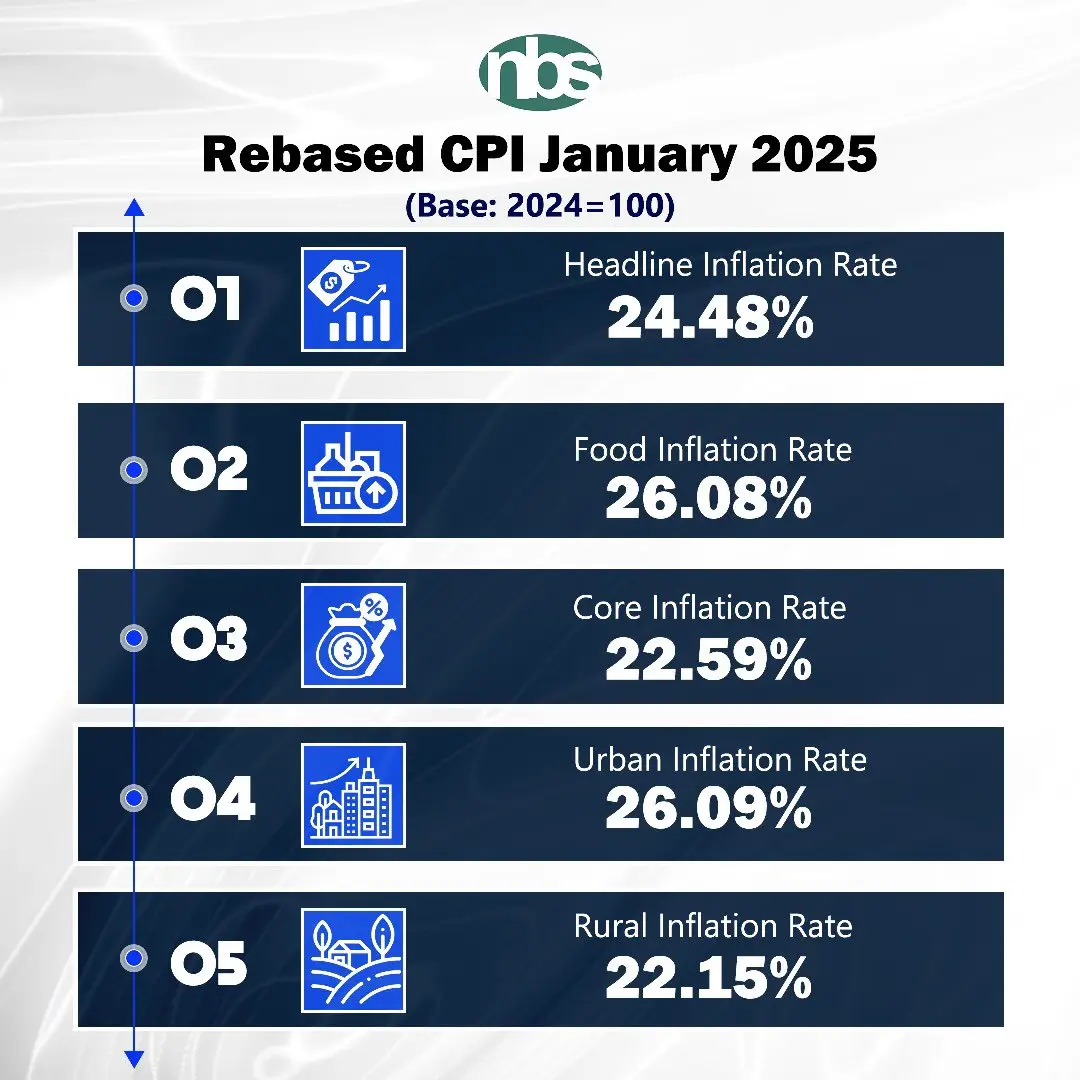
Nigeria’s inflation rate fell to 24.48 per cent in January 2025 from 34.80 per cent in December 2024. The National Bureau of Statistics (NBS) announced the drop after adjusting how inflation is calculated.
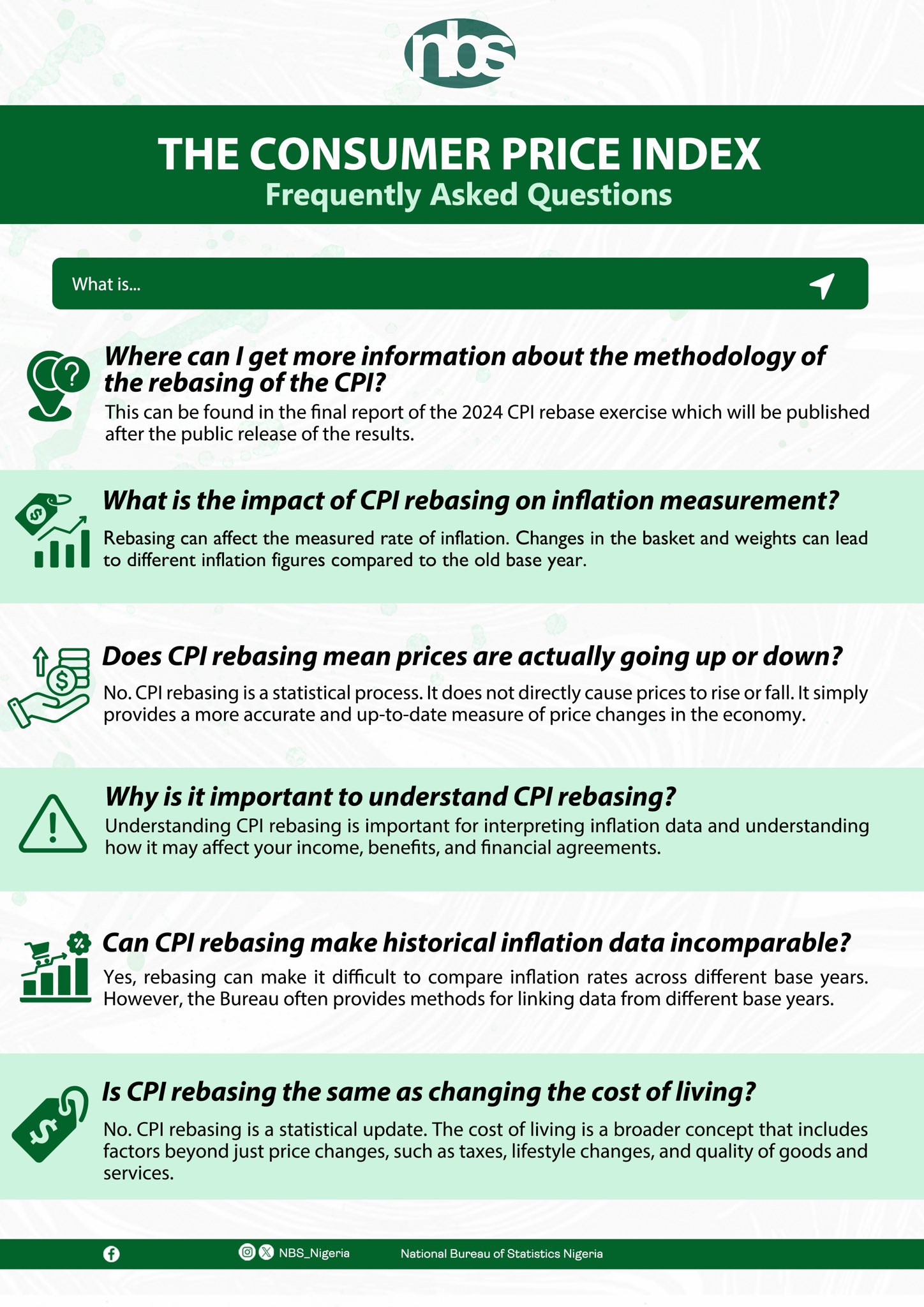
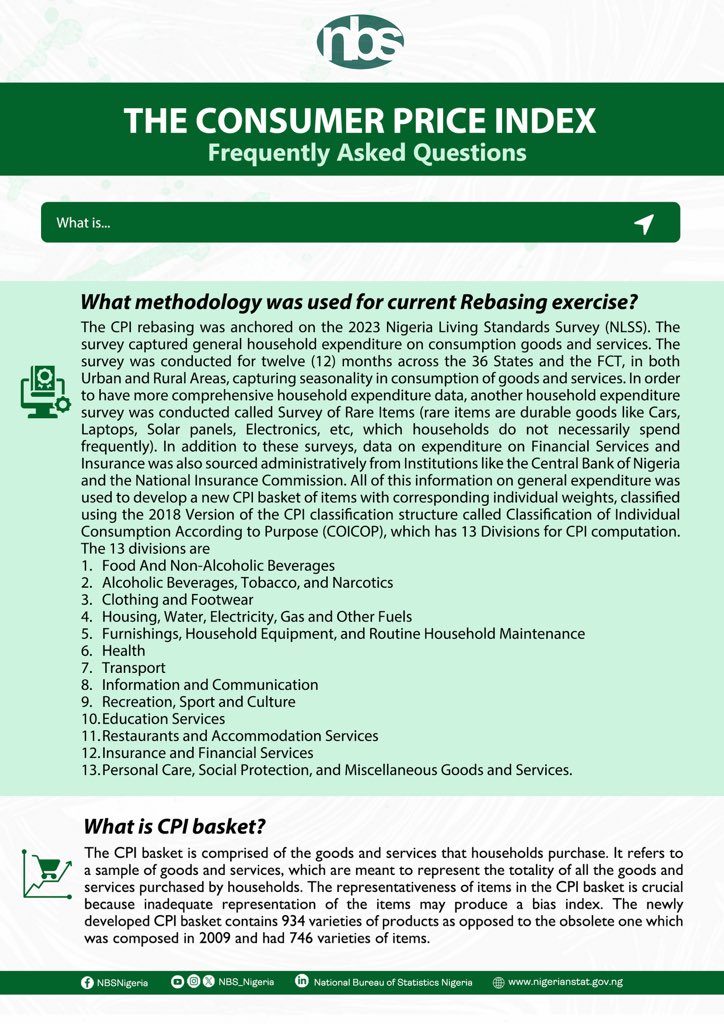
Statistician-General Adeyemi Adeniran said the new method gives a clearer picture of price changes. It updates the reference year and adjusts the basket of goods and services used to measure inflation. NBS, in a recent explanation, noted that the new figures do not imply that the cost of living is improving.
Urban inflation stood at 26.09 per cent, while rural inflation was 22.15 per cent. Food inflation dropped to 26.08 per cent from 39.84 per cent in December. Core inflation, which excludes food and energy prices, fell to 22.59 per cent.
Adeniran said price increases were mainly driven by food, transport, and accommodation services. The NBS will publish new indices to track farm produce, energy, services, goods, and imported food.
Despite the decline in the inflation rate, millions of Nigerians continue to struggle with soaring living costs. The removal of petrol subsidies in 2023 sent transport and food prices soaring, pushing more people into poverty. A sharp currency devaluation has contributed to the hardships, as imported goods and essential commodities are more expensive.
Many small businesses have shut down, while those still operating face higher production costs due to rising fuel and electricity prices. In July 2023, President Tinubu’s government declared a state of emergency on food insecurity and promised interventions to lower food prices. However, insecurity, poor infrastructure, and extreme weather have disrupted agricultural production and kept food prices at an all-time high.
Electricity tariffs, healthcare costs, school fees and telecommunications tariffs have also risen, further straining households. Although the government has introduced palliative measures in the past, it has done little to ease the burden on ordinary Nigerians.
Read More: Manufacturers Association Says “Sector Is on Its Last Breath,” Tells FG to Stop Interest Rate Hikes
About The Author



Related Articles
Gambian Businesses Struggle Under Prolonged Blackouts as Anger Mounts Ahead of December Election
Gambian businesses are collapsing under the weight of prolonged power cuts that...

Chelle Names Osimhen, Lookman, Ndidi in 24-Man Super Eagles Squad for 2027 AFCON Qualifiers
Super Eagles head coach Éric Chelle has unveiled a 24-man squad for...
Ghana Cuts Fuel Exports to Burkina Faso and Mali to Protect Its Own Supply
Ghana’s state-owned fuel distributor BOST Energies has reduced diesel and gasoline exports...


ASUU Strike Threatens to Shut Down Federal Universities as Nigerians Accuse Media of Ignoring the Crisis
The Academic Staff Union of Universities is on the verge of a...
Leave a comment