






N10 Trillion Wasted in 13 Years, Yet Tinubu’s Power Sector Promises Remain Empty
 West Africa WeeklyAugust 3, 20264 Mins read341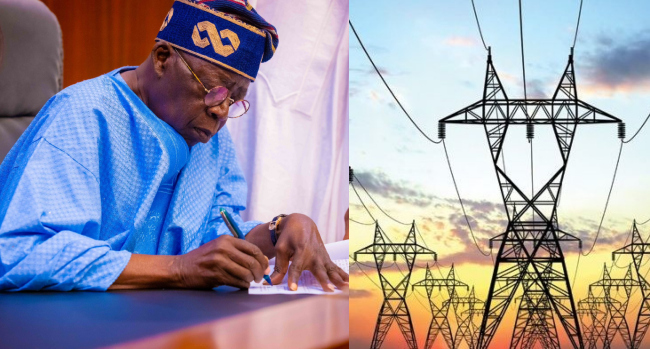
Despite more than N10 trillion poured into Nigeria’s electricity sector over the past 13 years through interventions, guarantees, metering programmes and infrastructure projects, power supply has remained largely stagnant, with average generation still hovering around 4,500 megawatts, far below the country’s estimated demand of over 30,000 megawatts. The staggering figure represents public finance that has either been frittered away or trapped in the sector value chain, yet President Bola Tinubu continues to make grand promises while Nigerians are left in the dark.
The scale of the waste is breathtaking. Since the November 2013 privatisation, successive administrations have deployed intervention funds, payment guarantees, debt settlement schemes, multilateral loans and infrastructure financing to address liquidity challenges and improve electricity supply. These include the Central Bank of Nigeria’s N213 billion Nigerian Electricity Market Stabilisation Facility, the N701 billion Payment Assurance Guarantee for generation companies, over N200 billion under the National Mass Metering Programme, N700 billion Presidential Metering Initiative, and the €2.3 billion Siemens Presidential Power Initiative. Other interventions include more than $2.4 billion in World Bank and African Development Bank-backed projects, as well as the recently launched N4 trillion Presidential Power Sector Debt Reduction Programme.
Despite these eye-watering sums, electricity generation has remained largely stagnant, only marginally above the level recorded shortly after the sector was privatised. The Nigerian Electricity Regulatory Commission’s latest report showed that in the first quarter of 2026, average available generation capacity from the 28 grid-connected power plants stood at just 4,457.96MW, while actual average hourly generation was 4,112.72MW, well below the federal government’s 6,000MW target. Minister of Power Joseph Tegbe has acknowledged that much of the sector’s previous investment has failed to deliver commensurate improvements in electricity supply, attributing the problem largely to longstanding structural weaknesses.
The liquidity crisis in the electricity market has continued to deepen. The Association of Power Generation Companies said debts arising from the government’s failure to fully fund electricity subsidies had risen to N6.2 trillion, comprising N4 trillion accumulated between 2015 and 2024 and an additional N2.2 trillion incurred in 2025. The government disputed the figure, with Minister of Finance Taiwo Oyedele claiming a verification exercise reduced verified liabilities from about N4 trillion to approximately N3.3 trillion. But even at the lower figure, the debt represents a monumental failure of governance.
President Tinubu has promised nothing short of a power revolution. He said Nigeria would generate and distribute 15 gigawatts of electricity within four years, delivering a 24/7 stable supply to homes, businesses and industries. He described reliable electricity supply as a fundamental democratic dividend that his administration is determined to deliver. He told Nigerians that the reforms would decentralise the power sector and improve efficiency across the value chain. He approved a N4 trillion bond to settle verified legacy debts in the sector. He signed the Electricity Act into law to allow states to independently generate, transmit, and distribute electricity.
Yet three years into his administration, the reality tells a different story. The national grid has collapsed multiple times, plunging major commercial centres including Lagos, Abuja and Port Harcourt into darkness. In January 2026 alone, the national grid collapsed twice. Only 10 power plants out of the country’s 28 accounted for 81 per cent of total electricity output in April 2026, while overall plant availability remained weak and national grid stability continued to operate outside regulatory limits. Despite an available generation capacity of 7,311MW as of May 2026, only an average of 4,222MW was being dispatched to consumers, leaving about 3,162MW of available generation capacity stranded and unutilised.
Energy expert Nick Agule has blamed incompetent operators for Nigeria’s electricity crisis and urged Tinubu to overhaul the sector urgently. The Nigeria Labour Congress has described power privatisation as the biggest scam, alleging that successive governments had failed to fulfil key agreements reached with electricity workers. The distribution companies are bleeding, losing N159 billion in unbilled and uncollected revenue in the first three months of 2026 alone. The grid has collapsed 105 times, according to NERC data.
Tinubu’s response has been to promise more. At his Democracy Day address, he highlighted reforms that now allow states to participate more actively in power generation, transmission, and distribution. He said the reforms are designed to decentralise the electricity market and improve access to reliable power across the country. He claimed that by the second quarter of 2026, about 45 per cent of Nigeria’s electricity market had transitioned to cost-reflective tariffs linked directly to service quality. But for millions of Nigerians who still depend on generators and candles, these are hollow words.
The question Nigerians must ask is simple: where has the N10 trillion gone? How can 13 years of investment, N4 trillion in presidential debt reduction, N2.3 trillion from the Central Bank, €2.3 billion from Siemens, and $2.4 billion from the World Bank and African Development Bank produce only 4,500MW of electricity? How can a country with installed capacity of more than 13,000MW generate only about 5,000MW that households and businesses depend on? The answer is not technical failure. It is systemic corruption, administrative incompetence, and a political class that has treated the power sector as a cash cow rather than a public good.
President Tinubu has now unveiled a comprehensive plan to reset Nigeria’s electricity sector, targeting a stronger national grid, improved power supply, universal metering and renewed investor confidence. Minister Tegbe has promised that within the next two to three years, Nigerians should experience a stronger grid, reduced technical losses, improved market discipline, greater investor confidence, expanded electricity access and significantly higher operational capacity. But Nigerians have heard these promises before. They have watched N10 trillion disappear. They have seen grids collapse and generators roar. They have paid for darkness while politicians speak of light.
The N10 trillion wasted in 13 years is not just a number. It is the cost of broken promises. It is the price of failed governance. It is the weight of a system that has failed the Nigerian people. And under President Tinubu, that system remains unchanged. The promises are bigger. The rhetoric is grander. But the results are the same. Nigerians are still in the dark, and Tinubu’s power sector revolution remains a distant dream.
About The Author


Related Articles
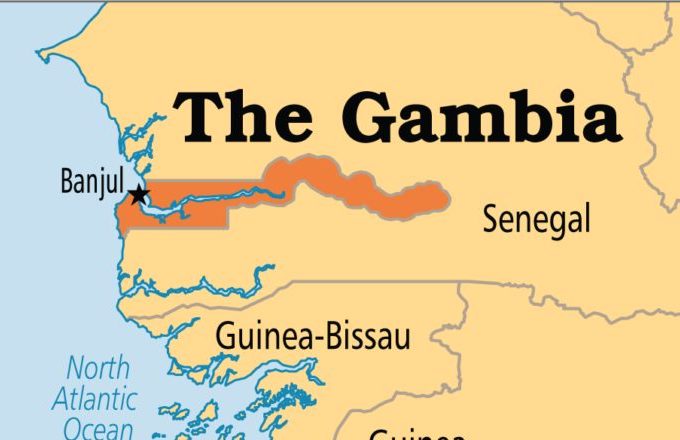
Gambian Businesses Struggle Under Prolonged Blackouts as Anger Mounts Ahead of December Election
Gambian businesses are collapsing under the weight of prolonged power cuts that...

Chelle Names Osimhen, Lookman, Ndidi in 24-Man Super Eagles Squad for 2027 AFCON Qualifiers
Super Eagles head coach Éric Chelle has unveiled a 24-man squad for...
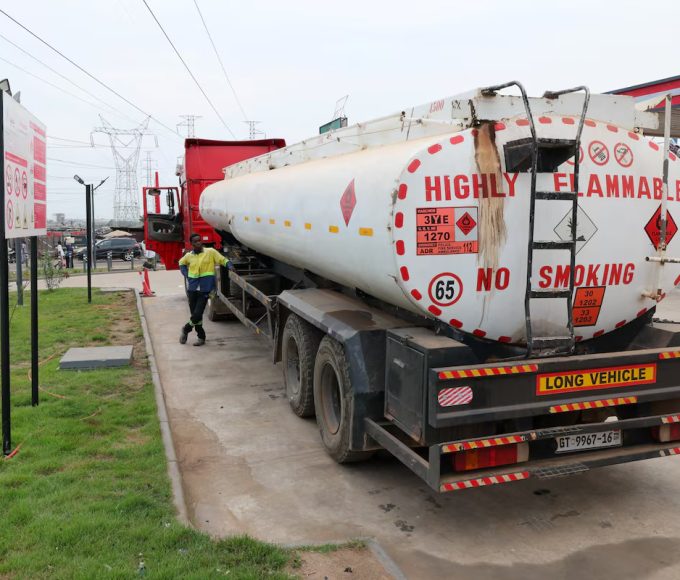
Ghana Cuts Fuel Exports to Burkina Faso and Mali to Protect Its Own Supply
Ghana’s state-owned fuel distributor BOST Energies has reduced diesel and gasoline exports...


ASUU Strike Threatens to Shut Down Federal Universities as Nigerians Accuse Media of Ignoring the Crisis
The Academic Staff Union of Universities is on the verge of a...
Leave a comment