






Ghana Sells 3.6 Million Tonnes of Lithium Owned by Australian Company to America
 West Africa WeeklyMarch 25, 20262 Mins read30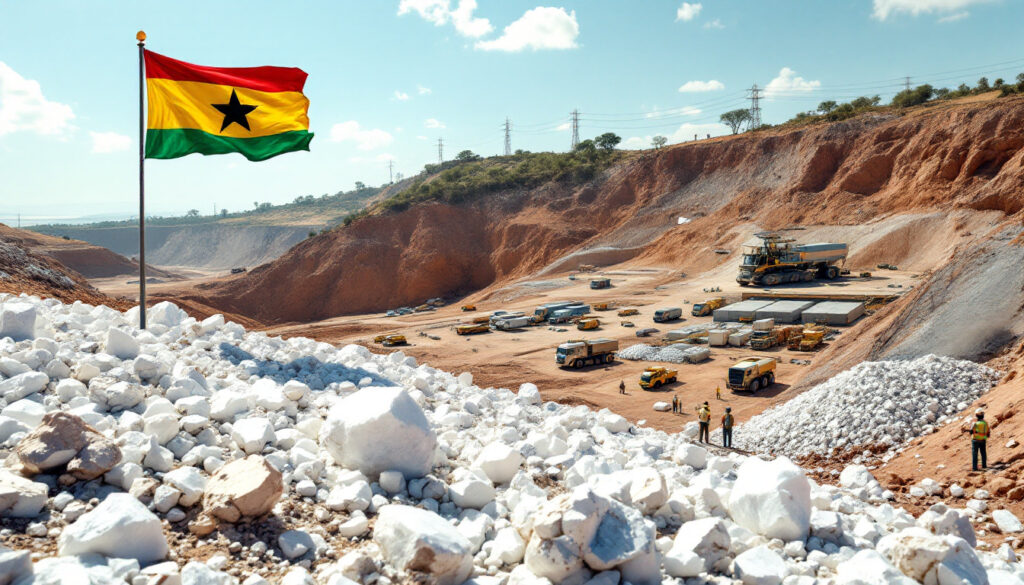
A lithium mining deal in Ghana has come under intense scrutiny after details emerged revealing that the country will receive as little as five percent of the revenue from its own mineral wealth while foreign companies lock in the bulk of the output for American markets.
The mine, which is owned by an Australian company, is set to produce 3.6 million tonnes of lithium over 12 years. Half of that output is already committed to an American company that has existing supply deals with Tesla and LG Chem, two of the world’s largest electric vehicle battery manufacturers. This makes Ghana’s lithium project the only US-bound lithium operation in all of Africa.
But the terms of the agreement have sparked outrage. Ghana’s share of the proceeds is limited to royalties ranging between five and twelve percent. With current global lithium prices sitting at low levels, the country is collecting at the bottom of that range, just five percent of the value of the resource leaving its soil. The remaining ninety five percent flows to foreign companies and shareholders outside the country.
The human cost of the deal is even more troubling. Farmers living near the mining site were told three years ago to stop planting crops because they would be resettled to make way for the mine. They were promised compensation and relocation. But to date, not a single cedi has been paid to them. Their livelihoods were halted based on a promise that has not been kept, and they have been left in limbo while the mining operation moves forward.
READ MORE: Sheikh Arrested Hours After Hosting Peter Obi, Calls It Harassment of Political Opponents
Ghanaians argue that the arrangement reflects a pattern that has played out across the continent for decades. African nations rich in critical minerals like lithium, cobalt, and copper sign deals that extract massive wealth but leave local communities impoverished and governments with little to show for the depletion of non renewable resources. In this case, Ghana is surrendering a strategic mineral essential for the global energy transition while capturing only a fraction of its value.
The deal also raises questions about the role of American companies in Africa’s resource sector. The US company securing half of Ghana’s lithium output has positioned itself as a key supplier to Tesla and LG Chem, both dominant players in the electric vehicle industry. The arrangement ensures a steady supply chain for American and Asian manufacturing while Ghana’s contribution is reduced to that of a raw material provider with no stake in the value added processes downstream.
Environmental and human rights advocates are now calling for a review of the agreement. They point to the treatment of the displaced farmers as emblematic of a broader disregard for the welfare of communities hosting mining operations. Three years of waiting with no compensation is not merely an administrative delay, they argue, but a violation of basic rights and a breach of trust.
As global demand for lithium continues to rise, driven by the electric vehicle revolution, the terms of Ghana’s first lithium mine are being held up as a cautionary tale. The country is sitting on a resource that could power its own industrial development, but instead the mineral is being shipped out with most of the profits going elsewhere.
For the farmers who stopped planting three years ago, the promise of resettlement has become a cruel joke. For Ghana as a nation, the five percent royalty raises an uncomfortable question. If a country cannot secure a fair share of its own lithium, what does it truly own?
About The Author

Related Articles
Tinubu’s Government Accused of Selling Out as EU Partnership Includes Rehabilitating Former Terrorists
A new partnership agreement between the European Union and the Nigerian government...
Tinubu Hands Another $700 Million to Convicted Money Launderer Chagoury While His Son Sits on the Board
Since President Bola Tinubu took office, one man has quietly collected more...
Algeria and Niger Move to Revive $13bn Trans-Saharan Gas Pipeline
Algeria and Niger have taken new steps toward advancing the long-delayed Trans-Saharan...


Sahel Alliance Rejects EU Resolution, Calls It Foreign Interference
The Alliance of Sahel States has strongly rejected a recent resolution by...
Leave a comment