






Burkina Faso and Niger Join Mali to Launch Retaliatory Air Campaign Against Rebel Targets
 West Africa WeeklyMay 4, 20262 Mins read1.2k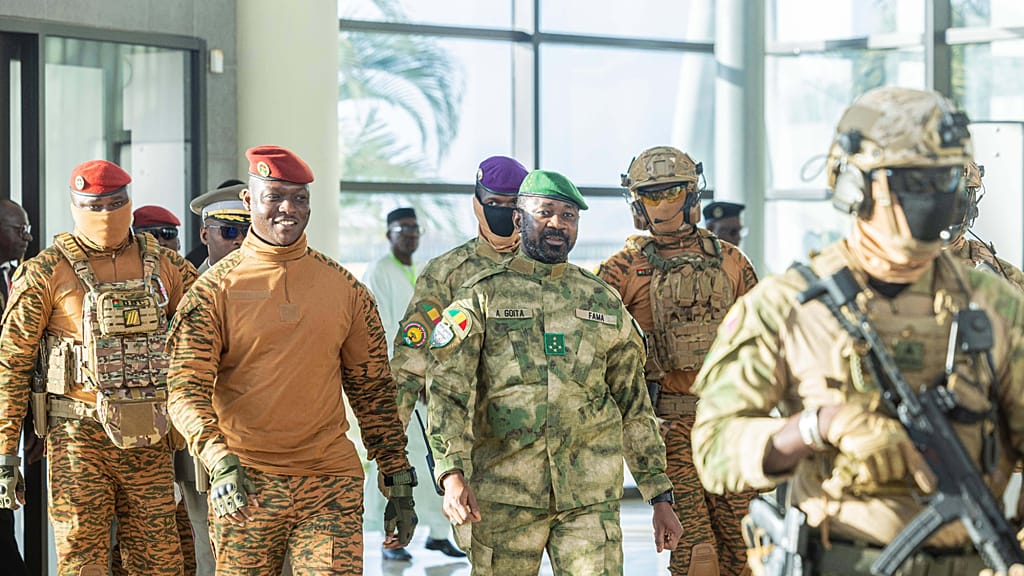
The Alliance of Sahel States (AES), a military coalition comprising Mali, Burkina Faso, and Niger, has confirmed that its joint force conducted “intense air campaigns” across northern Mali in response to a wave of coordinated attacks by al Qaeda linked jihadists and Tuareg separatists. The announcement, made by the government of Niger late Thursday, marks the first public confirmation of a large scale joint military operation since the alliance was formalized.
The air strikes were launched just hours after the weekend assaults, which targeted several cities including the capital Bamako, the northern town of Kidal, and the garrison town of Gao. The offensive is the largest in Mali in nearly 15 years and resulted in the death of Defence Minister Sadio Camara, a key figure in the ruling junta.
Niger’s government said it “welcomes the prompt and vigorous response of the units of the unified force, which conducted intense air campaigns in the hours following the cowardly attacks of April 25, 2026, in Gao, Menaka, and Kidal.” Prior to this operation, details of any joint military action between the three countries had remained unclear. However, in a show of solidarity, around a thousand people gathered in the Nigerien capital, Niamey, to express support for the Malian people, chanting slogans including “long live the AES.”
The crisis has plunged the former French colony into a major security emergency, with the AES nations all led by juntas that came to power through coups between 2020 and 2023. At the state funeral for Defence Minister Camara on Thursday, Burkina Faso Defence Minister Celestin Simpore spoke on behalf of the AES and vowed to “hunt down” the “assassins.”
The attacks on April 25 involved a coordinated effort by the separatist Azawad Liberation Front (FLA), which seeks a breakaway ethnic Tuareg state, and the jihadist group Jama’at Nusrat al-Islam wal-Muslimin (JNIM). Prior to the AES operation, FLA spokesman Mohamed Elmaouloud Ramadane had called on Burkina Faso and Niger “to stay out of the events underway in Mali.”
The AES joint force was created to fight jihadist groups and now numbers an estimated 15,000 men, a significant increase from its original 5,000, following a mid April decision by the alliance to bolster the unified force. While the immediate military threat may have been addressed, the AES’s response has intensified a broader diplomatic rift. Authorities in Niger have accused foreign powers, primarily France, of sponsoring the weekend attacks, a charge Paris denies. The air strikes thus represent not only a tactical military response but also a powerful political declaration of the AES’s self reliance and resolve to shape the region’s security architecture without external influence.
About The Author



Related Articles
Gambian Businesses Struggle Under Prolonged Blackouts as Anger Mounts Ahead of December Election
Gambian businesses are collapsing under the weight of prolonged power cuts that...
Chelle Names Osimhen, Lookman, Ndidi in 24-Man Super Eagles Squad for 2027 AFCON Qualifiers
Super Eagles head coach Éric Chelle has unveiled a 24-man squad for...
Ghana Cuts Fuel Exports to Burkina Faso and Mali to Protect Its Own Supply
Ghana’s state-owned fuel distributor BOST Energies has reduced diesel and gasoline exports...


ASUU Strike Threatens to Shut Down Federal Universities as Nigerians Accuse Media of Ignoring the Crisis
The Academic Staff Union of Universities is on the verge of a...
Leave a comment