



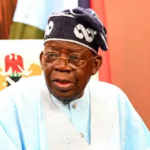

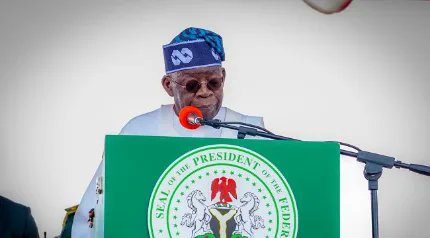
The Federal Government has announced the commencement of a N50,000 cash relief payment to vulnerable Nigerians under its National Emergency Relief and Stabilisation Intervention. The announcement, made by the Minister of Humanitarian Affairs and Poverty Reduction, Dr Bernard Doro, on October 30, 2026, has been met with widespread skepticism, as it comes just months before the 2027 general elections and after nearly three years of telling Nigerians to endure the brutal economic consequences of President Bola Tinubu’s reforms.
For years, Tinubu’s administration removed the petrol subsidy, floated the naira, and presided over inflation that pushed millions into poverty, while consistently telling citizens to endure the pain for a promised future prosperity. Now, with the election approaching, the government has suddenly discovered compassion. The African Democratic Congress described the timing as an election gimmick driven by President Tinubu’s desperation rather than any genuine concern for suffering Nigerians. The party questioned why, if the government could give N50,000 to vulnerable Nigerians, it did not factor it into its reform plans from day one rather than making it an election-season handout.
The intervention is also shrouded in confusion. While the Minister announced it as a monthly payment to millions of disadvantaged Nigerians, the programme’s official website describes it as a one-off grant. ActionAid Nigeria has demanded full transparency, asking the government to disclose the funding source, the total amount committed, and the actual number of beneficiaries. The organisation noted that supporting one million households with N50,000 monthly would require N50 billion, while five million households would cost N250 billion monthly, raising serious questions about the sustainability and budgeting of the scheme.
Furthermore, the government has failed to clearly define who qualifies as a vulnerable Nigerian. Critics have asked whether it is the unemployed graduate, the pensioner who cannot afford medication, or the civil servant whose salary barely lasts two weeks, and how the government plans to distinguish between those who deserve assistance and those who do not. The Civil Society Legislative Advocacy Centre warned the government against turning the cash assistance into an instrument of political patronage and vote buying ahead of the 2027 elections.
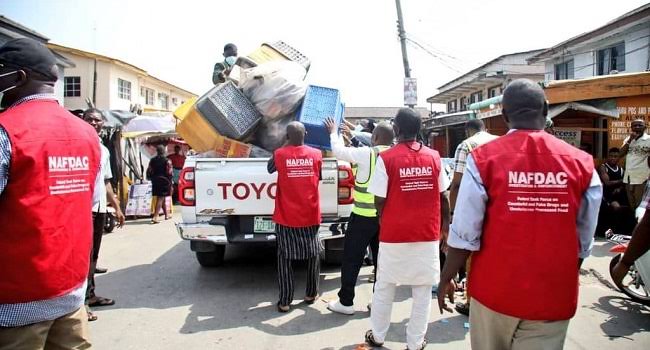
READ MORE: NAFDAC Celebrates N5 Million Fine for Fake Goya Oil Maker as Counterfeiters Walk Free
More damningly, the government’s track record on cash transfers offers little reason for confidence. The Auditor-General of the Federation flagged N33.751 billion in electronic transfers made to over 3.2 million households in 2023 because the National Cash Transfer Office failed to provide a Remita statement to verify the payments, and efforts to obtain access were obstructed by staff. The Socio-Economic Rights and Accountability Project has dragged the Tinubu administration before the ECOWAS Court of Justice over the alleged diversion and failure to account for over N78.8 billion in public funds involving the Ministry of Humanitarian Affairs and Poverty Reduction. The ADC described the social intervention programme as an organised racket and recalled the N585 million allegedly wired to a private account under former Minister Betta Edu, as well as the N44 billion reportedly missing from the National Social Investment Programme Agency.
The Allied Peoples Movement has called the N50,000 relief an attempt at vote-buying, accusing the administration of introducing various financial incentives to influence voters and discourage them from voting against the ruling government. The party recalled that the government had failed to pay six months of outstanding allowances to N-Power beneficiaries while announcing another financial support programme. The APM’s advice to Nigerians was blunt: let them collect the money and vote wisely.
What exactly is N50,000 supposed to buy in Tinubu’s Nigeria? Petrol prices have risen roughly sevenfold, food and transportation costs have followed, and the cost of basic drugs has soared. The amount is a fraction of what a family needs to survive, let alone lift themselves out of poverty.
Tinubu’s sudden generosity is too little, too late. It is a desperate attempt to buy back the goodwill of a people he has subjected to unprecedented hardship. And given the billions of naira in previous cash transfers that remain unaccounted for, Nigerians have every right to ask whether this new programme is another opportunity to divert public funds. The government cannot expect citizens to trust it with another multi-billion-naira scheme when it has failed to explain what happened to the last one.
About The Author


Leave a comment