





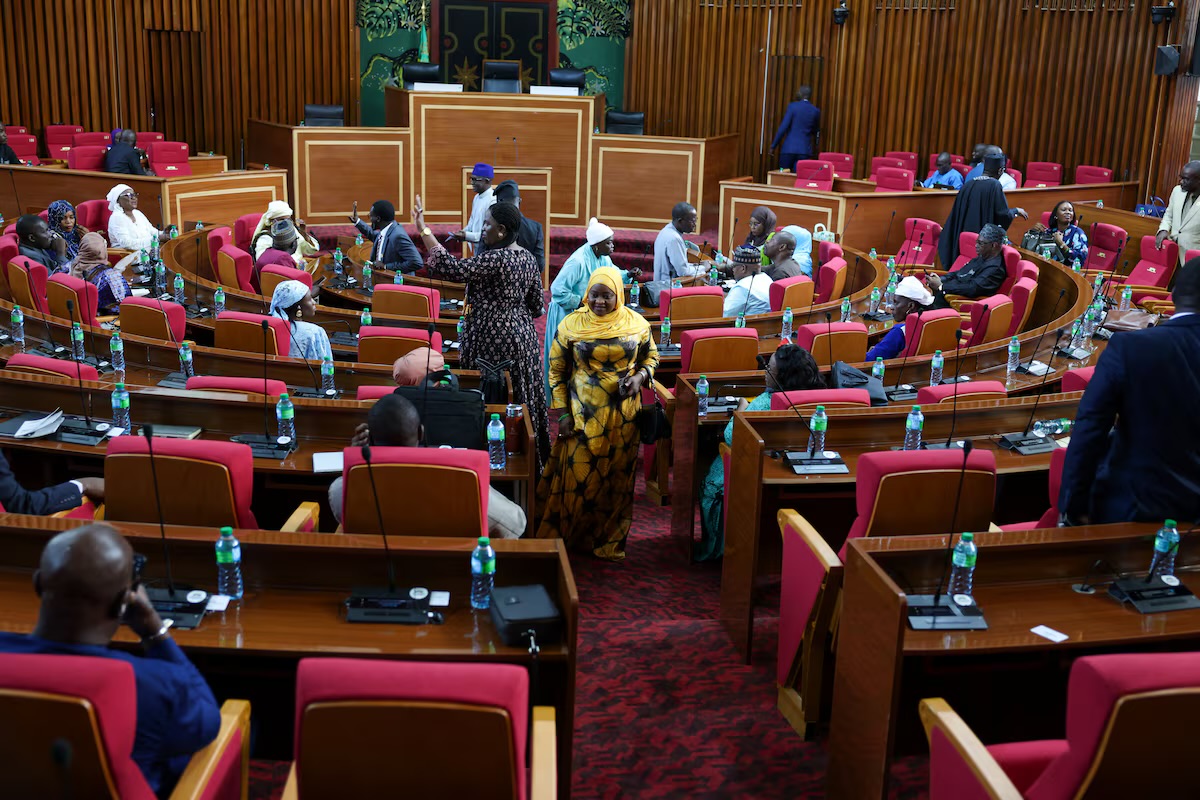
Senegal’s National Assembly has rejected a revised 2026 budget bill that was seen as crucial to finalising a $2.2 billion support programme with the International Monetary Fund, plunging the West African nation deeper into a political standoff and raising the spectre of a debt default. The bill was defeated on Tuesday by a vote of 109 to 20, with three abstentions, as the opposition-dominated parliament once again flexed its muscle against the government of President Bassirou Diomaye Faye.
The rejection is the third time lawmakers have blocked the amended finance bill, which the government has argued is essential to restoring public finances and meeting the conditions set by the IMF for a bailout programme agreed in September. The finance committee of the National Assembly had already rejected the bill twice before it came to the floor for a final vote. The powerful Pastef party, which holds an overwhelming majority in parliament, has long made clear its opposition to the budget, with its leader and National Assembly President, Ousmane Sonko, stating last month that his lawmakers would not vote for it.
The political context is a dramatic feud between President Faye and his former prime minister, Sonko, who now leads the parliamentary opposition. The two men, once allies who rode to power on a wave of anti-establishment sentiment, are now locked in a bitter power struggle that has paralysed the country’s legislative agenda. The budget rejection is the most concrete manifestation of that rift, with Pastef lawmakers accusing the government of a lack of budgetary transparency, ineffective cost-of-living measures, and a refusal to provide key documents or rationalise special funds. Another Pastef lawmaker, Ayib Daffe, said the measures aimed at combating the cost of living “do not suit us,” adding that there were “no measures planned to stabilise fuel prices”.
READ MORE: INEC’s Voter Register Is Haunted by AI Ghosts and Compromised Officials Ahead of 2027
The economic stakes could hardly be higher. Senegal is grappling with a debt burden that reached 132 per cent of GDP at the end of 2024, following the discovery of billions of dollars in misreported borrowing by the previous administration. The revised budget was designed to account for a sharp rise in hydrocarbon prices driven by tensions in the Middle East, a decline in projected tax revenue, and an increase in debt-servicing costs. It also aimed to cut real GDP growth to 2.7 per cent from roughly 5 per cent and widen the deficit to 7.6 per cent of GDP, more than double the 3 per cent ceiling set by the West African Economic and Monetary Union. To restore the accounts, the government proposed a reduction of 555 billion CFA francs ($949 million) in investment spending, a red line for Pastef, which has demanded the preservation of social investments and the protection of purchasing power.
The finance ministry has warned that the rejection comes “in a context of severely limited room for manoeuvring, difficulties in accessing financial markets and ongoing negotiations” with the IMF. Without the loan, the government has indicated that the rejection would compromise the supply of electricity, payments owed to businesses, and back pay for teachers. Finance Minister Cheikh Diba has said that if the budget law is not adopted, it poses a credibility problem for Senegal, not only with its citizens and the private sector but also with the international community. The shockwave could also threaten the economic stability of the wider UEMOA region.
For a country that was once seen as a beacon of stability in a turbulent region, the parliamentary paralysis is a stark warning. The government of President Faye, which came to power promising a break from the past and a new era of accountability, now finds itself unable to pass a budget that its own former ally is determined to block. The IMF deal hangs in the balance, the debt burden is unsustainable, and the political class is consumed by a feud that shows no sign of resolution. The people of Senegal, who voted for change, are watching their leaders fight while the economy teeters on the edge.
About The Author




Leave a comment