







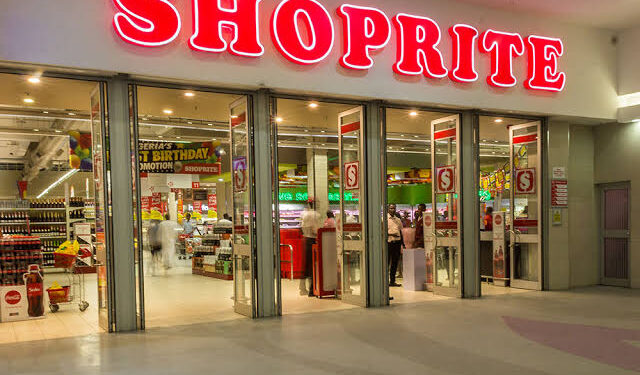
Shoprite Nigeria is planning to open standalone neighbourhood stores as it tries to revive its retail operations after financial difficulties forced it to temporarily shut down operations and abandon its traditional reliance on large shopping malls.
Adekunle Adebiyi, Executive Director of Investments at MBO Capital Management, an investor in Shoprite Nigeria, disclosed the plan during an interview on Nairametrics. He said three Shoprite stores have reopened after the company shut everything down to negotiate with suppliers and address its financial obligations. “We took a very, very drastic decision to just shut everything down whilst we negotiated with suppliers. Now three stores are back open,” Adebiyi said. He said the company would now focus on smaller neighbourhood outlets rather than depending primarily on shopping malls, a strategy he described as consistent with its original business plan.
But the shift to smaller stores is not a sign of strength. It is a survival strategy forced on the retailer by the economic crisis that has engulfed Nigeria under President Bola Tinubu.
Adebiyi identified foreign exchange volatility as a major factor behind Shoprite’s financial difficulties. About 17 of the retailer’s 28 stores had rental agreements denominated in dollars when the acquisition took place, and the depreciation of the naira subsequently increased rental obligations and placed additional pressure on operating costs. Rent should ordinarily account for about eight to ten per cent of a supermarket’s revenue, but some Shoprite locations faced substantially higher costs after the naira collapsed. Adebiyi also cited operational weaknesses, including inventory management problems and the loss of access to the former parent company’s enterprise resource planning system, which required billions of naira to replace.
The retailer also struggled to secure bank financing because Nigerian banks prefer lending to businesses with tangible assets that can serve as collateral, even though Shoprite generated billions of naira in revenue. The investors had to turn to alternative funding arrangements to complete the acquisition.
Shoprite’s troubles are part of a wider collapse. The African Democratic Congress has accused Tinubu of turning Nigeria into a “graveyard of businesses,” citing the Manufacturers Association of Nigeria’s reported 767 company closures, including 20 major global brands. The party listed Microsoft, Jumia, Bolt Food, Pick n Pay, Shoprite, GSK, Sanofi-Aventis, Bayer, Procter & Gamble, Unilever and PZ Cussons among the companies that have shut down or scaled back operations. The party said it was contradictory for the government to celebrate a marginal 0.2 percentage-point improvement in GDP while businesses were closing, jobs were disappearing and Nigerians were struggling with rising living costs.
Shoprite’s retreat has also hit Nigeria’s retail ecosystem. Analysts estimate the country’s organised mall sector at roughly N2.5 trillion, with Shoprite’s collapse potentially affecting economic activity approaching N1.4 trillion within that ecosystem. Empty malls, lost jobs and disrupted supply chains are the visible evidence of a retail giant that could not survive the economic environment Tinubu created.
The government will present the neighbourhood store plan as a restructuring success story. But the truth is simpler. Shoprite is shrinking because Nigerians cannot afford to shop in large malls anymore. The naira devaluation that Tinubu’s administration engineered has made dollar-denominated rents unsustainable, import costs unbearable and consumer spending weak. A supermarket chain that once anchored shopping malls across Lagos, Ibadan, Abuja and Port Harcourt is now retreating to smaller outlets because the economy has been mismanaged. The company has not disclosed the number of planned stores, their locations or a timeline. It has only confirmed that the model that worked for decades is no longer viable in Tinubu’s Nigeria.
About The Author





Leave a comment