







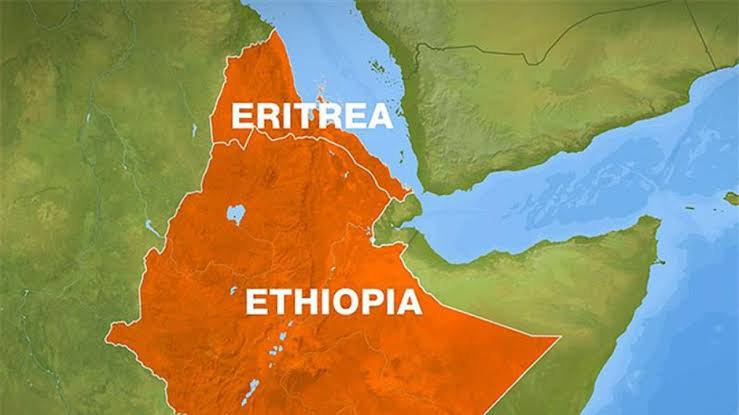
Ethiopia and Eritrea have severed diplomatic relations as renewed fighting in northern Ethiopia raises fears of a wider regional conflict. On Thursday, Ethiopia announced it was closing its embassy in the Eritrean capital, Asmara, and ordered 10 Eritrean diplomats to leave the country within 48 hours. Ethiopia accused the diplomats of activities that threatened national security. Eritrea responded by cutting diplomatic relations, saying Ethiopia’s decision left it with no choice but to take reciprocal action.
The diplomatic confrontation came hours after powerful explosions were heard overnight in the Ethiopian capital, Addis Ababa, including near Ethiopia’s military headquarters. It follows a sharp deterioration in relations between the neighbours, with Ethiopia accusing Eritrea of supporting a new rebel alliance, an allegation Asmara has repeatedly denied. Eritrea described the decision to expel its ambassador as astounding. “Eritrea has no option but to reciprocate in kind and sever all diplomatic ties with Ethiopia,” its foreign ministry said, warning of negative corollaries from the decision.
The diplomatic fallout comes as Ethiopian federal forces battle fighters from the Tigray People’s Liberation Front (TPLF) and its allies across parts of the northern regions of Tigray, Afar and Amhara. Ethiopia has also expelled an Egyptian diplomat, giving him 48 hours to leave the country, according to state media. The government has not publicly given a reason for the decision. Egypt responded by ordering an Ethiopian embassy official to leave within the same period. Relations between Ethiopia and Egypt have been strained for years, largely over Ethiopia’s Grand Ethiopian Renaissance Dam on the Blue Nile.
The cutting of ties between Ethiopia and Eritrea marks a dramatic reversal from 2018, when Prime Minister Abiy Ahmed restored relations with Asmara after two decades of hostility. The rapprochement helped earn Abiy the Nobel Peace Prize in 2019. The latest hostilities are the most serious since a peace agreement ended the devastating Tigray war in 2022. An African Union mediator previously estimated that about 600,000 people had died during that two-year conflict.
Last month, the TPLF joined six other armed movements, including the Fano militia from Amhara, to form an alliance whose stated objective is to remove Prime Minister Abiy Ahmed’s government from power. A pro-government militia commander fighting in Tigray told the BBC that Eritrean soldiers had been involved on the front lines. The BBC has not independently verified the allegation. The BBC is unable to report from Tigray and the internet has been cut, making it difficult to get reliable information from the region.
In a rare response to the BBC before diplomatic relations were severed, Eritrea’s Information Minister Yemane Gebremeskel denied that it was involved in the fighting in Tigray. He told BBC Tigrinya that Ethiopia’s governing Prosperity Party was blaming neighbouring countries to divert attention from conflicts and other problems within Ethiopia. The two countries were allies during the 2020-2022 Tigray war, when Eritrean troops fought alongside Ethiopian federal forces against the TPLF. But relations have deteriorated significantly since then, particularly over Ethiopia’s push for direct access to the Red Sea. Ethiopia lost its coastline when Eritrea became independent in 1993.
Federal forces and their allies appear to have made gains in southern Tigray and are advancing towards Mekelle, the regional capital. In Alamata, a doctor told the BBC earlier this week that at least 52 civilians had been killed during three days of intense fighting. The TPLF has also been fighting in neighbouring Afar, which lies along Ethiopia’s crucial transport corridor to Djibouti and the sea. Tens of thousands of people are estimated to have fled their homes there.
Both the Ethiopian government and the TPLF accuse the other of starting the latest hostilities. Tigrayan authorities say their forces were responding to a federal offensive and drone strikes, while Addis Ababa says Tigrayan fighters launched attacks after taking control of federally administered airports in Tigray. The African Union has urged Ethiopia, Eritrea and Egypt to exercise restraint and resolve their differences through diplomatic channels, warning against actions that could further destabilise the region. The UN has also warned that the deteriorating security situation is severely disrupting humanitarian work in northern Ethiopia.
READ MORE: Tinubu Cannot Even Speak for Himself, Nigerians Say After Edited Broadcast Exposed


Leave a comment