



Gambian Businesses Struggle Under Prolonged Blackouts as Anger Mounts Ahead of December Election
 West Africa WeeklySeptember 18, 20264 Mins read18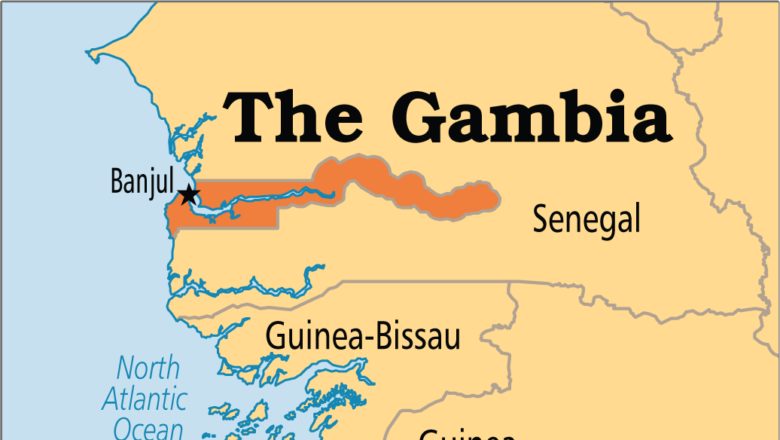
Gambian businesses are collapsing under the weight of prolonged power cuts that have gripped the West African nation since June, with the crisis reaching a fever pitch in recent weeks and sparking violent protests just months before President Adama Barrow seeks a controversial third term in office.
In the coastal town of Tanji, home to The Gambia’s largest fish landing site, Sirah Darboe-Manneh cleans fish next to a row of empty ice boxes. The 31-year-old mother of six says the outages have made it almost impossible to store the daily catch. “The customers are not forthcoming. They are not buying fish anymore because they don’t have a place to keep it,” she told AFP. The cost of ice has more than doubled since ice vendors, who often make it in home freezers, no longer have electricity. With no money for her children’s school supplies as the new academic year begins, Darboe-Manneh’s livelihood hangs by a thread. Fellow fish vendor Faraba Fatty, 58, who has 13 children, said simply: “Without electricity, we have a very bad life.”
The blackouts, which have sometimes lasted between 12 and 48 hours, have plunged the deeply impoverished country into steaming darkness at night. Businesses have shuttered, hospitals have had to rely on generators that have occasionally faltered, and residents have been scrambling to charge phones and refrigerate food. In some locations, water supply has been cut for up to 24 hours. In Sukuta, Amadou Gaye, 40, stops by his shack at the market where people use his small electric mill to grind millet for cooking porridge or the local steamed grain dish called chere. But he cannot run the machine without power. “People depend on millet for livelihood. We depend on electricity for livelihood,” Gaye told AFP. The money Gambians use to feed their families is known colloquially as “fish money,” and Gaye is now less able to buy fish from mongers like Darboe-Manneh because everything is intertwined.
The state-owned National Water and Electricity Company, NAWEC, said in mid-August that the blackouts were due to surges in demand, mainly because of high temperatures, combined with “constraints on electricity imports” and a technical incident. The Gambia has long relied on electricity imports from Senegal and Guinea to supplement its own ageing and underfunded generation capacity. Senegal has supplied mostly rural parts of the country since 2017, and Guinea joined the electricity mix through the Gambia River Basin Development Organisation network in October 2024. But supplies from both have fallen recently, reportedly over NAWEC’s unpaid bills to Senegal’s national electricity company and, in Guinea, lower rainfall affecting hydropower generation. NAWEC Managing Director Gallo Saidy also cited climate change and the war in the Middle East as contributing factors, while appealing to Gambians for patience.
The crisis exploded into the open last week when two nights of chaotic, spontaneous protests broke out in Banjul and surrounding towns. Demonstrators blocked roads, burned tyres, and chanted “Barrow must go!” as they marched toward the heavily guarded State House. In the Westfield district of the capital, police fired tear gas as crowds advanced. In Farato, protesters gathered outside the residence of Vice President Muhammed B.S. Jallow and destroyed banners at an office of Barrow’s ruling National People’s Party. A police post was vandalised and detainees were unlawfully released from custody, according to the police chief. Three branches of NAWEC were attacked, with buildings, infrastructure and office equipment severely damaged. Authorities have arrested 11 people in connection with the unrest.
President Barrow has declared the outages a “national security issue” and an emergency. During a visit to a NAWEC power station on Tuesday, he promised that new generators would arrive this week and that electricity would be restored by the end of October. He said the government was in the final stage of installing an additional 24-megawatt generation machine at the Brikama power station and had awarded a contract for a 50-megawatt solar plant in Soma. In a televised address to the nation, Barrow acknowledged the widespread hardship. “I know that the fans have stopped turning, children work in the dark, mothers throw away stale food, and the heat is unbearable by day and by night,” he said. “Let us not destroy in a moment of anger what we suffered so long to gain.” His vice president, Muhammed Jallow, said during a visit to a transmitter substation in Bijilo that Barrow has set up a taskforce that is “meeting literally on a daily basis” and that in the short term, The Gambia must make sure that “everything comes back normal” before implementing a “long-term sustainable strategy.”
But the government’s response has done little to quell public anger. On Thursday, the police chief, Inspector General Seedy Mukhtar Touray, announced a ban on all public protests without official permits, warning that “any violation to this will be met with necessary force.” The move has raised fresh concerns about the space for dissent as the December 5 election approaches.
Opposition figures say the crisis reflects deeper failures. Talib Ahmed Bensouda, mayor of Kanifing Municipality, who plans to challenge Barrow in December, told Reuters he understood why protesters were upset. “If you can’t sit in your house because of the heat. If you don’t have a generator to do basic business or even to carry out informal activities, you’re forced to take the matter to the streets,” he said. Bensouda faulted Barrow for relying too much on energy imports, leaving the country exposed to global supply disruptions. “Youths are frustrated, and I think not just about energy, they’re frustrated about a lot of things,” he said. “There’s a lack of opportunity and this is what’s driving irregular migration to Europe.”
Information Minister Ismaila Ceesay offered a formal government apology, saying officials were working relentlessly to restore stability. But for Gambians who have spent months in the dark, the promises of action ring hollow. The December election is shaping up as a referendum on Barrow’s leadership, and the government’s ability to restore power by October may be the only thing that can quiet the chants of “Barrow must go.”
READ MORE: Burna Boy to Headline Historic NFL Paris Game Halftime Show
About The Author


Related Articles
Chelle Names Osimhen, Lookman, Ndidi in 24-Man Super Eagles Squad for 2027 AFCON Qualifiers
Super Eagles head coach Éric Chelle has unveiled a 24-man squad for...
Ghana Cuts Fuel Exports to Burkina Faso and Mali to Protect Its Own Supply
Ghana’s state-owned fuel distributor BOST Energies has reduced diesel and gasoline exports...

ASUU Strike Threatens to Shut Down Federal Universities as Nigerians Accuse Media of Ignoring the Crisis
The Academic Staff Union of Universities is on the verge of a...

French Troops in Abidjan While Russian Tanks Roll Through Sahel, X User Sparks Fresh Debate on Foreign Influence in West Africa
A social media post by X user De Black Star (@niq_black) has...
Leave a comment