



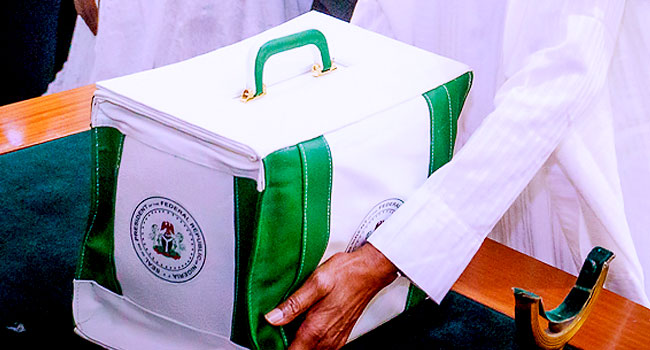
A comprehensive analysis by BudgIT, a civic technology organisation promoting transparency in public finance, has uncovered that lawmakers inserted 11,122 unvetted projects worth N6.93 trillion into the 2026 budget. The revelation has ignited widespread public anger and raised fundamental questions about parliamentary integrity and executive complicity.
The 2026 Appropriation Act, initially proposed at N58.47 trillion, was later expanded by N9.09 trillion to a final N68.32 trillion, representing the nation’s highest fiscal plan to date. However, BudgIT warned that the budget is “ambitious” and “unrealistic,” noting that it has become the long-standing, recurring norm in Nigeria over the years. The organisation stated that Nigeria’s annual budgets have increasingly become mere paper exercises, failing to deliver tangible economic development due to deeply entrenched opacity and untraceable fund releases.
The detailed breakdown of the budget insertions exposes a systemic practice of inflating micro-procurements and diverting public funds into non-developmental, highly localised constituency line items. Among the most controversial allocations uncovered are N393.29 billion earmarked across 1,477 streetlight line items, many tucked inside the capital budget of the Federal Ministry of Agriculture and Food Security. The analysis also found 538 individual borehole insertions totalling N114.53 billion, 2,122 ICT-related projects valued at N505.79 billion, and N17.23 billion allocated for 43 community town hall constructions and renovations, alongside N6.74 billion inserted for the direct empowerment of traditional rulers.
In total, 39 percent of all legislative insertions, worth over N1.72 trillion, were dumped into the Ministry of Agriculture’s budget alone, inflating its capital allocation from an initial N242.50 billion to N1.95 trillion and diverting the ministry far outside its primary mandate of food security. The analysis also revealed that N8.05 billion was allocated for the construction and furnishing of churches and mosques, projects far outside the statutory mandates of the Ministries, Departments and Agencies involved.
The government faces a fiscal deficit of N31.45 trillion, equivalent to 6.41 percent of GDP, well above the Fiscal Responsibility Act threshold of 3 percent. BudgIT stated that in practical terms, the government can only finance 53.9 percent of its budget from actual revenues, leaving 46.1 percent dependent on borrowing and loans. The organisation decried that over the years, revenue performance has remained weak in the nation’s budgeting system, coupled with a fragile public trust in governance. “Hence, effective budget execution requires not only the publication of allocations but also the timely disclosure of execution reports. In Nigeria, approved budgets do not necessarily translate into performance, as fund releases are opaque and untraceable,” BudgIT stated.
BudgIT also flagged the budget as a politically motivated, pre-election spending framework designed to maximise short-term visibility rather than long-term national value. The organisation stressed that rather than dispersing funds across numerous low-impact projects, priority should be given to critical areas such as infrastructure, education, and healthcare, where coordinated and substantial investment can unlock productivity, stimulate growth, and improve human capital outcomes. It further warned that the executive must enforce zero tolerance for extra-budgetary spending and off-book expenditures, citing the Lagos to Calabar coastal highway, which does not exist in the budget in total allocations and has historically weakened fiscal credibility.
BudgIT also raised concerns over debt servicing, which has grown from N942 billion in 2014 to N4.2 trillion in 2021, reached N12.6 trillion in 2024, and is projected to exceed N15 trillion in 2026. This means Nigeria is unlikely to escape the 50 to 60 percent band for debt servicing as a share of revenue in the near term. The organisation stated that the pace of debt growth has outstripped revenue growth, causing increasing fiscal fragility.
The scandal has renewed fierce scrutiny over Senate President Godswill Akpabio’s stewardship. Critics point out that under Akpabio’s supervision, the National Assembly expanded the budget from the President’s proposed figure to N54.99 trillion without public budget hearings or rigorous line-item auditing on the Senate floor. Responding to the findings, Senate Spokesperson Yemi Adaramodu dismissed the civil society report, labelling critics as “dark angels of falsehood” and claiming that the legislature acted within its constitutional rights to amend budget entries in the public interest. However, with the legislature defending the additions and the Executive arm quietly executing the operative budget, Nigerians are left asking who holds the legal and moral authority to enforce transparency.
About The Author




Leave a comment