






Senegal has begun the countdown to what could become Africa’s first sovereign default since Ethiopia reneged on its debts in 2023, after the government unveiled a debt treatment plan that will likely lead to the restructuring of nearly $5 billion in eurobonds.
The West African nation has been at the forefront of emerging-market bond investors’ minds since the government discovered billions of dollars of hidden debt left behind by the previous administration two years ago.A Court of Auditors investigation confirmed that former President Macky Sall’s government had understated debt and deficit figures, pegging end-2023 debt at 99.7 per cent of GDP, well above the previously reported 74.41 per cent, implying hidden borrowing of around $7 billion.The true scale of the crisis became even more alarming when S&P Global Ratings estimated the undeclared debt at approximately $13 billion, equivalent to a quarter of the country’s economy.
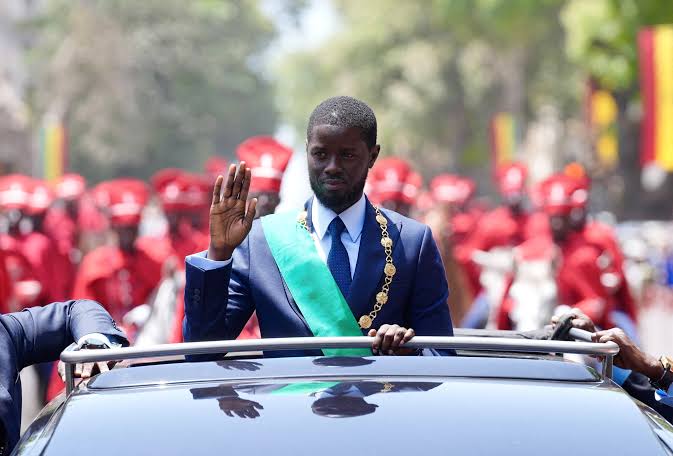
On Tuesday, September 1, President Bassirou Diomaye Faye’s government unveiled its Debt Treatment Plan for Senegal (PTDS) alongside a staff-level agreement with the International Monetary Fund for a $2.2 billion, 36-month program.The restructuring of nearly $5 billion in eurobonds under IMF supervision has effectively started the clock on a potential default, as bondholders interpret the debt reworking as a default event.
Moody’s downgraded Senegal’s sovereign rating from Caa1 to Caa2 with a negative outlook on August 28, 2026, citing the growing pressure on public finances.The debt burden is now projected at 132.3 per cent of GDP in 2026, with debt servicing costs expected to reach 5.49 trillion CFA francs ($9.7 billion) this year.Total repayments, including principal and interest, are forecast to reach 18.9 trillion francs over the 2027-2029 period.
The crisis has also triggered a political rupture at the highest levels of government. In May 2026, President Faye fired his Prime Minister and former ally Ousmane Sonko, who had opposed any debt restructuring.Disagreements between Faye and Sonko, who is now Speaker of the National Assembly, could impact the restructuring process.The political fallout has drawn attention to the broader challenge facing Faye, who came to power on promises of economic transformation and anti-establishment reform, only to be confronted with a debt crisis that has forced him to choose between populist rhetoric and national solvency.
Senegal has pledged to honor its September 13 eurobond coupon payment despite the restructuring, seeking to maintain some investor confidence even as it prepares for a broader debt rework.But with investors increasingly selling off short-dated bonds and expecting losses ahead, the question is no longer whether Senegal can avoid default, but how the restructuring will unfold.
Senegal now joins Ethiopia, which defaulted in 2023, as the latest African nation to face the consequences of unsustainable debt accumulation.For President Faye, the coming months will determine not only the country’s financial future but also his political survival. The hidden debts left by his predecessor have become his burden to bear, and the countdown to default has already begun.
About The Author




Leave a comment