



Tinubu Approves 33 New Universities While Over 20 Million Children Are Out of School and Students Are Being Kidnapped
 West Africa WeeklyAugust 5, 20264 Mins read447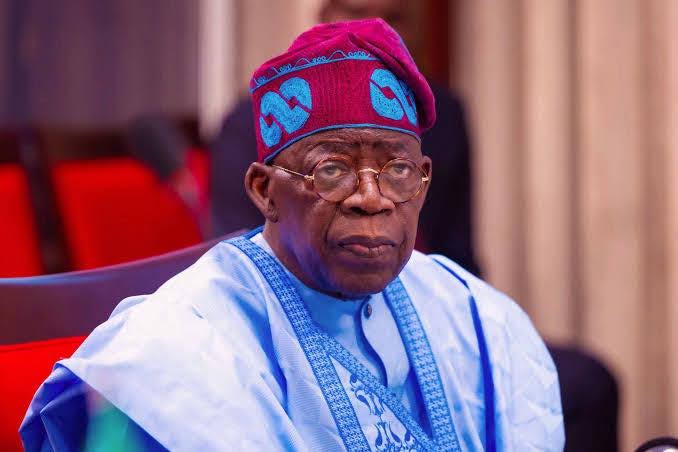
The Federal Government has approved the establishment of 33 new universities across Nigeria, increasing the total number of universities in the country to 309. The approvals include seven federal universities, six state-owned universities and 20 private universities. The decision comes just months after the same government imposed a six-year moratorium on the establishment of new tertiary institutions, citing the need to improve quality and financial sustainability. Education Minister Tunji Alausa had announced the freeze after a Federal Executive Council meeting chaired by President Bola Tinubu, stating: “We have lots of tertiary institutions, both public and private. We need to help these private institutions be sustainable financially”. Yet the government has now contradicted its own policy by approving another 33 universities, raising serious questions about the administration’s coherence and commitment to educational quality.
The approval of 33 new universities is not driven by proven need but by political pressures. Critics have argued that universities should not be established because of political or party affiliations but because of the felt needs for accelerated human capital and sustainable development. Political institutions are often established to win elections or as constituency projects for legislators. In 2025 alone, the National Universities Commission approved 33 new universities, not necessarily because of proven needs, but because of political pressures. The scale of Nigeria’s access problem in higher education is stark: over 2.3 million candidates applied for university admission last year through the Joint Admissions and Matriculation Board, yet fewer than 228,000 secured places in public universities. While new universities may increase access on paper, they do nothing to address the quality of education, infrastructure deficits, or the funding crisis that has plagued Nigerian universities for decades.
The contrast between the government’s university expansion and the state of basic education could not be starker. Nigeria currently faces the highest out-of-school children crisis in the world, with estimates ranging from 14.8 million to over 18.3 million children absent at the primary and junior secondary levels. The Federal Government has revealed that more than 20 million Nigerian children who enrolled in primary schools never made it to senior secondary education, exposing what it described as one of the country’s gravest education crises. UNICEF has warned that about 10 million Nigerian children are out of school entirely, with only one in four Nigerian children attending school able to read proficiently and perform basic mathematics by the age of 14. One in every five out-of-school children on this entire planet is Nigerian. Education experts say one of the biggest reasons is poverty, which forces parents to make painful choices between putting food on the table and keeping their children in school. Although basic education is officially free, many families still struggle to pay for uniforms, exercise books, transportation, school bags, writing materials and feeding. For households already battling rising food prices, unemployment and inflation, these expenses often become unaffordable.
While the government approves 33 new universities, students across Nigeria are being kidnapped from their schools. In May 2026, gunmen abducted 39 students and seven teachers during simultaneous raids in Oyo State. The abduction underscored a perilous expansion of Nigeria’s kidnapping crisis into regions previously considered relatively secure. Over 40 schoolchildren and their teachers were kidnapped on May 15, 2026, and were rescued unharmed on July 11 after 56 days in captivity. In July 2026, nearly 50 abducted pupils and teachers were rescued after 56 days. A week marked by escalating abductions across Nigeria targeted both Christians and Muslims, with several incidents appearing to be financially motivated. The government has approved 33 new universities while children cannot even safely attend the schools that already exist.
The cost-of-living crisis has made education unaffordable for millions of Nigerian families. Nigeria’s headline inflation accelerated to 15.93 percent and food inflation to 16.96 percent in May 2026. No fewer than 133 million Nigerians live in multidimensional poverty. Rising food prices continue to erode household purchasing power, worsen poverty and food insecurity while weakening the inclusiveness of the current reform programme. Food inflation rose to 16.96 per cent year-on-year in May 2026, driven by increasing prices of staples such as onions, maize, yam, cassava, tomatoes, pepper, wheat and plantain. Nigeria ranked lowest in the Quality of Life Index 2026, according to the latest data released by Numbeo. While Tinubu approves 33 new universities, millions of Nigerian children cannot afford to attend the ones that already exist.
The Federal Government’s education funding is woefully inadequate. In 2024, the federal education budget was N2.18tn, or 7.9 per cent of the budget, but the actual amount spent is imprecise. In 2025, the federal budget was higher, but education got less, its share shrinking to 7.3 per cent because of a policy choice that prioritised other sectors over education. The Academic Staff Union of Universities has warned that Nigeria’s public universities may be heading for another industrial crisis following the Federal Government’s failure to fully implement agreements reached with the union. Many state-owned universities are battling additional challenges such as unpaid Earned Academic Allowances, non-remittance of cooperative deductions and union dues, non-payment of annual increments and the absence of governing councils in some institutions. A vice-chancellor has decried that capital budget for the past four years given to universities is less than 10 percent. The minister of education himself has admitted that inadequate funding remains one of the major obstacles confronting tertiary education in the country.
The hypocrisy is staggering. President Tinubu’s government imposed a six-year moratorium on new universities to “improve quality” and then immediately approved 33 new universities. The government says it cannot fund existing universities adequately, yet it creates more institutions to underfund. The government says it is committed to education, yet it spends less than 8 per cent of the budget on education while UNESCO recommends 20 per cent. The government approves new universities while over 20 million children are out of school. The government approves new universities while students are being kidnapped from their classrooms. The government approves new universities while millions of Nigerian families cannot afford to feed their children, let alone send them to school.
Tinubu and his government have shown that they care more about political patronage than about the future of Nigerian children. They care more about establishing universities as constituency projects than about ensuring that existing universities have the resources to function. They care more about photo opportunities than about the safety of students. They care more about expanding the number of institutions than about expanding access to quality education for the millions of Nigerian children who are currently out of school. The approval of 33 new universities is not a victory for education. It is an insult to every Nigerian child who cannot afford to go to school, to every student who fears being kidnapped, and to every family that is struggling to survive.
About The Author

Related Articles
Gambian Businesses Struggle Under Prolonged Blackouts as Anger Mounts Ahead of December Election
Gambian businesses are collapsing under the weight of prolonged power cuts that...
Chelle Names Osimhen, Lookman, Ndidi in 24-Man Super Eagles Squad for 2027 AFCON Qualifiers
Super Eagles head coach Éric Chelle has unveiled a 24-man squad for...
Ghana Cuts Fuel Exports to Burkina Faso and Mali to Protect Its Own Supply
Ghana’s state-owned fuel distributor BOST Energies has reduced diesel and gasoline exports...

ASUU Strike Threatens to Shut Down Federal Universities as Nigerians Accuse Media of Ignoring the Crisis
The Academic Staff Union of Universities is on the verge of a...
Leave a comment