


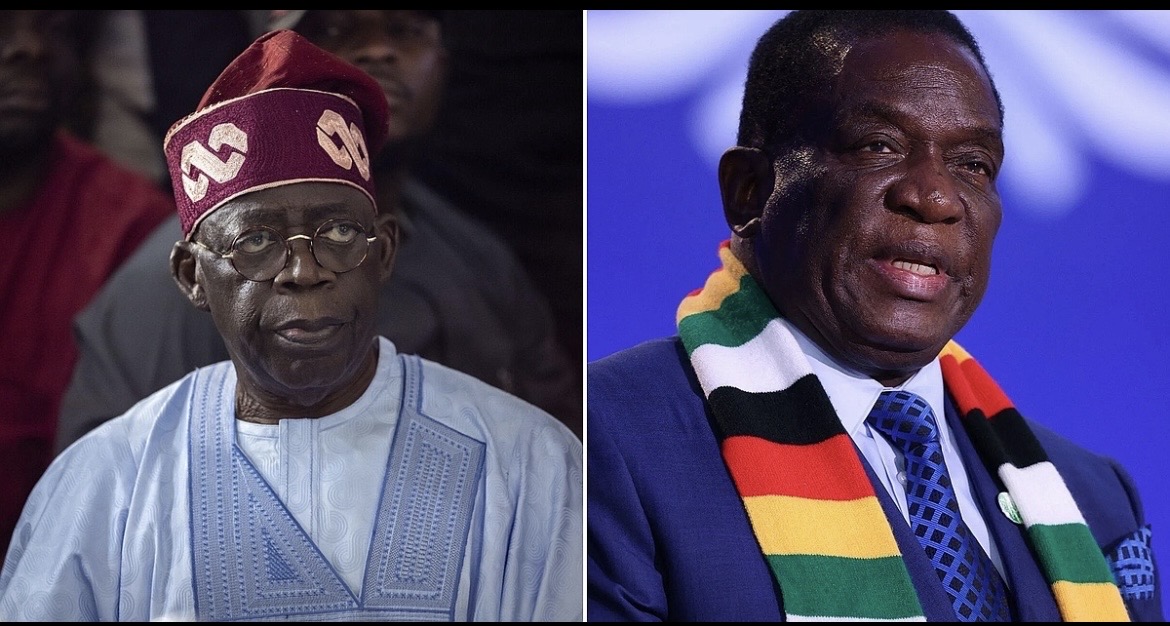
A video from election day in Nigeria showed polling stations opening hours late. Another clip from Zimbabwe showed ballot papers running out while voters waited in the sun. The two countries are separated by thousands of kilometres, but the picture looked familiar. Institutions are failing in public. Citizens watching systems collapse in real time. But the real failure is not just late openings or missing paper. It is that both countries held elections that the West declared acceptable while citizens knew the results were already decided. That is not a coincidence. It is a clue.
Nigeria and Zimbabwe tell you everything you need to know about the contradiction at the heart of this continent. Two countries sitting on extraordinary wealth, one floating on crude oil, the other on diamonds and platinum, and yet both watching their people live lives of shortage. No steady electricity. Weak healthcare systems. Unemployment. Inflation. That is not bad luck. That is a system working exactly as it was designed to work. And at the centre of that system is Western control of who gets to win African elections.
When Nigeria held its 2023 presidential election, Western governments issued pre‑emptive statements praising the process before all results were even collated. When Zimbabwe held its 2023 elections, the European Union observer mission noted irregularities but stopped short of calling the result illegitimate. In both cases, the West got the outcomes it preferred: incumbents who would keep markets open, keep debts serviced, and keep resource extraction flowing. This is not a conspiracy. It is structured.
Western nations control Africa’s electoral systems through three quiet mechanisms. First, funding. The United Nations Development Programme, the National Democratic Institute, and the International Republican Institute receive substantial Western government grants to “support” election management bodies. That support comes with technical advice, which comes with preferred vendors, which comes with digital voter registration systems that Western firms can access. When a disputed election happens, those same Western donors decide whether to call it free or fair. Second, observer bias. Election observer missions are funded by the same governments that benefit from stable, predictable African incumbents.
A mission that exposes rigging by a pro‑Western leader risks alienating a partner. A mission that exposes rigging by an anti‑Western leader becomes a headline. The double standard is so consistent that it has become predictable. Third, post‑election leverage. After the votes are counted, Western powers control the recognition, the aid flows, the debt renegotiations, and the sanctions regimes. An African leader who wins through fraud but remains friendly to Western business interests faces a mild statement of concern. A leader who wins cleanly but threatens to renegotiate mining contracts faces an international campaign.
Zimbabwe is the perfect example. The West spent two decades sanctioning Robert Mugabe and Emmerson Mnangagwa while ignoring far worse electoral fraud in countries where Western corporations held larger stakes. The problem was never election integrity. The problem was that Zimbabwe attempted land reform without compensating former colonial settlers. That was the real crime in Western eyes.
In 1884, European powers gathered in Berlin and divided Africa among themselves. No African was in the room. The borders they drew had nothing to do with culture, language, or existing political structures. They cut through kingdoms, split communities, and forced incompatible groups into the same territories while separating others who shared everything. Those decisions were not administrative oversights. They were the architecture of control, and the instability that followed, the ethnic tensions, the political fragmentation, the civil conflicts, did not happen despite those borders. It happened because of them.
What came next was extraction on an industrial scale. Gold, rubber, ivory, diamonds, and agricultural produce. All of it moved toward Europe, building the wealth of colonial powers while the labour that made it possible came from people who saw none of the returns. The colonies were not underdeveloped. They were actively drained. African countries gained independence in the mid‑twentieth century, but the economic structures established during colonisation did not disappear. They evolved into what is now called neo‑colonialism, a system where Western nations maintain economic control through financial policies, investment practices, and strategic partnerships. The pipeline did not close. It was rebranded.
Western corporations arrived, or rather never left, and set up operations in mining, oil extraction, and agriculture that prioritised profit over local development. Then came the loans. International financial institutions like the IMF and World Bank shaped the economic landscape of African nations through conditions attached to their lending. Structural adjustment programs forced many African governments to adopt policies that prioritised economic liberalisation and privatisation, leading to the dismantling of social safety nets, increased inequality, and economic dependency. The debt did not fund development. It funded dependency.
Nigeria’s version of this story runs through its oil. The country has the largest GDP on the continent and yet one of the lowest GDP per capita figures. Decades of oil revenue have produced infrastructure deficits, power shortages, and unemployment numbers that make no sense for a country sitting on that much crude. But watch what happens during elections. Western governments pour millions into “democracy promotion” while their intelligence agencies maintain quiet relationships with the same politicians buying votes in the open. The money moved, but it did not stay where the people were, and the ballots moved even less.
What keeps both countries, and much of the continent, stuck is not just external pressure. The internal political culture plays its own role. What can be proven is the de‑democratisation of elections through open vote‑buying by politicians and vote‑rigging by incumbent leaders. In such a politically dysmorphic situation, it becomes difficult to hold any single entity fully responsible for the interference and dysfunction that follows. African politicians have perfected the art of blaming outside forces for crises they helped engineer, while the outside forces that genuinely do interfere, including Western powers choosing which election results to recognise, use that blame game as cover.
The constitutional and governance systems across the continent are under threat from incumbent leaders who tamper with presidential term limits, skew wealth creation toward one side of the ethnic and political divide, and fill institutions with loyalists rather than competent administrators. Togo is a recent and vivid example. In March 2024, the Togolese parliament approved a constitutional amendment allowing President Faure Gnassingbé, whose family has ruled the country since 1967, to run for two more terms, potentially extending his presidency until 2030. This is not an outlier. It is a pattern. Leaders who come to power promising change and then spend their time engineering ways to stay. And Western capitals say little, as long as those leaders keep the contracts running.
ECOWAS, the regional body meant to hold these governments accountable, has found itself increasingly unable to enforce democratic norms. The organisation is under immense pressure following its preventive diplomacy efforts, which could not secure the return of Mali, Burkina Faso, and Niger to democratic governance. The same region that once set the standard for African democratic transitions is now watching those transitions reverse. But even ECOWAS operates under the shadow of Western financial backing. When the West wants a coup condemned, it is condemned. When the West prefers silence, silence follows.
The foreign interference that gets the most attention, Russia being the name most frequently mentioned, is real but is also a convenient distraction. The ability of foreign actors to interfere in national elections is directly dependent on the vulnerabilities created by the political elite in those nations. No outside power can insert itself into a well‑governed country with strong institutions and an independent judiciary. It finds the gaps that already exist and walks through them. The gaps in Nigeria and Zimbabwe were not made in Moscow or Washington. They were made at home, over decades, by leaders who found it more profitable to keep their countries weak. But that does not erase the fact that Western powers have spent decades building and exploiting those same gaps, especially around the question of who gets to hold power after an election.
True partnerships that prioritise African development, equity, and self‑determination are rare and must become the standard. The voices of African leaders, communities, and advocates need to be amplified to ensure that foreign investments contribute to sustainable growth and genuine empowerment, not just the profits of outside investors. That sentence sounds reasonable. It also describes something that has rarely happened voluntarily. The history of the relationship between Africa and the West is not a history of partnerships gone slightly wrong. It is a history of a deliberate arrangement that has worked exactly as intended, for one side. And part of that arrangement has always been making sure that when Africans vote, the West still decides what that vote means.
What Nigeria and Zimbabwe share, beyond their resources and their struggles, is a story about what happens when a place is never quite allowed to own itself. The land was taken. The resources were priced by others. The borders were drawn by strangers. The loans came with conditions. The elections were compromised from inside and out, but also from London, Washington, and Brussels, where the real verdict on whether an African election is “free and fair” is written. And through all of it, the continent kept being described as the problem, rather than the subject of one.
That framing needs to change. Not because Africa has no internal failures, it has many and they are serious, but because the honest account of why this continent remains poor cannot begin and end with African corruption. It has to include the full story. Who drew the borders? Who took the resources? Who gave the loans with impossible terms? Who backed the dictators when it was convenient? And who, when called out, offered a corporate social responsibility report and called it progress. Who, today, still decides which African election results are honoured and which are condemned? The same capitals that drew those borders in Berlin.
Africa is not poor. It has been kept that way. And its elections are not free. They have been kept that way too. There is a difference, and the difference matters.
About The Author




Leave a comment