








The death of a 21-year-old university student at the hands of campus security volunteers has exposed a deeply troubling pattern in Nigeria: a cycle of impunity where state security forces routinely abuse power, and smaller, auxiliary groups emulate their brutality in a dangerous game of learned violence.
Chinedu Chibuzor Christogonus, a 100-level Cyber Security student at the Federal University of Technology, Owerri (FUTO), was allegedly beaten to death on May 30, 2026, by fellow members of the university’s Man O’ War unit. According to Channels Television, Christogonus was accused of stealing N13,500, then restrained and subjected to a severe assault that proved fatal. Three students, all 500-level undergraduates, have been arrested by the Imo State Police Command.
The case did not begin in isolation. It follows a long record of abuses by the Man O’ War, a voluntary paramilitary organization that has operated on Nigerian campuses and communities for decades. In 2024, four Man O’ War officials at Rivers State University were suspended for beating a student and inflicting injuries on his eye and body. A year later, in Lagos, Man O’ War volunteers acting under alleged police instruction manhandled Yemi Adamolekun, executive director of Enough is Enough Nigeria, as she laid a wreath for victims of the #EndSARS massacre; the assault was condemned by Amnesty International and a coalition of civil society groups.
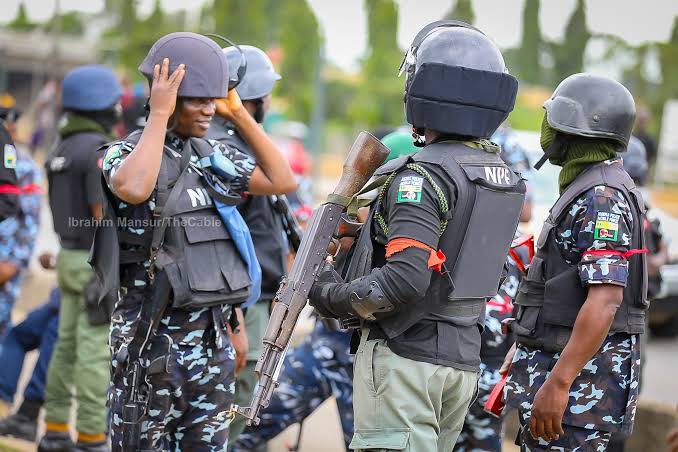
Nigerians say the behaviour of such groups is not accidental but cultivated. They operate in the shadow of Nigeria’s conventional security apparatus, where impunity has long been the norm. The disbandment of the Special Anti-Robbery Squad (SARS) in 2020 followed years of documented torture, extrajudicial killings, and extortion. Yet reports indicate that SARS’s successor, the Special Weapons and Tactical Squad (SWAT), has been accused of reviving similar brutality. In Enugu State, SWAT officers were accused of carrying out warrantless arrests, incommunicado detentions, and torture during a chieftaincy dispute. A High Court was forced to issue a sweeping restraining order against the unit to protect over 70 residents.
The drift of the military into police roles has only worsened the culture of heavy handedness. In April 2026, a young corps member, Abdulsamad Jamiu, was shot dead in his room in Abuja by soldiers who claimed he was caught in crossfire. His family insisted there was no robbery or exchange of gunfire, only that soldiers scaled his fence and fired through his door. An analysis by Punch warned that when soldiers assume policing duties, deadly consequences become almost inevitable, citing repeated episodes including soldiers killing police officers and burning down stations.
Vigilante groups, many of them poorly trained and barely supervised, have added another layer of violence. In Benue State, a corps member was beaten into a coma and killed by vigilantes who suspected him of being a motorcycle thief. A lawyer involved in the case stated that the frequent harassment, illegal detention, and assaults by local vigilantes “call to question the legality of such groups under our laws”. In Anambra State, vigilantes attacked a female corps member, tore her clothes, and tried to silence her with a N10,000 payoff.
Legal experts and activists have described the situation as systemic. Human rights lawyer Femi Falana has accused the Nigerian military of abandoning its constitutional duties and “hijacking the powers of police,” while another activist argued that the failure of the police to manage auxiliary forces has left citizens at the mercy of groups that operate as “oppressive tools” in the hands of state governors.
The FUTO case is the latest and perhaps most symbolic tragedy: a young man killed on campus by his peers who dressed in the uniform of order. His death, police say, has led to three arrests and an ongoing investigation. But the deeper fear, expressed by students who have since shunned classes, is that the hand that beat Christogonus learned its technique from a system that has rarely been held to account.
Only when the most powerful are punished will the least powerful stop mimicking their cruelty.
READ MORE: FIFA Set to Introduce Eight New Laws At Next World Cup
About The Author




Leave a comment