






They Tried to Take Kenyan Land in 1903, Now They’re Back With Vacation Homes
 West Africa WeeklyMarch 19, 20264 Mins read887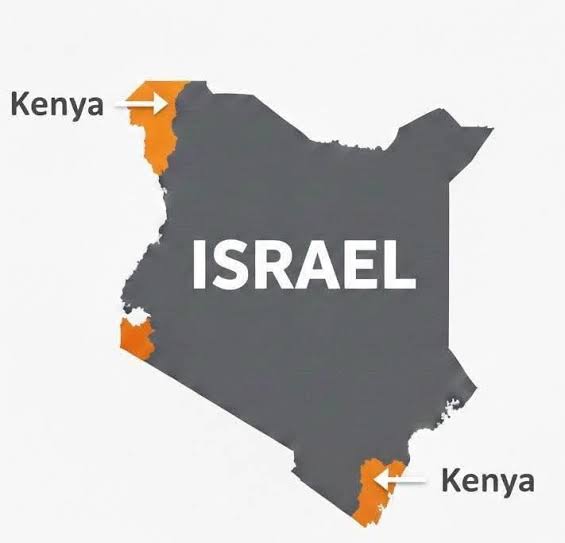
In 1903, British Colonial Secretary Joseph Chamberlain made an offer that could have rewritten the history of two continents. He proposed carving out a vast territory in what is now western Kenya, land seized from the Nandi people in the Uasin Gishu plateau, as an autonomous Jewish homeland for European Jews fleeing persecution in Russia and Eastern Europe . The plan was debated at the Sixth Zionist Congress in Basel, where it fractured the movement before being definitively rejected two years later. The Zionists held out for Palestine, and the rest is history.
More than 120 years later, that history is echoing in ways that have many Kenyans deeply alarmed.
An Israeli developer named Erez Rivkin is currently building a massive agricultural and residential project on 520 acres of land in Solai, Nakuru County, in Kenya’s Rift Valley. The Great Rift Valley Retreat features greenhouses, irrigation infrastructure, food production facilities, and plans for residential plots, a mall, medical facilities, a school, infinity pools, and hospitality services. Plot prices start at 1.9 million Kenyan shillings, about $14,775, and the project is marketed to both local and diaspora investors.
Rivkin has described Solai as “a dreamland” where Israelis would like to integrate with Kenyans, particularly young people. “It’s not just a view of Lake Solai and some quiet,” he said. “So, we will create a community of Israelis and Kenyans”.
That talk of integration, of building a community where Israeli teenagers grow up alongside Kenyan adolescents, immediately provoked outrage. Kenyan influencer Lynn Ngugi captured the popular mood, asking,
What I find absurd is people trying to acquire large tracts of land here and then saying it’s because Israeli teenagers can then ‘integrate’ with Kenyan teenagers. Integrate how exactly?.
Critics have invoked the historical parallels that cannot be ignored. During the early 20th century, British officials offered Zionist leaders land in East Africa as a potential refuge, a plan that was ultimately rejected when Palestine was chosen for geopolitical reasons. But as international lawyer Njahira Gitahi wrote in The Standard, “the reality remains that Jewish settlement in East Africa would have portended the same unfortunate fate that has befallen Palestine” .
Concern has also been raised about how a foreigner could access so much land. While Kenyan law generally restricts foreign ownership of freehold land to Kenyan entities, structures exist that allow land to be held by Kenya-registered companies with foreign shareholders, raising questions about true control . This has fueled speculation that the Solai project could become a form of extended foreign foothold with political overtones .
Online reaction has been polarized. Hashtags referencing “land grab” and “neo-colonialism” trended intermittently on platforms like X, Facebook, and TikTok, reflecting anxieties about whether foreign-backed agricultural enclaves could evolve into insulated communities with long-term political implications . In response, a noticeable counter-narrative emerged where some Kenyan influencers began emphasizing security concerns about migration and instability from neighboring Somalia, arguing that Kenya’s primary threat comes from cross-border extremism and refugee flows, not Israeli agricultural investors . This worrying counter-narrative suggests some Kenyans are being financially incentivized to shift the conversation away from land sovereignty and toward framing Somalis as the greater national threat, a framing that echoes broader global trends in digital political communication .
The debate cannot be separated from Israel’s parallel diplomatic actions in the region, especially its recent recognition of Somaliland, which has further fanned concerns that Israeli engagement is part of strategic geopolitical positioning rather than purely economic cooperation . In the same week the Israeli land ownership was revealed, Kenyans also learned that Israeli spyware was used to track and kidnap protesters in 2024 .
And then there is Patagonia.
As wildfires have ravaged over 52,000 hectares of Argentina’s Patagonia region since December 2025, a century-old antisemitic conspiracy theory has resurfaced with a vengeance . The “Plan Andinia” conspiracy, which originated in the 1960s with the sons of Nazi fugitive Adolf Eichmann, claims that Jews have a secret plot to establish a second Israeli state in Patagonia . Viral videos show Israeli tourists fleeing areas near the fires, with captions accusing them of arson as part of this alleged plot .
The reality is far more complicated. Fact-checkers at Chequeado have confirmed that most of these videos are either misleading or outright false. A video of a man fleeing a fire was filmed 1,400 kilometers from where the actual fires began . A photo of a grenade supposedly of Israeli origin used to start fires was actually produced by the Argentine company Fabricaciones Militares . The Argentine Zionist Organization has vehemently denied the accusations, calling the Plan Andinia a “antisemitic libel without any historical or political basis” .
But conspiracy theories thrive on frustration. The wildfires, which preliminary investigations suggest were intentionally set, are burning through a country already devastated by President Javier Milei’s austerity measures and the arrival of foreign investors buying up Argentine territory . The influx of Israeli tourists, some of whom are young people taking a “sabbatical year after completing military service in Israel” and possibly participating in the Gaza genocide, further inflames social tensions .
For activists like Héctor Grad Fuchsel, the resurgence of the Plan Andinia conspiracy dangerously deflects attention from the real colonial project. “That there are investors doesn’t mean there is a strategic plan by a country to take over a territory,” he told Spanish newspaper Público. It’s an absurd idea, “like saying Germany has a plan to take over Mallorca” . The real focus should remain on “the true colonial objective of Israel, the Palestinian West Bank” .
Yet the pattern is undeniable. From the 1903 offer of Kenyan highlands to the 2026 project in Solai, from the conspiracy theories in Patagonia to the recognition of Somaliland, the same questions keep emerging. Whose land is this? Who benefits when communities are displaced or when boundaries are redrawn? And why do these projects, whether real or imagined, so often trace back to the same geopolitical players?
The Kenyan government has not intervened in the Solai project, suggesting it remains aligned with Israeli and American interests . A fact-check by Hivileo confirmed that viral claims of Nakuru city being “sold” to BlackRock and 500,000 Israeli settlers are false, noting there is no evidence of sovereign land being transferred . But the existence of a 520-acre private development in Solai is real, and the historical memory it evokes is even more real.
For the Nandi people of Uasin Gishu, whose ancestral land was nearly handed to Jewish settlers in 1903, and for the Kenyans now watching an Israeli developer build a “community” in their Rift Valley, the echoes are impossible to ignore. History does not repeat, but it often rhymes. And sometimes, it returns to claim what was once almost taken.
About The Author



Related Articles

AI Companies Reportedly Destroying Antique Books After Scanning Them for Training Data
A troubling report has emerged claiming that artificial intelligence companies are purchasing...

Sierra Leone Leader Says Whole World Idolises Peter Obi, Nigeria Doesn’t Appreciate Honesty
A senior Sierra Leonean government official has declared that the “whole sane...

CAF Confirms Key Dates for 2027 AFCON Qualifiers
The Confederation of African Football (CAF) has officially confirmed the full schedule...


Nigeria’s Hungry Population More Than Doubles to 34.7 Million Under Tinubu’s Watch
The number of hungry people in Nigeria has risen from 18.6 million...
Leave a comment