



Guinea Bissau Junta Bans Protests Ahead of ECOWAS Visit
 West Africa WeeklyDecember 3, 20251 Mins read781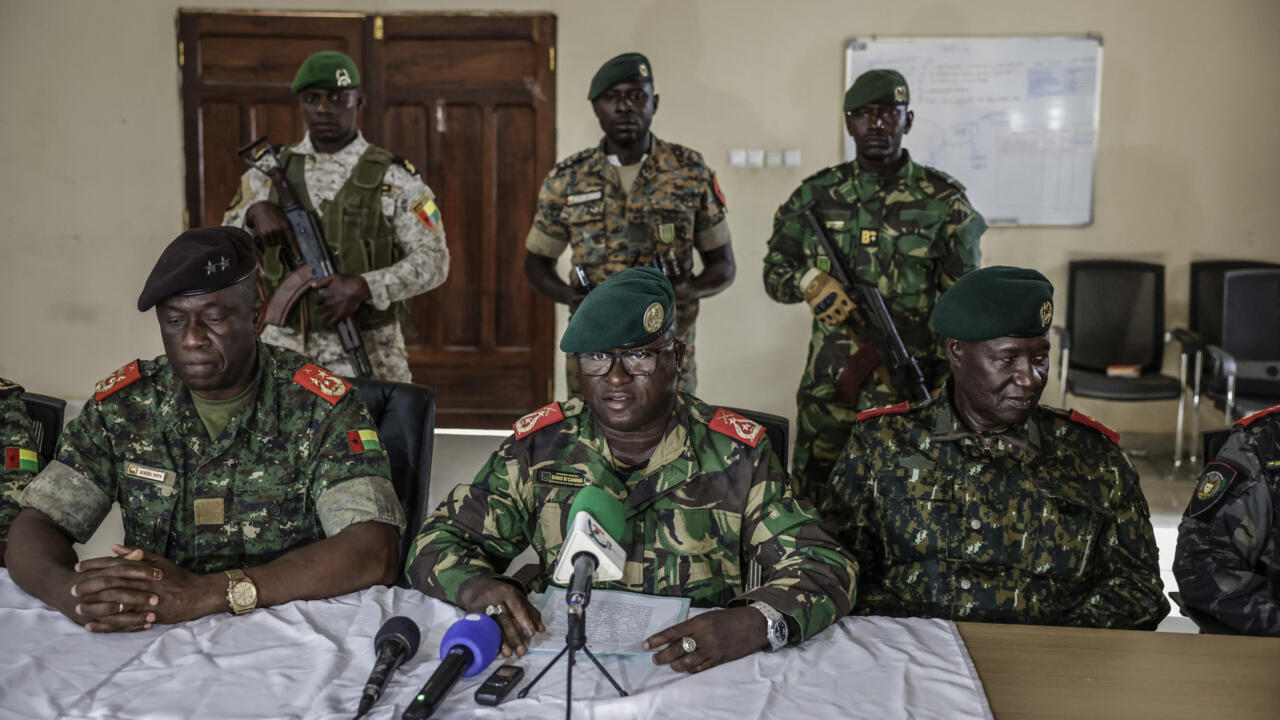
Guinea-Bissau’s military authorities have tightened control over the country ahead of a crucial mission by the Economic Community of West African States. On Sunday, the junta announced a nationwide ban on protests, strikes and any form of public gathering that could challenge its hold on power. The order came only a day before the arrival of ECOWAS leaders who are visiting Bissau to press for a return to constitutional rule.
The ban follows a weekend of unrest in the capital. Hundreds of residents had taken to the streets to demand the release of political detainees and the publication of results from the disputed presidential election. Security forces dispersed the crowds and detained several protesters, deepening concerns about shrinking civic space under the new military government.
The junta took power after last week’s coup, which it claims was necessary to block an alleged plot involving senior officials and drug trafficking networks. The military leader, Horta Inta, has announced a one-year transition period and insists that the armed forces acted to stabilise the country. Many observers and opposition groups reject this explanation and accuse the junta of exploiting political tension to seize authority.
READ MORE: Mohammed Badaru Abubakar Steps Down as Defence Minister as Insecurity Rises
ECOWAS has dispatched a high-level delegation that includes heads of state and the bloc’s commission president. Their mandate is to push the junta to restore civilian rule, ensure the stalled electoral process is completed and secure the release of detained political figures. The bloc has already warned of possible sanctions if the military authorities fail to commit to clear steps toward a democratic transition.
Regional leaders and international partners remain wary of the fragile situation in Guinea-Bissau, a country long troubled by political instability and the deep involvement of criminal networks in its institutions. The ban on protests has amplified fears that the military government is preparing to silence dissent ahead of talks with ECOWAS, raising the risk of further confrontation between citizens and the authorities.
As the delegation begins its meetings in Bissau, the country stands at a critical crossroads. The outcome of the talks is expected to determine whether Guinea-Bissau moves toward restoring democratic governance or sinks deeper into uncertainty under military rule.
About The Author

Related Articles
Senegal’s Power Cuts Force Government to Push Gas as the Long-Term Fix
Senegal’s energy minister says the power cuts that hit the country hard...
Ethiopia and Eritrea Cut Diplomatic Ties as Tigray Conflict Escalates
Ethiopia and Eritrea have severed diplomatic relations as renewed fighting in northern...

Tinubu Cannot Even Speak for Himself, Nigerians Say After Edited Broadcast Exposed
Nigerians on social media have accused the Presidency of manipulating President Bola...
Tinubu’s Cancer Analogy Backfires as Nigerians Remind Him He Was in Power Since 2015
President Bola Tinubu’s attempt to paint himself as the leader who inherited...
Leave a comment