



The American Airstrike in Nigeria Wasn’t Just About Terrorism — It Exposed That Nigeria Is No Longer a Sovereign Nation
 West Africa WeeklyDecember 26, 20252 Mins read2.3k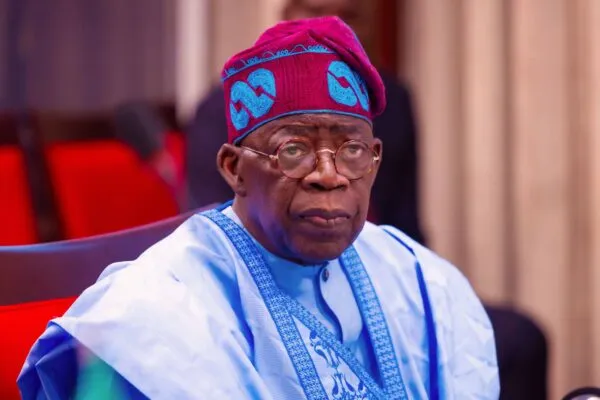
On Christmas Day, a foreign military bombed Nigerian soil, and Nigerians did not hear it first from their own government. They heard it from the President of the United States. Donald Trump announced on social media that American forces had carried out a “powerful and deadly strike” in Sokoto State. At the same time, Nigeria’s president remained silent, waiting to respond after the fact. That silence spoke volumes.
This was not just a security operation. It was a humiliation.
A sovereign nation does not learn about airstrikes on its territory from a foreign leader’s social media feed. A serious government does not allow another country to define the narrative of violence carried out within its borders. However, that is precisely what happened.
The Tinubu administration later rushed out statements calling the strike a “joint operation” under “structured security cooperation.” But that language rang hollow when contrasted with Washington’s justification. Trump framed the bombing as retaliation for the killing of Christians. Nigerian officials insisted it had nothing to do with religion. One country spoke with confidence. The other scrambled for damage control.
If the United States could locate and eliminate an ISIS cell in Sokoto, why has Nigeria’s own military failed to do so for years? Why did a foreign power decide to act? What was presented as a tactical success instead exposed a devastating truth: the Nigerian government cannot protect the lives of Nigerians from internal and external forces.
The airstrike occurred a few hours after President Bola Tinubu’s Christmas message, which spoke of peace, religious harmony, and national unity. He then tagged Donald Trump publicly. This appears more like deference than diplomacy. A president tagging a foreign leader raises a disturbing question: who is answerable to whom?
This discomfort is intensified by Tinubu’s long shadow in the United States. His history involving drug-related forfeiture proceedings remains part of the public record. That background, combined with Nigeria’s strained standing in U.S. immigration and security relations, fuels a perception that Nigerians can no longer ignore. This administration appears weak abroad and dependent at home.
Let us be clear, terrorism must be defeated. But outsourcing national defence is not a victory; it is a surrender by another name. When American jets fly unchallenged over Nigerian territory, when American officials announce strikes first, and when Nigeria’s president responds afterwards instead of authority, sovereignty becomes a slogan, not a reality.
This is not a partnership between equals. A power imbalance is on display.
The tragedy is not only the bombs that fell, but the confidence that collapsed. Nigerians are now debating not just security, but dignity, whether their country still controls its future or merely manages appearances while others pull the trigger.
If this is what “cooperation” looks like, Nigerians are right to ask a painful question: at what point does assistance become a quiet occupation?
And if more strikes are coming, as hinted by U.S. officials, then Nigeria must decide whether it will continue to outsource its survival or finally confront the leadership failures that made this humiliation possible.
Because history will not remember this moment for the terrorists who killed.
It will remember it as the day Nigeria was bombed.
About The Author


Related Articles
Malian Prime Minister Presents 2025 Government Report, Pledges Stability and Reform
Mali’s Prime Minister, Major General Abdoulaye Maïga, has presented the government’s 2025...
AES Ministers Conclude Roadmap Talks in Ouagadougou, Strengthen Security Coordination
Ministers of the Confederation of Sahel States have concluded high level discussions...
Investigation Links Western Funding Networks and NGOs to African Conflict, Terror Financing, and Organised Crime
A transcontinental investigation has exposed an alleged web of Western-funded organisations and...

Tinubu Approves Additional Endless Federal Road Projects While Old Projects Crawl at Snail’s Pace
President Bola Tinubu has approved a fresh round of federal road projects,...
Leave a comment