


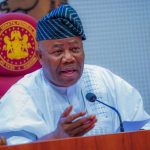





Minister for Communications, Innovation and Digital Economy in Nigeria, Dr Bosun Tijani, recently posted on X, sparking mixed reactions amongst Nigerian users of the social media application.
The tweet was directed at the country’s medical professionals in the Diaspora, asking if they would be willing to “contribute” time and expertise to a technology platform for their fellow citizens back home. He also asked for their preferred terms and conditions.
The idea in and of itself is laudable, particularly since experts say that the ratio of doctors to patients in Nigeria is about 1:30000. Telemedicine as proposed by the minister, could, therefore, potentially help to make healthcare accessible to more people. It also showed that the minister in question was actively thinking about Nigeria’s challenges and trying to proffer solutions to them unlike the average government appointee who ignores problems and is more focussed on enjoying the perks while abusing the office and its constitutional powers.
However, for a country with very poor institutions and infrastructural deficits, the idea could become projected as an alternative to traditional healthcare which is simply not true. Countries all over the world have somewhat effective telemedicine built it to leverage on and collaborate with the traditional healthcare facilities and personnel which provide services like aftercare, checkups, emergency care and so on that a telemedicine professional cannot.
The Nigerian government, known to sometimes owe salaries of healthcare professionals amongst other civil servants, could also get emboldened to continue such dangerous and inhumane actions because of the illusion of an alternative that Telemedicine may give.
Accessibility to both the internet and electronic devices is also another challenge, particularly for rural areas where the lack of basic healthcare is more acute. If Telemedicine were to be implemented in Nigeria today, it would most likely serve the elite more. At the same time, the vast majority of Nigerians who are poor and need it the most would be excluded.
Lastly, this writer is of the opinion that Nigerians would be better served if the basics were provided in not just healthcare but other critical sectors instead of an attempt to escape germaine issues with “technology”. After all, technology is simply a tool for upscaling, NOT a replacement for good infrastructure and better institutions. To get the best of the former, the latter MUST be provided. 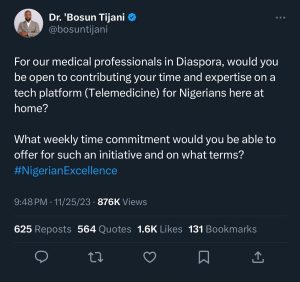
About The Author






Leave a comment