




World Bank Pledges $25m for Nigeria’s $300m Off-Grid Power Fund, Leaving $275m Unaccounted For
 West Africa WeeklySeptember 23, 20263 Mins read10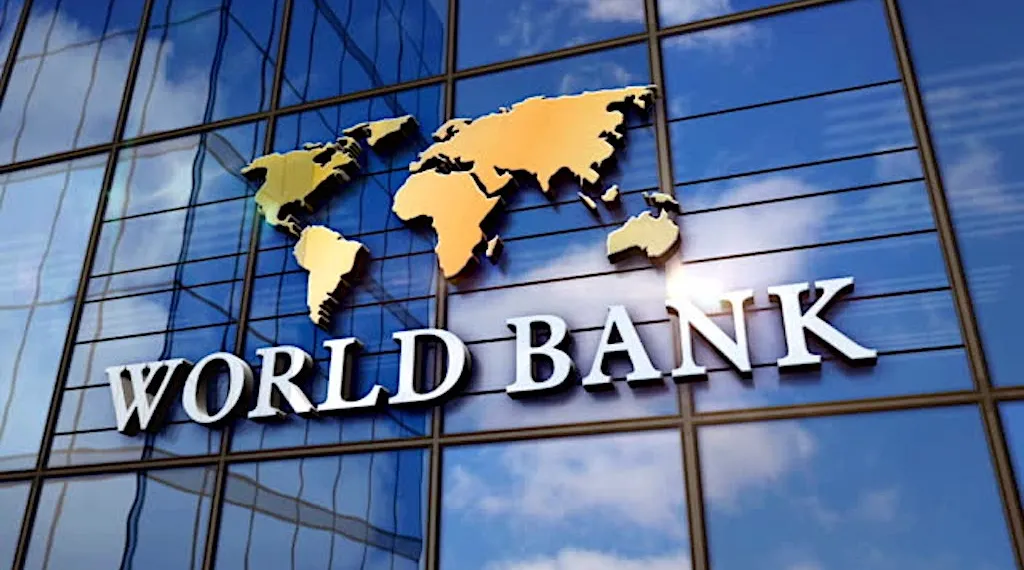
The World Bank has committed an initial $25 million to Nigeria’s newly launched $300 million Distributed Renewable Energy Fund, a contribution that represents just 8.3 per cent of the fund’s target and leaves a gap of $275 million that has not yet been secured. The fund, co-managed by the Nigeria Sovereign Investment Authority and Africa50, was commercially launched on the sidelines of the United Nations General Assembly in New York.
The World Bank’s contribution comes through the International Development Association, its financing arm for lower-income countries. The bank described the money as “catalytic capital” meant to attract private investors. But the fund’s own managers have not disclosed how much of the remaining $275 million has been raised, who the other investors are, or when the full amount will be available. The commercial launch only means the platform can begin deploying capital. It does not mean the money is there.
The fund was originally announced at $500 million in 2025. It is now being launched at $300 million. The partners have not explained the $200 million reduction. They have not said what happened to the money that was supposed to make the fund bigger. They have not said whether the target was unrealistic from the start or whether investors simply refused to commit.
This is not the first time the World Bank has poured money into Nigeria’s off-grid power sector with little to show for it. A previous World Bank and African Development Bank programme worth $220 million expired after it “inadvertently encouraged developers to build oversized systems and maximize the subsidy received instead of encouraging productive consumption and income generation.” An audit of ten commercial mini-grids in Nigeria found that only three had capacity utilisation rates above 50 per cent. Four had utilisation rates below 10 per cent. The mini-grids were built too big for the communities they were meant to serve. Rural customers could only afford a few kilowatts per month, roughly the same as a 60-watt light bulb running for four hours a day.
The World Bank’s own risk assessments continue to rate Nigeria’s political, governance and macroeconomic risks as high. It cites currency volatility and the effects of fuel subsidy reforms as factors that could slow private investment. The bank and Nigeria also cancelled $717.7 million in undisbursed financing from the Power Sector Recovery Programme in May 2026 after required reform milestones were not met. Nigeria has a history of failing to meet the conditions attached to World Bank loans.
READ MORE: From Yemen’s Khat Fields to Nigeria’s Gold Mines, Dehumanisation Fuels a Shared Drug Crisis
The fund’s managers say they will seek capital from pension funds and insurance companies that have traditionally been cautious about investing in Nigeria’s power sector. Those investors have stayed away for a reason. Tariffs are uncertain. The naira is volatile. Long-term local currency financing is scarce. The same risks that have kept private capital out of Nigeria’s power sector for decades have not disappeared because a new fund has been launched.
NSIA Managing Director Aminu Umar-Sadiq called the launch “a strategic signal to markets, investors, governments and development partners that Nigeria’s distributed renewable energy market is investable, credible and ready to operate at scale.” The signal may be strategic. But signals do not electrify homes. The fund has no disclosed pipeline of projects. It has no disclosed list of investors beyond the World Bank’s $25 million. It has no disclosed timetable for reaching $300 million.
The World Bank’s Anna Bjerde said the contribution reflects the bank’s commitment to “bridging funding sources and delivering real connections to people and communities across the continent.” But a $25 million pledge toward a $300 million fund is not a bridge. It is a down payment on a promise that may never be fulfilled.
Nigeria’s power sector has an installed capacity of about 13,000 megawatts but generates only between 3,500 and 5,000 megawatts. Millions of households and businesses have no access to the grid or receive only a few hours of power a day. The fund is meant to help close that gap by financing mini-grids and solar systems. But until the remaining $275 million is raised, until investors are named, until projects are selected and until electricity actually reaches communities, the fund remains a press release. The World Bank has put $25 million on the table. The Nigerian government and its partners have put nothing on the table that they are willing to disclose.
About The Author


Related Articles

From Yemen’s Khat Fields to Nigeria’s Gold Mines, Dehumanisation Fuels a Shared Drug Crisis
A social media post about Yemen’s khat addiction has sparked a conversation...

Awoniyi Replaces Injured Osimhen in Super Eagles Squad for AFCON Qualifiers
Victor Osimhen has been ruled out of Nigeria’s opening 2027 Africa Cup...
Tinubu and Umahi Threaten to Shut Down Coastal Highway They Can’t Protect
The Federal Government has threatened to shut down the Lagos section of...

Tinubu Extends European Vacation as Nigerians Continue to Suffer at Home
President Bola Tinubu has extended his working vacation in Europe, meaning he...
Leave a comment