


Burkina Faso Orders All Students to Seek Government Approval Before Studying Abroad
 West Africa WeeklyJuly 8, 20262 Mins read624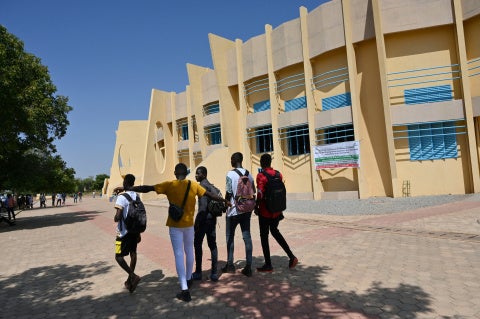
Burkina Faso’s government has approved a decree requiring every Burkinabè student wishing to pursue higher education abroad to obtain prior authorisation from the Ministry of Higher Education. The Council of Ministers adopted the decree on June 25, but it has yet to go into effect. The requirement applies to all students, regardless of whether they are funded through government scholarships, private sponsorship or their own finances.
The government has presented the measure as part of a broader effort to strengthen oversight of higher education and promote “scientific sovereignty”. Higher Education Minister Adjima Thiombiano said the policy would allow “the state to monitor training content in accordance with the current vision of the government, to avoid social cases after studies abroad and to prepare the professional integration of these students”. Officials say the decree is also intended to protect students from fraudulent foreign universities, improve consular protection by maintaining a register of students abroad, align overseas training with national development priorities, and protect young people from indoctrination or unsafe environments. Thiombiano warned that students who bypass the requirement “exposes that the diploma obtained abroad will not be recognized in Burkina Faso”.
Human Rights Watch has raised serious concerns about the decree, noting that while the state has a legitimate interest in collecting data on students abroad and protecting them from educational scams, the breadth of these measures is concerning. Rather than establishing a system of registration or notification, the Burkina Faso authorities are introducing a system of prior governmental authorization before students may pursue higher education abroad, a requirement HRW says restricts internationally protected rights, including freedom of movement and education.
Much will depend on the implementing framework, which has yet to be made public. There is no indication of the criteria by which authorization could be denied, whether decisions will provide reasons, or if applicants will have access to an independent appeals process or effective judicial review. Without such safeguards, broad administrative discretion threatens arbitrary and discriminatory decision-making. “There is a risk of selective application based on political opinion, ethnicity, gender,” a former Burkinabè judge told Human Rights Watch. “Those perceived as enemies of the junta will never get an authorization”.
READ MORE: Ebola Death Toll in DR Congo Surpasses 500 as Outbreak Continues to Expand
These concerns are reinforced by the higher education minister’s statement that some students abroad are pursuing studies not “in line with the current government vision”. Human rights appear unlikely to qualify as a field aligned with the government’s vision, given its abysmal human rights record and recent decisions to force the United Nations human rights office in the country to close, withdraw from the International Criminal Court, and dissolve human rights groups.
France remains one of Burkina Faso’s leading study destinations, with around 2,500 Burkinabè students enrolled in French higher education institutions in 2022, according to Campus France. The decree follows France’s suspension of visa issuance in Burkina Faso, alongside Mali and Niger, in 2023 amid diplomatic tensions.
The decree is part of a series of education reforms introduced since the country’s military-led transitional government took power in 2022. Last year, authorities introduced a mandatory month-long “patriotic immersion” program for students entering public universities after completing the baccalaureate examination. More recently, authorities suspended the General Union of Burkina Students, one of the country’s largest student organisations, accusing it of “glorifying terrorism” after it criticised the government’s handling of the security situation. Rights organisations criticised the suspension, arguing that it reflected a broader narrowing of civic space.
About The Author

Related Articles
Cameroon Commits to Stronger Bilateral Ties with Nigeria
Cameroon has reaffirmed its commitment to strengthening bilateral relations with Nigeria, pledging...

Ghana Borrows $288 Million at 11% to Pay Cocoa Farmers After Delayed Purchases
Ghana’s cocoa regulator has been forced to borrow 3.39 billion cedis, about...
Burkina Faso President Ibrahim Traoré Defies FIFA, Vows to Intervene in Football Federation After 7-0 Argentina Humiliation
Burkina Faso’s military leader, Captain Ibrahim Traoré, has vowed to intervene directly...

INEC Turns to AI for Election Verification While Nigerians Still Queue for PVCs and Results Vanish on IReV
The Independent National Electoral Commission has announced plans to deploy artificial intelligence...
Leave a comment