

Ebola Death Toll in DR Congo Surpasses 500 as Outbreak Continues to Expand
 West Africa WeeklyJuly 8, 20262 Mins read546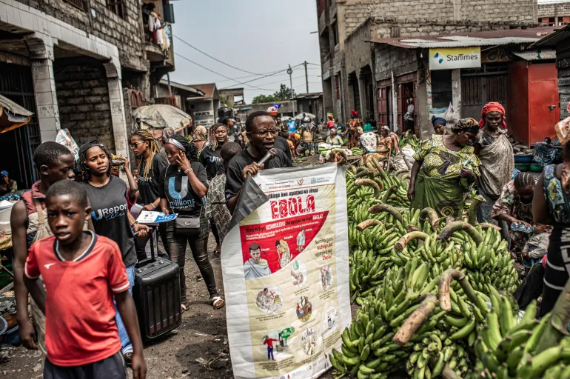
The death toll from the Ebola outbreak in the Democratic Republic of the Congo has surpassed 500, with health authorities and the World Health Organization warning that the epidemic remains in an expansion phase and has not yet stabilised.
According to the country’s health authorities, the DRC has recorded 1,561 confirmed cases and 506 deaths as of July 4, 2026. A total of 254 patients have recovered, while 628 confirmed patients are currently in isolation or hospitalisation. Authorities also identified 354 suspected cases, including 110 deaths. The outbreak has so far affected 36 health zones across three provinces, with weekly confirmed cases continuing to rise. Epidemiological weeks 25 and 26 represent the highest levels recorded since the start of the outbreak, each exceeding 300 confirmed cases, indicating continued community transmission.
The outbreak, declared on May 15, 2026, is caused by the rare Bundibugyo strain of Ebola, for which there is currently no approved vaccine or specific treatment. It is the largest outbreak ever caused by this virus strain. While the Bundibugyo strain is generally considered less deadly than some other Ebola strains, the absence of a vaccine has made early detection critical.
Speaking to reporters in Geneva on Tuesday, Dr Anne Ancia, WHO Representative to the DRC, said the outbreak has not yet stabilised. “It is still in the expansion phase, unfortunately. We would like to say it is stabilising but frankly we cannot say it yet,” Dr Ancia said. She added that the full extent of the epidemic has not yet been fully established.
One of the biggest drivers of transmission is the movement of infected workers from the mining town of Mongbwalu, where some leave the area instead of seeking treatment locally. “It is really those people who are coming back, and coming back too late and going to die with their family,” Dr Ancia said. Health authorities are setting up additional road checkpoints to reduce further spread.
Major challenges remain, including the near-saturation of some Ebola treatment centres, with occupancy levels around 90 percent. The outbreak is unfolding in conflict-affected areas where insecurity, displacement and overstretched health services have complicated response efforts. More than 1.3 million people are living in displacement camps after years of conflict in the region. Many healthcare workers have also been infected, while others continue to work with inadequate protective equipment, including gloves, boots and waterproof overalls. The response was also disrupted after healthcare workers in Ituri province went on strike over delayed salary payments, although most have since resumed work.
Community mistrust and rumours are making the outbreak even harder to contain. Some people still do not believe the disease exists, while others claim it was brought by outsiders seeking to profit from the crisis. In mid-May, isolation tents in Rwampara were set on fire by angry relatives and friends of a young man believed to have died from Ebola after they were prevented from conducting traditional burial rites.
The Congolese government is leading the response alongside partners including the Africa Centres for Disease Control and Prevention and the United Nations. The government has provided $50 million out of the $200 million requested for the health response plan. The WHO announced that a clinical trial has begun enrolling patients in the DRC to evaluate potential treatments for Ebola disease caused by the Bundibugyo ebolavirus.
About The Author


Related Articles
Cameroon Commits to Stronger Bilateral Ties with Nigeria
Cameroon has reaffirmed its commitment to strengthening bilateral relations with Nigeria, pledging...

Ghana Borrows $288 Million at 11% to Pay Cocoa Farmers After Delayed Purchases
Ghana’s cocoa regulator has been forced to borrow 3.39 billion cedis, about...
Burkina Faso President Ibrahim Traoré Defies FIFA, Vows to Intervene in Football Federation After 7-0 Argentina Humiliation
Burkina Faso’s military leader, Captain Ibrahim Traoré, has vowed to intervene directly...

INEC Turns to AI for Election Verification While Nigerians Still Queue for PVCs and Results Vanish on IReV
The Independent National Electoral Commission has announced plans to deploy artificial intelligence...
Leave a comment